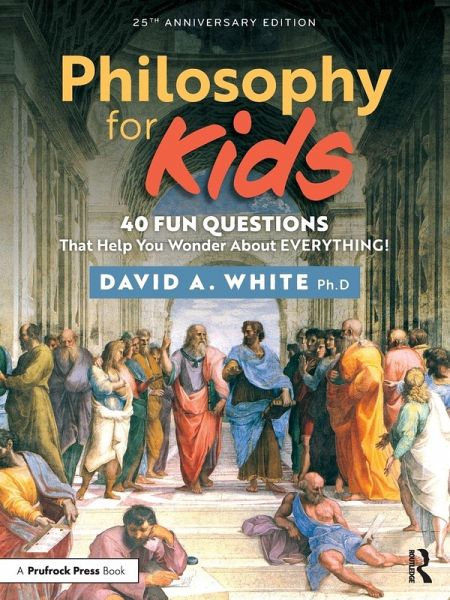
Inspire animated discussions of questions that concern kidsâ and all of usâ with the 25th anniversary edition of this innovative, interactive book. Open your students' minds to the wonders of philosophy.
Inspire animated discussions of questions that concern kidsâ and all of usâ with the 25th anniversary edition of this innovative, interactive book. Open your students' minds to the wonders of philosophy.
David A. White has a doctorate in philosophy from the University of Toronto and taught philosophy in colleges and universities from 1967 to 2025. He has written nine books and over 50 articles in philosophy, literary criticism, and educational theory. In 1985, he received a Fellowship from the American Council of Learned Societies to study the function of myth in Plato's philosophy. Since 1993, he has taught programs in philosophy for the gifted centers and various magnet schools of the Chicago Public School system, the International Baccalaureate program at Lincoln Park High School in Chicago, and Northwestern University's Center for Talent Development, grades 4-9.
Inhaltsangabe
Part I-Values Question #1. Are you a fair and just person? Question #2. How do you know who your friends are? Question #3. Should you be rewarded for your efforts in school? Question #4. Should you let little things bother you? Question #5. Is it your duty to give to charity? Question #6. Will having fun make you happier than studying? Question #7. Should you ever tell a lie? Question #8. Are there times when you should be violent? Question #9. Do you sometimes feel weird when you are with others? Question #10. Do we control technology or does technology control us? Part II-Knowledge Question #11. How do you know for certain that things move? Question #12. What makes something you say true? Question #13. Can you doubt that you exist? Question #14. Does a tree make a sound if it falls in a forest with no one around? Question #15. Are you certain that the law of gravity is really a law? Question #16. How can you tell when you know something? Question #17. Can another person understand your feelings? Question #18. Can you lie to yourself? Question #19. Do you perceive things as they are or only as they seem to be? Question #20. Can computers think? Part III-Reality Question #21. Can you think about nothing at all? Question #22. Does anything ever happen by chance? Question #23. What happens to numbers when you are not using them? Question #24. Are numbers and people equally real? Question #25. Is time what you see when you look at a clock? Question #26. If the universe came from the Big Bang, where did the Big Bang come from? Question #27. Are you the same person you were five years ago? Question #28. Do you have a free will? Question #29. Does anything depend on everything? Question #30. Are impossible things ever possible? Part IV-Critical Thinking Question #31. Is it important to speak and write so you can be understood? Question #32. Should you always listen to the opinions of others? Question #33. Should you criticize people or the opinions people have? Question #34. Why is "because" such an important word? Question #35. Is it always easy to tell what causes things to happen? Question #36. If many people think something is true, is it true? Question #37. Do two wrongs balance out and make an action right? Question #38. "I am lying." True or false? Question #39. Can something logical ever not make sense? Question #40. "I wonder . . ." what it means to define something?
Part I-Values Question #1. Are you a fair and just person? Question #2. How do you know who your friends are? Question #3. Should you be rewarded for your efforts in school? Question #4. Should you let little things bother you? Question #5. Is it your duty to give to charity? Question #6. Will having fun make you happier than studying? Question #7. Should you ever tell a lie? Question #8. Are there times when you should be violent? Question #9. Do you sometimes feel weird when you are with others? Question #10. Do we control technology or does technology control us? Part II-Knowledge Question #11. How do you know for certain that things move? Question #12. What makes something you say true? Question #13. Can you doubt that you exist? Question #14. Does a tree make a sound if it falls in a forest with no one around? Question #15. Are you certain that the law of gravity is really a law? Question #16. How can you tell when you know something? Question #17. Can another person understand your feelings? Question #18. Can you lie to yourself? Question #19. Do you perceive things as they are or only as they seem to be? Question #20. Can computers think? Part III-Reality Question #21. Can you think about nothing at all? Question #22. Does anything ever happen by chance? Question #23. What happens to numbers when you are not using them? Question #24. Are numbers and people equally real? Question #25. Is time what you see when you look at a clock? Question #26. If the universe came from the Big Bang, where did the Big Bang come from? Question #27. Are you the same person you were five years ago? Question #28. Do you have a free will? Question #29. Does anything depend on everything? Question #30. Are impossible things ever possible? Part IV-Critical Thinking Question #31. Is it important to speak and write so you can be understood? Question #32. Should you always listen to the opinions of others? Question #33. Should you criticize people or the opinions people have? Question #34. Why is "because" such an important word? Question #35. Is it always easy to tell what causes things to happen? Question #36. If many people think something is true, is it true? Question #37. Do two wrongs balance out and make an action right? Question #38. "I am lying." True or false? Question #39. Can something logical ever not make sense? Question #40. "I wonder . . ." what it means to define something?
Es gelten unsere Allgemeinen Geschäftsbedingungen: www.buecher.de/agb
Impressum
www.buecher.de ist ein Internetauftritt der buecher.de internetstores GmbH
Geschäftsführung: Monica Sawhney | Roland Kölbl | Günter Hilger
Sitz der Gesellschaft: Batheyer Straße 115 - 117, 58099 Hagen
Postanschrift: Bürgermeister-Wegele-Str. 12, 86167 Augsburg
Amtsgericht Hagen HRB 13257
Steuernummer: 321/5800/1497
USt-IdNr: DE450055826