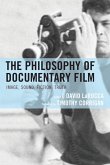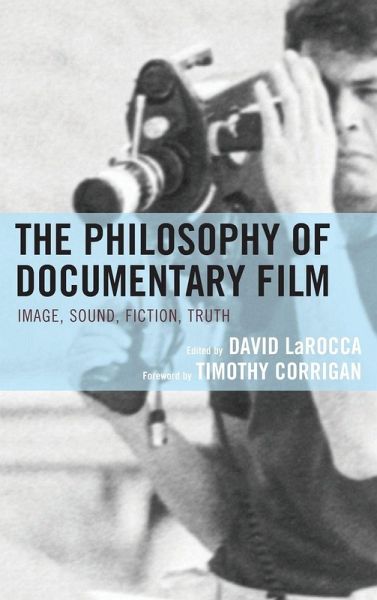
Perhaps nowhere in the broad expanse of types of film is the old "quarrel between philosophy and poetry" more evident—and also more vitally relevant—than in the genre or mode of film known as documentary. Documentary film is just another form of poetic imitation, in its variety of instances and complexity of fabrication, it is just as much caught up with the limitations—and effects—of mimetic art, including fiction film. This book affords a prismatic perspective on documentary cinema, inviting the dynamism and diversity of the arts, humanities, social sciences, and even natural sciences together into a shared conversation.…mehr
Perhaps nowhere in the broad expanse of types of film is the old "quarrel between philosophy and poetry" more evident—and also more vitally relevant—than in the genre or mode of film known as documentary. Documentary film is just another form of poetic imitation, in its variety of instances and complexity of fabrication, it is just as much caught up with the limitations—and effects—of mimetic art, including fiction film. This book affords a prismatic perspective on documentary cinema, inviting the dynamism and diversity of the arts, humanities, social sciences, and even natural sciences together into a shared conversation.
David LaRocca is visiting assistant professor in the Department of Philosophy at the State University of New York College at Cortland.
Inhaltsangabe
Foreword At the Center of Our Age Timothy Corrigan Introduction Representative Qualities and Questions of Documentary Film David LaRocca Part I: The Medium, Morals, and Metaphysics of Documentary Film Chapter 1: What Photography Calls Thinking: Theoretical Considerations on the Power of the Photographic Basis of Cinema Stanley Cavell Chapter 2: Cinematic Representation and Spatial Realism: Reflections After/Upon André Bazin Noël Carroll Chapter 3: Documentary Traces: Film and the Content of Photographs Gregory Currie Chapter 4: The Limits of Appropriation: Subjectivist Accounts of the Fiction/Nonfiction Distinction Carl Plantinga Chapter 5: Inscribing Ethical Space: Ten Propositions on Death and Documentary Vivian Sobchack Part II: Strategies and Styles of Documenting with Film Chapter 6: Before Documentary: Early Nonfiction Films and the "View" Aesthetic Tom Gunning Chapter 7: Ruminating on the Ideologies of Nature Film Scott MacDonald Chapter 8: Jean Rouch's Cine-trance and
Es gelten unsere Allgemeinen Geschäftsbedingungen: www.buecher.de/agb
Impressum
www.buecher.de ist ein Internetauftritt der buecher.de internetstores GmbH
Geschäftsführung: Monica Sawhney | Roland Kölbl | Günter Hilger
Sitz der Gesellschaft: Batheyer Straße 115 - 117, 58099 Hagen
Postanschrift: Bürgermeister-Wegele-Str. 12, 86167 Augsburg
Amtsgericht Hagen HRB 13257
Steuernummer: 321/5800/1497
USt-IdNr: DE450055826