
Andere Kunden interessierten sich auch für
 Philosophical Concepts12,99 €
 What is Enlightenment?6,99 €
 Wisdom Beyond Distractions14,99 €
 ... Kind Of A Third World War ...") Cal Caleido's Curiosities (Vol. 13) ... Kind Of A Third World War ...169,00 €
Cal Caleido's Curiosities (Vol. 13) ... Kind Of A Third World War ...169,00 € Jerusalem: Or on Religious Power and Judaism19,99 €
 Refractions of Reality: Philosophy and the Moving Image38,99 €
 Nietzsche in 60 Minutes9,99 €


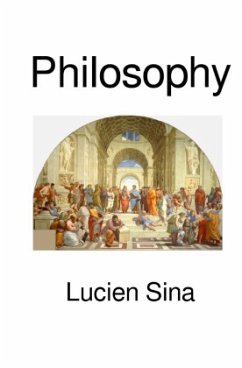
This book offers a clear and systematic introduction to philosophy: its central branches, major movements, key figures, and the historical developments that have shaped the discipline. It presents core topics-metaphysics, epistemology, ethics, political philosophy, logic, and aesthetics-in a careful, structured way, showing both their internal questions and their interconnections.Emphasizing conceptual clarity and argumentative rigor, the text explains fundamental theories and philosophical methods without assuming prior training. Historical context is used not as ornament but as a tool to understand why particular problems arose and how different responses evolved over time. Major schools and turning points-ancient and modern-are treated with restrained analysis, enabling readers to trace continuities and ruptures across epochs.Designed for students, teachers and intellectually curious readers, the volume balances accessibility with seriousness: it provides concise summaries, representative primary-source excerpts, and guided questions that encourage close reading and independent judgment. Practical sections illustrate how philosophical ideas bear on contemporary debates-in science, politics, law and everyday ethics-so readers learn to apply conceptual tools outside the classroom.By the end of the book readers will have acquired a reliable conceptual vocabulary, a framework for evaluating arguments, and a methodical approach to philosophical problems. The aim is not to supply final answers but to equip readers with the analytic instruments necessary to think clearly, argue carefully, and engage thoughtfully with the enduring questions that define the philosophical tradition.