Phytomanagement of Polluted Sites: Market Opportunities in Sustainable Phytoremediation brings together recent and established knowledge on different aspects of phytoremediation, providing this information in a single source that offers a cutting-edge synthesis of scientific and experiential knowledge on industrially contaminated site restoration that is useful for both practitioners and scientists. The book gives interested groups, both non-profit and for-profit, methods to manage dumpsites and other contaminated areas, including tactics on how to mitigate costs and even profit from ecological restoration. …mehr
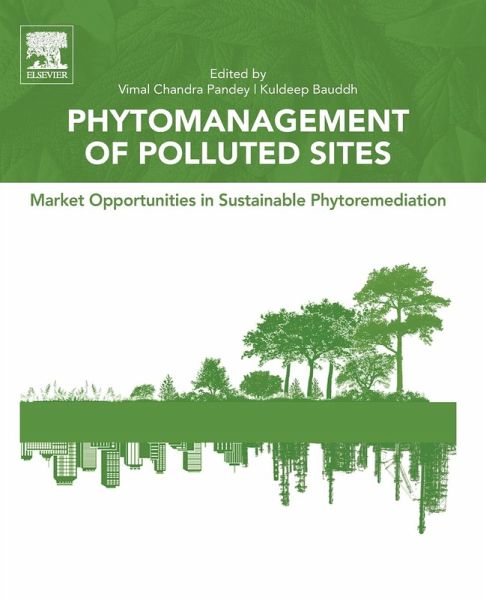
Phytomanagement of Polluted Sites: Market Opportunities in Sustainable Phytoremediation brings together recent and established knowledge on different aspects of phytoremediation, providing this information in a single source that offers a cutting-edge synthesis of scientific and experiential knowledge on industrially contaminated site restoration that is useful for both practitioners and scientists. The book gives interested groups, both non-profit and for-profit, methods to manage dumpsites and other contaminated areas, including tactics on how to mitigate costs and even profit from ecological restoration.
Dr. Vimal Chandra Pandey is currently working as a consultant at Council of Science & Technology, Uttar Pradesh, India. Prior to his current position, he worked in the Plant Ecology and Environmental Sciences Division, CSIR-National Botanical Research Institute, Lucknow, UP, India. Dr. Pandey is an Environmental Botanist, Internationally recognized in the area of phytomanagement of fly ash. His research domain area is phytoremediation, revegetation of fly ash dumps, restoration of degraded lands with special reference to raising rural livelihoods and maintaining ecosystem services.
Inhaltsangabe
1. Phytoremediation: From theory towards practices 2. Market opportunities in sustainable phytoremediation 3. Ecological Restoration of Coal Mine Degraded Lands - Topsoil Management, Pedogenesis, Carbon Sequestration and Mine Pit Limnology 4. Ecorestoration of fly ash deposits by native plant species at thermal power stations (Serbia) 5. Ecorestoration of polluted aquatic ecosystems through rhizofiltration 6. Floral species in pollution remediation and augmentation of micrometeorological conditions and microclimate: An integrated approach 7. Phytoremediation of Air Pollutants: Prospects and Challenges 8. A review of phytoremediation prospects of arsenic contaminated water and soil 9. Aromatic crops in phytoremediation: From contaminated to waste dump sites 10. Rehabilitation of uranium contaminated sites by phytoremediation and natural attenuation 11. A sustainable phytoremediation strategies for river water rejuvenation 12. Restoration of pesticide contaminated sites through plants 13. Adaption mechanisms in plants under heavy metal stress conditions during phytoremediation 14. Application of soil quality indicators for phytorestoration of mine spoil 15. Rhizoremediation of polluted sites: harnessing plant-microbe interactions 16. Phytoremediation of red mud deposits through natural succession 17. Eco-restoration potential of vegetation for contaminated water bodies 18. Phytomanagement of chromium contaminated brown fields 19. Techno-economics perspectives of bioremediation of wastewater, dewatering and biofuel production from microalgae 20. Exploring the potential and opportunities of recent tools for removal of hazardous materials from environments 21. Recent advances, challenges and opportunities in bioremediation of hazardous materials 22. Economics, Technology and Environmental Protection: A Critical Analysis of Phytomanagement Technologies
1. Phytoremediation: From theory towards practices 2. Market opportunities in sustainable phytoremediation 3. Ecological Restoration of Coal Mine Degraded Lands - Topsoil Management, Pedogenesis, Carbon Sequestration and Mine Pit Limnology 4. Ecorestoration of fly ash deposits by native plant species at thermal power stations (Serbia) 5. Ecorestoration of polluted aquatic ecosystems through rhizofiltration 6. Floral species in pollution remediation and augmentation of micrometeorological conditions and microclimate: An integrated approach 7. Phytoremediation of Air Pollutants: Prospects and Challenges 8. A review of phytoremediation prospects of arsenic contaminated water and soil 9. Aromatic crops in phytoremediation: From contaminated to waste dump sites 10. Rehabilitation of uranium contaminated sites by phytoremediation and natural attenuation 11. A sustainable phytoremediation strategies for river water rejuvenation 12. Restoration of pesticide contaminated sites through plants 13. Adaption mechanisms in plants under heavy metal stress conditions during phytoremediation 14. Application of soil quality indicators for phytorestoration of mine spoil 15. Rhizoremediation of polluted sites: harnessing plant-microbe interactions 16. Phytoremediation of red mud deposits through natural succession 17. Eco-restoration potential of vegetation for contaminated water bodies 18. Phytomanagement of chromium contaminated brown fields 19. Techno-economics perspectives of bioremediation of wastewater, dewatering and biofuel production from microalgae 20. Exploring the potential and opportunities of recent tools for removal of hazardous materials from environments 21. Recent advances, challenges and opportunities in bioremediation of hazardous materials 22. Economics, Technology and Environmental Protection: A Critical Analysis of Phytomanagement Technologies
Es gelten unsere Allgemeinen Geschäftsbedingungen: www.buecher.de/agb
Impressum
www.buecher.de ist ein Internetauftritt der buecher.de internetstores GmbH
Geschäftsführung: Monica Sawhney | Roland Kölbl | Günter Hilger
Sitz der Gesellschaft: Batheyer Straße 115 - 117, 58099 Hagen
Postanschrift: Bürgermeister-Wegele-Str. 12, 86167 Augsburg
Amtsgericht Hagen HRB 13257
Steuernummer: 321/5800/1497
USt-IdNr: DE450055826