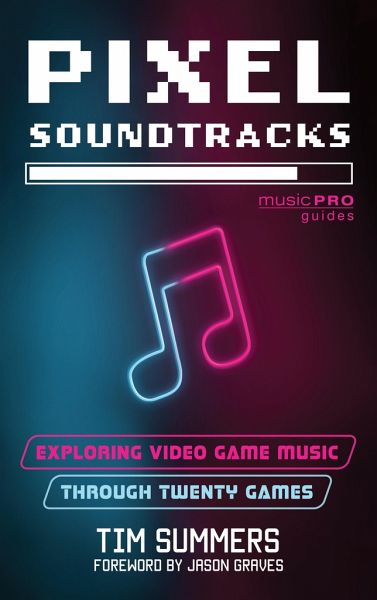
An accessible guide to video game music, this book covers essential topics for understanding game music—from how games produce chip sounds to the significance of game music in concerts. It explains both technical and cultural aspects, using twenty games as case studies, and shows how video game music works and why it matters to so many people.
An accessible guide to video game music, this book covers essential topics for understanding game music—from how games produce chip sounds to the significance of game music in concerts. It explains both technical and cultural aspects, using twenty games as case studies, and shows how video game music works and why it matters to so many people.
Tim Summers is senior lecturer in music at Royal Holloway University of London. Summers co-founded the European Ludomusicology Research Group and was a founding editor of the Journal of Sound and Music in Games. His books include Understanding Video Game Music, The Queerness of Video Game Music and The Legend of Zelda: Ocarina of Time - A Game Score Companion. Tim regularly contributes to articles, podcasts and radio programs on the topic of video game music.
Inhaltsangabe
Table of Contents Acknowledgments Introduction Chapter 1: The Sonic Invasion - Space Invaders (1978) Stage 1: How Video Games Make Music Chapter 2: Music on Chips - Super Mario Bros (1985) Chapter 3: MIDI, Samples and Synthesis - Kings Quest IV (1988) Chapter 4: CD Audio and Recorded Sound in Games - Wipeout (1995) Stage 2: Integrating Music in Games Chapter 5: Dynamic Music - The Operative: No One Lives Forever (2000) Chapter 6: Generating Music with Algorithms - Mini Metro (2015) Chapter 7: Introductions, Menus and Loading Screens - BioShock Infinite (2013) Stage 3: The Role of Music in Games Chapter 8: Battle and Boss Music - Dark Souls III (2016) Chapter 9: Characters and Stories - Final Fantasy VI (1994) Chapter 10: Building Worlds and Histories - Kingdom Hearts (2002) Chapter 11: Music and Feeling in Play - Ori and the Blind Forest (2015) Stage IV: Aesthetic Questions Chapter 12: Music and Gameplay - The Artful Escape (2021) Chapter 13: Nostalgia and Remakes - Resident Evil 2 (1998/2019) Chapter 14: Modern Chiptune and Fandom - Undertale/Deltarune (2015/2021+) Chapter 15: Classical Music and Video Games - Untitled Goose Game (2019) Chapter 16: Popular Music and Game Music - 50 Cent: Bulletproof (2005) Stage 5: Game Music and Wider Culture Chapter 17: Identity, Representation and Avatars - Tomb Raider (2013) Chapter 18: Adaptations - Star Trek: Judgement Rites (1993 Floppy Version/1995 CD-ROM Version) Chapter 19: Game Music in Concert and On Record - Xevious (1982) Final Boss Playing Games, Playing with Music - The Legend of Zelda: Ocarina of Time (1998) Bibliography
Table of Contents Acknowledgments Introduction Chapter 1: The Sonic Invasion - Space Invaders (1978) Stage 1: How Video Games Make Music Chapter 2: Music on Chips - Super Mario Bros (1985) Chapter 3: MIDI, Samples and Synthesis - Kings Quest IV (1988) Chapter 4: CD Audio and Recorded Sound in Games - Wipeout (1995) Stage 2: Integrating Music in Games Chapter 5: Dynamic Music - The Operative: No One Lives Forever (2000) Chapter 6: Generating Music with Algorithms - Mini Metro (2015) Chapter 7: Introductions, Menus and Loading Screens - BioShock Infinite (2013) Stage 3: The Role of Music in Games Chapter 8: Battle and Boss Music - Dark Souls III (2016) Chapter 9: Characters and Stories - Final Fantasy VI (1994) Chapter 10: Building Worlds and Histories - Kingdom Hearts (2002) Chapter 11: Music and Feeling in Play - Ori and the Blind Forest (2015) Stage IV: Aesthetic Questions Chapter 12: Music and Gameplay - The Artful Escape (2021) Chapter 13: Nostalgia and Remakes - Resident Evil 2 (1998/2019) Chapter 14: Modern Chiptune and Fandom - Undertale/Deltarune (2015/2021+) Chapter 15: Classical Music and Video Games - Untitled Goose Game (2019) Chapter 16: Popular Music and Game Music - 50 Cent: Bulletproof (2005) Stage 5: Game Music and Wider Culture Chapter 17: Identity, Representation and Avatars - Tomb Raider (2013) Chapter 18: Adaptations - Star Trek: Judgement Rites (1993 Floppy Version/1995 CD-ROM Version) Chapter 19: Game Music in Concert and On Record - Xevious (1982) Final Boss Playing Games, Playing with Music - The Legend of Zelda: Ocarina of Time (1998) Bibliography
Es gelten unsere Allgemeinen Geschäftsbedingungen: www.buecher.de/agb
Impressum
www.buecher.de ist ein Internetauftritt der buecher.de internetstores GmbH
Geschäftsführung: Monica Sawhney | Roland Kölbl | Günter Hilger
Sitz der Gesellschaft: Batheyer Straße 115 - 117, 58099 Hagen
Postanschrift: Bürgermeister-Wegele-Str. 12, 86167 Augsburg
Amtsgericht Hagen HRB 13257
Steuernummer: 321/5800/1497
USt-IdNr: DE450055826