
Andere Kunden interessierten sich auch für
 Pocket guide: Exanthematous diseases in childhood29,99 €
 Budd Chiari Syndrome secondary to Antiphospholipid Syndrome27,99 €
 Spontaneous infection of ascites fluid: impact of etiology27,99 €
 Lung Ultrasound as a Physiotherapy Assessment Tool27,99 €
 Pocket Guide to Teaching for Medical Instructors26,99 €
 The Complete Medical Pocket-Formulary and Physician's Vade-Mecum22,90 €
 Health Seeking Behavior and Out-of-Pocket Expenditure on Chronic Non-communicable Diseases in Sub-Saharan Africa50,85 €




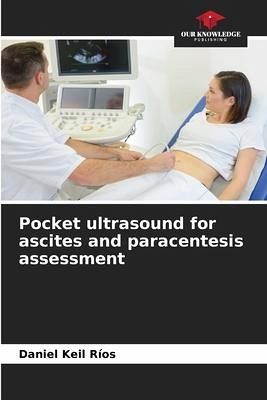
The presence of ascites may be suggestive of multiple pathologies. Physical examination cannot always detect it, particularly when the amount of fluid is low or if it coexists with obesity. Its early detection has important diagnostic, therapeutic and prognostic implications. This is why ultrasound has become essential for its detection. Moreover, its usefulness in performing guided procedures has been demonstrated on multiple occasions and it has become a tool of daily use in hospital services. With technological improvement, new portable ultrasounds have been developed, so small and light that they fit in the palm of the hand: pocket ultrasounds. This paper discusses their usefulness as an adjunct to physical examination for the detection of ascites, as well as for the performance of guided paracentesis.