Originally published in 1966, this book contains a selection of over a hundred poems from the whole range of Goethe's poetry, except for the scientific and dramatic works. The poems are arranged in groups. Each group has a brief introduction, and each poem is followed, where necessary, by a brief glossarial note and by a longer comment. This incorporates some historical or biographical information, but is mainly critical. The poems give a cumulative sense of the detail of Goethe's art. There is a general introduction, which deals briefly with Goethe's life and has a long section on his use of…mehr
Originally published in 1966, this book contains a selection of over a hundred poems from the whole range of Goethe's poetry, except for the scientific and dramatic works. The poems are arranged in groups. Each group has a brief introduction, and each poem is followed, where necessary, by a brief glossarial note and by a longer comment. This incorporates some historical or biographical information, but is mainly critical. The poems give a cumulative sense of the detail of Goethe's art. There is a general introduction, which deals briefly with Goethe's life and has a long section on his use of language. This book will be of value to anyone with an interest in Goethe's poetry and literary criticism.
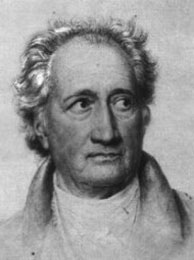
JOHANN WOLFGANG VON GOETHE (1749-1832) was a German poet, writer, scientist, statesman, and one of the greatest German literary figures. Goethe, the eldest of seven children born in a wealthy Frankfurt family, studied law at the universities of Leipzig and Strasbourg. He wrote novels and poetry, dramas, treatises on botany and literary criticism, among which his successful novels The Sorrows of Young Werther (1774) and Wilhelm Meister's Apprenticeship (1795). Early in his life, Goethe was a member of the Sturm und Drang literary movement, emphasizing free expression of emotions over the restraints of rationalism. Later, Goethe, together with Friedrich Schiller, initiated the Weimar Classicism, a cultural movement based on a synthesis of Romanticism, Classicism and the Enlightenment.
Bild: Wikipedia
Inhaltsangabe
Preface Some views of Goethe's poetry Introduction: Goethe's life and works Goethe's language The Poems: 1. Young Goethe in love 2. Woods and lakes 3. Genius or demi-god 4. Humorous and light verse 5. 'Weltanschauungslyrik' 6. Early folk-songs and ballads 7. 'Freudvoll und leidvoll' 8. Italian journey 9. Later narrative poems and ballads 10. Love-poems of his old age 11. Poetry of wisdom 12. Poems of his old age Index of titles and beginnings of poems.
Preface Some views of Goethe's poetry Introduction: Goethe's life and works Goethe's language The Poems: 1. Young Goethe in love 2. Woods and lakes 3. Genius or demi-god 4. Humorous and light verse 5. 'Weltanschauungslyrik' 6. Early folk-songs and ballads 7. 'Freudvoll und leidvoll' 8. Italian journey 9. Later narrative poems and ballads 10. Love-poems of his old age 11. Poetry of wisdom 12. Poems of his old age Index of titles and beginnings of poems.
Es gelten unsere Allgemeinen Geschäftsbedingungen: www.buecher.de/agb
Impressum
www.buecher.de ist ein Internetauftritt der buecher.de internetstores GmbH
Geschäftsführung: Monica Sawhney | Roland Kölbl | Günter Hilger
Sitz der Gesellschaft: Batheyer Straße 115 - 117, 58099 Hagen
Postanschrift: Bürgermeister-Wegele-Str. 12, 86167 Augsburg
Amtsgericht Hagen HRB 13257
Steuernummer: 321/5800/1497
USt-IdNr: DE450055826