
Andere Kunden interessierten sich auch für
 Pindar in English Rhyme22,99 €
 Chess Strategy: A Treatise Upon The Art Of Problem Composition21,99 €
 Chess Fruits: A Selection Of Direct Mate, Self-mate, Picture And Letter Problems, Poems And Humourous Sketches, From The Composition18,99 €
 Chess: Its Poetry And Its Prose: A Practical And Theoretical Treatise On The Arts Of Composing And Solving Chess Problems, Wi26,99 €
 Keep Moving: The Journal12,99 €
 Chess Problems: A Collection of Original Positions, Forming One Hundred Ends of Games Won Or Drawn; to Which Is Added a Selection of G17,99 €
 The Worrier18,99 €
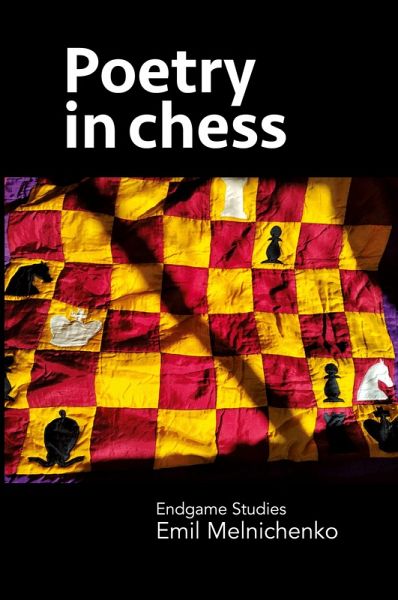
Poetry in Chess introduces the reader to the fascinating world of chess endgame studies by revealing some of the beautiful ideas that are only rarely encountered in over-the-board play. This collection of chess studies, conundrums, puzzles and curiosities will appeal to players of all levels, from beginner to advanced, who are interested in the ocean of possibilities that exist in chess. The book can also be used as a solution guide for the solver or a source of aesthetic ideas or themes. An endgame study is part of a microcosm, inhabiting a small perfect world where art and science are fused, and mathematical rigour and a clockmaker's precision are combined with poetic grace and the elegance of a ballerina to forge conceptual beauty. Where repetitive geometric motifs are employed they are a form of kinetic art, where the originality, wit, surprise, economy, thematic content, and humour of the objet d'art offer a vision that transcends chess as a game, placing it into the realms of art. This book contains 136 fully annotated and analysed end game studies with an additional 40 problems to solve.