
Emmett Macfarlane
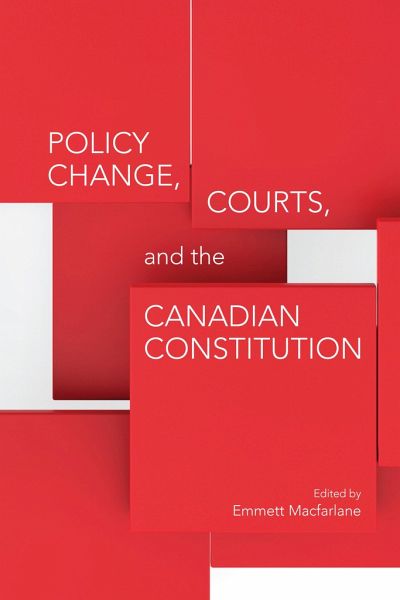
Policy Change, Courts, and the Canadian Constitution
Herausgeber: Macfarlane, Emmett
Emmett Macfarlane
Policy Change, Courts, and the Canadian Constitution
Herausgeber: Macfarlane, Emmett
- Broschiertes Buch
- Merkliste
- Auf die Merkliste
- Bewerten Bewerten
- Teilen
- Produkt teilen
- Produkterinnerung
- Produkterinnerung
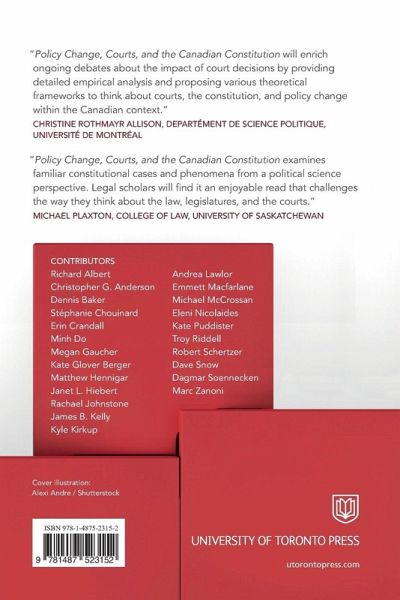
Policy Change, Courts, and the Canadian Constitution examines the impact of courts and various constitutional provisions on a wide range of policy issues, including health care, immigration and refugee policy, citizenship, the rights of Indigenous peoples, and criminal justice policy.
Andere Kunden interessierten sich auch für
 Cristóbal CaviedesSupermajority Voting in Constitutional Courts138,99 €
 Otto LangContemporary Problems of Public Law in Canada31,99 €
 Elie HonigWhen You Come at the King22,99 €
 Neil GorsuchOver Ruled23,99 €
 Frederick Cowell (UK Birkbeck College)The Law, Politics and Theory of Treaty Withdrawal122,99 €
 Catherine AtkinsonBritish Legal Reform24,99 €
 Professor Martin LoughlinAgainst Constitutionalism32,99 €
-
-
-





Policy Change, Courts, and the Canadian Constitution examines the impact of courts and various constitutional provisions on a wide range of policy issues, including health care, immigration and refugee policy, citizenship, the rights of Indigenous peoples, and criminal justice policy.
Produktdetails
- Produktdetails
- Verlag: University of Toronto Press
- Seitenzahl: 464
- Erscheinungstermin: 29. Oktober 2018
- Englisch
- Abmessung: 226mm x 152mm x 30mm
- Gewicht: 702g
- ISBN-13: 9781487523152
- ISBN-10: 1487523157
- Artikelnr.: 52420938
- Herstellerkennzeichnung
- Libri GmbH
- Europaallee 1
- 36244 Bad Hersfeld
- gpsr@libri.de
- Verlag: University of Toronto Press
- Seitenzahl: 464
- Erscheinungstermin: 29. Oktober 2018
- Englisch
- Abmessung: 226mm x 152mm x 30mm
- Gewicht: 702g
- ISBN-13: 9781487523152
- ISBN-10: 1487523157
- Artikelnr.: 52420938
- Herstellerkennzeichnung
- Libri GmbH
- Europaallee 1
- 36244 Bad Hersfeld
- gpsr@libri.de
Emmett Macfarlane is a professor in the Department of Political Science at the University of Waterloo.
Introduction: Judicial Policy Impact in Canada
Emmett Macfarlane (University of Waterloo)
PART I - Approaches and Theories of Policy Change
Chapter 1: Lessons from Public Policy Theories: Ask About Policy Change
First, Courts Second
Minh Do (University of Toronto)
Chapter 2: Closing a Door but Opening a Policy Window: Legislating Assisted
Dying in Canada
Dave Snow (University of Guelph) and Kate Puddister (University of Guelph)
Chapter 3: The Supreme Court of Canada, Judicial Remedies, and Punctuated
Equilibrium
Marc Zanoni (University of Guelph)
PART II - Institutional Contexts
Chapter 4: The Charter, Policy, and Political Judgment
Janet Hiebert (Queen’s University)
Chapter 5: Collaborative Federalism and the Role of the Supreme Court of
Canada
Robert Schertzer (University of Toronto)
Chapter 6: The Impact of Constitutional References on Institutional Reform
Kate Glover (Western University)
Chapter 7: The Desuetude of the Notwithstanding Clause - And How to Revive
It
Richard Albert (University of Texas at Austin)
PART III - Policy Issues
Chapter 8: The Charter Beat: The Impact of Rights Decisions on Canadian
Policing
Troy Riddell (University of Guelph) and Dennis Baker (University of Guelph)
Chapter 9: Protecting Against Cruel and Unusual Punishment: Section 12 of
the Charter and Mandatory Minimum Sentences
Kate Puddister (University of Guelph)
Chapter 10: Third Party Policy and Electoral Participation after Harper v.
Canada: A Triumph of Egalitarianism?
Erin Crandall (Acadia University) and Andrea Lawlor (Western University)
Chapter 11: Section 23 of the Charter and Official-Language Minority
Instruction in Canada: The Judiciary’s Impact and Limits in Education
Policymaking
Stéphanie Chouinard (Royal Military College of Canada)
Chapter 12: The Charter of the French Language and the Supreme Court of
Canada: Assessing Whether Constitutional Design Can Influence Policy
Outcomes
James B. Kelly (Concordia University)
Chapter 13: When is a Citizen No Longer a Citizen? Analyzing Constructions
of Citizenship in Canada’s Judicial and Legislative Forums
Megan Gaucher (Carleton University)
Chapter 14: Taking the Harper Government’s Refugee Policy to Court
Chris Anderson (Wilfrid Laurier University) and Dagmar Soennecken (York
University)
Chapter 15: Carter Conflicts: The Supreme Court of Canada’s Impact on
Medical Assistance in Dying Policy
Eleni Nicolaides (University of Guelph) and Matthew Hennigar (Brock
University)
Chapter 16: Canadian Abortion Policy and the Limitations of Litigation
Rachael Johnstone (Queen’s University)
Chapter 17: Contrasting Visions of Indigenous Rights, Recognition, and
Territory: Assessing Crown Policy in the Context of Reconciliation and
Historic Obligations
Michael McCrossan (University of New Brunswick)
Chapter 18: After Marriage Equality: Courting Queer and Trans Rights
Kyle Kirkup (University of Ottawa)
Conclusion: Policy Influence and Its Limits: Assessing the Power of Courts
and the Constitution
Emmett Macfarlane (University of Waterloo)
Introduction: Judicial Policy Impact in Canada
Emmett Macfarlane (University of Waterloo)
PART I - Approaches and Theories of Policy Change
Chapter 1: Lessons from Public Policy Theories: Ask About Policy Change
First, Courts Second
Minh Do (University of Toronto)
Chapter 2: Closing a Door but Opening a Policy Window: Legislating Assisted
Dying in Canada
Dave Snow (University of Guelph) and Kate Puddister (University of Guelph)
Chapter 3: The Supreme Court of Canada, Judicial Remedies, and Punctuated
Equilibrium
Marc Zanoni (University of Guelph)
PART II - Institutional Contexts
Chapter 4: The Charter, Policy, and Political Judgment
Janet Hiebert (Queen’s University)
Chapter 5: Collaborative Federalism and the Role of the Supreme Court of
Canada
Robert Schertzer (University of Toronto)
Chapter 6: The Impact of Constitutional References on Institutional Reform
Kate Glover (Western University)
Chapter 7: The Desuetude of the Notwithstanding Clause - And How to Revive
It
Richard Albert (University of Texas at Austin)
PART III - Policy Issues
Chapter 8: The Charter Beat: The Impact of Rights Decisions on Canadian
Policing
Troy Riddell (University of Guelph) and Dennis Baker (University of Guelph)
Chapter 9: Protecting Against Cruel and Unusual Punishment: Section 12 of
the Charter and Mandatory Minimum Sentences
Kate Puddister (University of Guelph)
Chapter 10: Third Party Policy and Electoral Participation after Harper v.
Canada: A Triumph of Egalitarianism?
Erin Crandall (Acadia University) and Andrea Lawlor (Western University)
Chapter 11: Section 23 of the Charter and Official-Language Minority
Instruction in Canada: The Judiciary’s Impact and Limits in Education
Policymaking
Stéphanie Chouinard (Royal Military College of Canada)
Chapter 12: The Charter of the French Language and the Supreme Court of
Canada: Assessing Whether Constitutional Design Can Influence Policy
Outcomes
James B. Kelly (Concordia University)
Chapter 13: When is a Citizen No Longer a Citizen? Analyzing Constructions
of Citizenship in Canada’s Judicial and Legislative Forums
Megan Gaucher (Carleton University)
Chapter 14: Taking the Harper Government’s Refugee Policy to Court
Chris Anderson (Wilfrid Laurier University) and Dagmar Soennecken (York
University)
Chapter 15: Carter Conflicts: The Supreme Court of Canada’s Impact on
Medical Assistance in Dying Policy
Eleni Nicolaides (University of Guelph) and Matthew Hennigar (Brock
University)
Chapter 16: Canadian Abortion Policy and the Limitations of Litigation
Rachael Johnstone (Queen’s University)
Chapter 17: Contrasting Visions of Indigenous Rights, Recognition, and
Territory: Assessing Crown Policy in the Context of Reconciliation and
Historic Obligations
Michael McCrossan (University of New Brunswick)
Chapter 18: After Marriage Equality: Courting Queer and Trans Rights
Kyle Kirkup (University of Ottawa)
Conclusion: Policy Influence and Its Limits: Assessing the Power of Courts
and the Constitution
Emmett Macfarlane (University of Waterloo)