
Andere Kunden interessierten sich auch für
 Beckett Before Godot103,99 €
 Writing Marginality in Modern French Literature109,99 €
 The Family in Crisis in Late Nineteenth-Century French Fiction104,99 €
 The Birth of European Romanticism118,99 €
 Rhetoric of Sexuality & French103,99 €
 History and Ideology in Proust103,99 €
 Politics and Narratives of Birth112,99 €






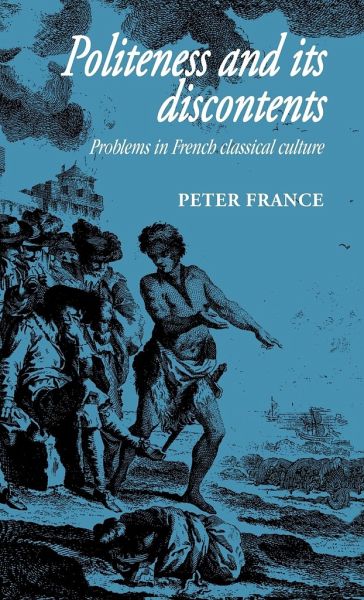
This is a 1992 study of writing of the seventeenth and eighteenth centuries, mainly in France, but also in Britain and Russia. Its focus is on the establishing and questioning of rational, 'civilized' norms of 'politeness', which in the ancien régime meant not just polite manners, but a certain ideal of society and culture. Within this general context, a series of familiar oppositions, between polite and rude, tame and wild, urban(e) and rustic, élite and popular, adult and child, reason and unreason, gives the initial impetus to enquiries which often show how these opposites interpenetrate, how hierarchies are reversed, and how compromises are sought. Polite society, like polite literature, needs and desires its opposite. The ideal is often the meeting of garden and wilderness, where the savage encounters the civilized and gifts are exchanged. Professor France points to the centrality, but also the vulnerability, in classical culture, of the ideal of 'politeness', and his discussion embraces revolutionary eloquence and enlightened primitivism, the value of hyperbole, and the essay as a form of polite sociability.