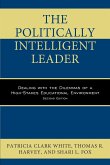
The Politically Intelligent Leader will help leaders at all levels understand how to operate ethically during politically volatile times and how to deal with the special groups that are unique to the educational setting - elected boards, citizen groups, unions, and volunteers. And when a political crisis arises, there's some advice on how to come out of it "alive."
The Politically Intelligent Leader will help leaders at all levels understand how to operate ethically during politically volatile times and how to deal with the special groups that are unique to the educational setting - elected boards, citizen groups, unions, and volunteers. And when a political crisis arises, there's some advice on how to come out of it "alive."
Patricia Clark White, Thomas R. Harvey, Shari L. Fox
Inhaltsangabe
Contents Preface Acknowledgements Part I: Developing Your Political Intelligence 1The Politically Intelligent Leader Defined This chapter defines the politically intelligent leader and discusses the importance of raising your PIQ. It explains the difference between internal and external politics, and shoots down some of the myths about politics. 2Blocks to Political Intelligence Ten things that block leaders from using their political intelligence are presented. Antidotes for each of them are discussed. 3Trust: The Heart of Effective Political Action Trust is defined and explored as the core of all political strategies. Presented are 10 strategies to build trusting relationships. Part II: Using Smart Political Strategies 4External Strategies Nineteen external political strategies are presented to be used by the politically intelligent leader who is dealing with situations outside the organization. 5Internal Strategies Eighteen local political strategies are described, which can enhance power and influence inside the organization. Part III: Understanding How to Work with Political Styles 6Understanding Your Own Political Style Through the use of an assessment instrument, The Inventory of Political Styles, which is included here, readers are able to analyze their own primary, secondary, and tertiary political styles. This chapter describes nine political styles and offers insights about how typical behaviors connected with each style can help or hinder the individual and the organization. 7Working Effectively with Other Political Styles The reader learns to analyze the political styles of other key players and to customize a set of strategies that tend to be persuasive with those of various styles. Part IV: Staying on an Ethical Course in Politically Charged Situations 8The Politically Ethical Leader Four Questions prompt reflection on ethical decisions in a political environment. 9Dealing with Special Public Sector Groups This chapter examines the unique political problems and strategies for dealing with unions and union leadership, elected boards and councils, volunteers, advisory groups, and foundations. 10The Machiavellian Leader If you have the misfortune of working with a Machiavellian leader, then you need to read this chapter thoroughly. In it we define such leadership and give you ways to cope with this style. 11Digging Your Way Out of a Political Hole Problems are examined that arise from digging yourself a political hole, and tips are offered on how to get yourself out of it. Part V: Pulling It All Together 12Practicing What We Preach Scenarios give the reader practice in using the strategies and ideas presented in the earlier chapters to become a politically intelligent leader. 13Questions: We Get Questions In this final chapter we answer the questions posed most often in our speaking engagements. Conclusion Appendix: Inventory of Political Styles References Index
Contents Preface Acknowledgements Part I: Developing Your Political Intelligence 1The Politically Intelligent Leader Defined This chapter defines the politically intelligent leader and discusses the importance of raising your PIQ. It explains the difference between internal and external politics, and shoots down some of the myths about politics. 2Blocks to Political Intelligence Ten things that block leaders from using their political intelligence are presented. Antidotes for each of them are discussed. 3Trust: The Heart of Effective Political Action Trust is defined and explored as the core of all political strategies. Presented are 10 strategies to build trusting relationships. Part II: Using Smart Political Strategies 4External Strategies Nineteen external political strategies are presented to be used by the politically intelligent leader who is dealing with situations outside the organization. 5Internal Strategies Eighteen local political strategies are described, which can enhance power and influence inside the organization. Part III: Understanding How to Work with Political Styles 6Understanding Your Own Political Style Through the use of an assessment instrument, The Inventory of Political Styles, which is included here, readers are able to analyze their own primary, secondary, and tertiary political styles. This chapter describes nine political styles and offers insights about how typical behaviors connected with each style can help or hinder the individual and the organization. 7Working Effectively with Other Political Styles The reader learns to analyze the political styles of other key players and to customize a set of strategies that tend to be persuasive with those of various styles. Part IV: Staying on an Ethical Course in Politically Charged Situations 8The Politically Ethical Leader Four Questions prompt reflection on ethical decisions in a political environment. 9Dealing with Special Public Sector Groups This chapter examines the unique political problems and strategies for dealing with unions and union leadership, elected boards and councils, volunteers, advisory groups, and foundations. 10The Machiavellian Leader If you have the misfortune of working with a Machiavellian leader, then you need to read this chapter thoroughly. In it we define such leadership and give you ways to cope with this style. 11Digging Your Way Out of a Political Hole Problems are examined that arise from digging yourself a political hole, and tips are offered on how to get yourself out of it. Part V: Pulling It All Together 12Practicing What We Preach Scenarios give the reader practice in using the strategies and ideas presented in the earlier chapters to become a politically intelligent leader. 13Questions: We Get Questions In this final chapter we answer the questions posed most often in our speaking engagements. Conclusion Appendix: Inventory of Political Styles References Index
Es gelten unsere Allgemeinen Geschäftsbedingungen: www.buecher.de/agb
Impressum
www.buecher.de ist ein Internetauftritt der buecher.de internetstores GmbH
Geschäftsführung: Monica Sawhney | Roland Kölbl | Günter Hilger
Sitz der Gesellschaft: Batheyer Straße 115 - 117, 58099 Hagen
Postanschrift: Bürgermeister-Wegele-Str. 12, 86167 Augsburg
Amtsgericht Hagen HRB 13257
Steuernummer: 321/5800/1497
USt-IdNr: DE450055826