

Andere Kunden interessierten sich auch für
 Civil Resistance Against Climate Change27,99 €
 Towards Efficient Regulation of Air Pollution from Coal-Fired Power Plants45,99 €
 Optimizing Abrasion Wear Resistance and Impact Toughness of White Iron47,99 €
 The Politics of the Climate Change-Health Nexus167,99 €
") Memoire Sur La Theorie De La Resistance Statique Et Dynamique Des Solides Surtout Aux Impulsions Comme Celles Du Tir Des Canons (1863)18,99 €
Memoire Sur La Theorie De La Resistance Statique Et Dynamique Des Solides Surtout Aux Impulsions Comme Celles Du Tir Des Canons (1863)18,99 € Réutilisation des déchets de barrages dans les travaux routières32,99 €
 Climate Change Justice and Global Resource Commons167,99 €

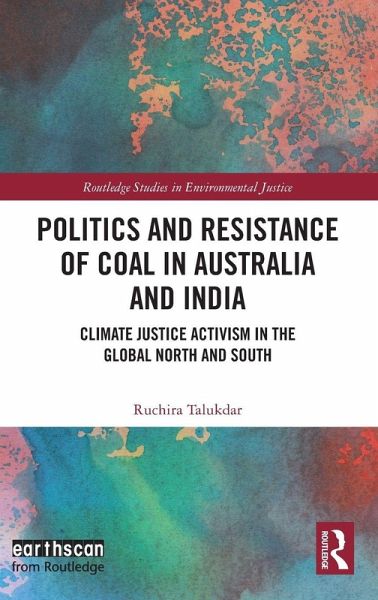
Since 2009, international climate activism has focused on stopping coalmining in solidarity with local and Indigenous struggles that are resisting coalmining. Based on ethnographic and historic research in Australia and India, this book compares the politics and resistance to coal in the two countries, particularly focusing on the time period between 2009 and 2018, and the case of the Carmichael coalmine in Queensland and the Mahan coalmine in central India.
This book shows differences and similarities in the political economy of coal and creates understanding about the significantly different imperatives and narratives of anti-coal environmentalism, in Australia and India. Through the Stop Adani movement and its collaboration with the Wangan and Jagalingou Traditional Owners and farmers against coalmining in Queensland, and Greenpeace and forest-based communities resisting coalmining in Madhya Pradesh, Ruchira Talukdar not only explores anti-coal movement dynamics but also how these movements grapple with the violation of Indigenous land rights through coal extraction, in both places. Drawing on differences and patterns in Australian and Indian anti-coal activisms, this book proposes a global outlook - an intersectional framework beyond the singularity of 'stopping coal' that can encapsulate visions for secure futures of communities on the frontlines of fossil fuel struggles - for climate activism. The conclusions help to decolonize climate activism as well as make it cognizant of global North-South contextual differences for effective solidarity.
The author's unique vantage point through experience in environmental activism over 20 years across Australia and India combined with research in both countries, makes this book a crucial resource for scholars and practitioners in just transition, climate politics and environmental activism across the global North and South.
This book shows differences and similarities in the political economy of coal and creates understanding about the significantly different imperatives and narratives of anti-coal environmentalism, in Australia and India. Through the Stop Adani movement and its collaboration with the Wangan and Jagalingou Traditional Owners and farmers against coalmining in Queensland, and Greenpeace and forest-based communities resisting coalmining in Madhya Pradesh, Ruchira Talukdar not only explores anti-coal movement dynamics but also how these movements grapple with the violation of Indigenous land rights through coal extraction, in both places. Drawing on differences and patterns in Australian and Indian anti-coal activisms, this book proposes a global outlook - an intersectional framework beyond the singularity of 'stopping coal' that can encapsulate visions for secure futures of communities on the frontlines of fossil fuel struggles - for climate activism. The conclusions help to decolonize climate activism as well as make it cognizant of global North-South contextual differences for effective solidarity.
The author's unique vantage point through experience in environmental activism over 20 years across Australia and India combined with research in both countries, makes this book a crucial resource for scholars and practitioners in just transition, climate politics and environmental activism across the global North and South.