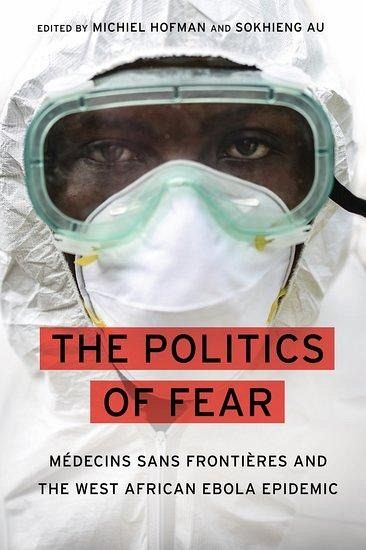
The 2014-2015 Ebola epidemic in West Africa was an unprecedented medical and political emergency that cast an unflattering light on multiple corners of government and international response. Fear, not rational planning, appeared to drive many decisions made at population and leadership levels, which in turn brought about a response that was as uneven as it was unprecedented: entire populations were decimated or destroyed, vaccine trials were fast-tracked, health staff died, untested medications were used (or not used) in controversial ways, humanitarian workers returned home to enforced…mehr
The 2014-2015 Ebola epidemic in West Africa was an unprecedented medical and political emergency that cast an unflattering light on multiple corners of government and international response. Fear, not rational planning, appeared to drive many decisions made at population and leadership levels, which in turn brought about a response that was as uneven as it was unprecedented: entire populations were decimated or destroyed, vaccine trials were fast-tracked, health staff died, untested medications were used (or not used) in controversial ways, humanitarian workers returned home to enforced isolation, and military was employed to sometimes disturbing ends. The epidemic revealed serious fault lines at all levels of theory and practice of global public health: national governments were shown to be helpless and unprepared for calamity at this scale; the World Health Organization was roundly condemned for its ineffectiveness; the US quietly created its own African CDC a year after the epidemic began. Amid such chaos, M�decins sans Fronti�res was forced to act with unprecdented autonomy -- and amid great criticism -- in responding to the disease, taking unprecedented steps in deploying services and advocating for international aid. The Politics of Fear provides a primary documentary resource for recounting and learning from the Ebola epidemic. Comprising eleven topic-based chapters and four eyewitness vignettes from both MSF- and non-MSF-affiliated contributors (all of whom have been given access to MSF Ebola archives from Guinea, Sierra Leone, and Liberia for research), it aims to provide a politically agnostic account of the defining health event of the 21st century so far, one that will hopefully inform current opinions and future responses.
Michiel Hofman worked on MSF field missions between 1993 and 1998 as Emergency Coordinator and Head of Mission in Liberia, DRC, Bosnia, Burundi, Sri Lanka, Brazil, South Sudan, and Kosovo, returning to his other career as freelance journalist between missions. Between 1999 and 2001, he co-founded the Antares Foundation, a Dutch non-profit organization that supports local NGOs in providing psycho-social support for staff working in high-stress environments. He returned to MSF in 2001 as Country Director in Russia, Operations Director in Amsterdam, and Country Director for Afghanistan. Since 2011 he has worked as senior humanitarian specialist for MSF based out of Belfast, concentrating on research, training, and operational support as well as publications in the humanitarian field. Sokhieng Au is a program staff member with the Advocacy and Analysis Unit of Médecins sans Frontières and a research fellow in the Cultural History since 1750 program at Katholieke Universiteit, Leuven, Belgium. She earned a PhD in history from University of California, Berkeley, and an MPH from the Johns Hopkins Bloomberg School of Public Health.
Inhaltsangabe
* Section I. Terms of Engagement * 1. Ebola: The failure of global health governance? * Claire Wenham * 2. MSF and the Military * Adia Benton * 3. Fear and solidarity in global health: Médecins Sans Frontières and the 2014 Ebola outbreak in West Africa * Joao Nunes * Section II. Systems and Actors * 4. Between mistrust and routine: epidemic management in Guinea, Mali, and Niger * Jean-François Caremel * 5. Roll out of and response to the epidemic: Impressions from the field perspective * Thomas Kratz * 6. Collateral effects of Ebola virus disease on the national health programs in Guinea, 2014 * Niouma Nestor Leno * Section III. Therapeutics * 7. Unproven humanitarian assistance: MSF and the ethics of using experimental vaccines and treatments during the Ebola epidemic * Annette Rid * 8. Z-Mapp for white people only * Timothy O'Dempsey * 9. Balancing patient care, epidemic containment, and risks of staff contamination * Armand Sprecher * Section IV. (Im)mobility * 10. Care or containment? Field practices and perceptions of norms for contact follow up * Alice Desclaux, Stéphane Doyon, Khoudia Sow, and Almudena Mari Saez * 11. Challenges of Instituting Effective 'Medevac' Policies * Duncan McLean
* Section I. Terms of Engagement * 1. Ebola: The failure of global health governance? * Claire Wenham * 2. MSF and the Military * Adia Benton * 3. Fear and solidarity in global health: Médecins Sans Frontières and the 2014 Ebola outbreak in West Africa * Joao Nunes * Section II. Systems and Actors * 4. Between mistrust and routine: epidemic management in Guinea, Mali, and Niger * Jean-François Caremel * 5. Roll out of and response to the epidemic: Impressions from the field perspective * Thomas Kratz * 6. Collateral effects of Ebola virus disease on the national health programs in Guinea, 2014 * Niouma Nestor Leno * Section III. Therapeutics * 7. Unproven humanitarian assistance: MSF and the ethics of using experimental vaccines and treatments during the Ebola epidemic * Annette Rid * 8. Z-Mapp for white people only * Timothy O'Dempsey * 9. Balancing patient care, epidemic containment, and risks of staff contamination * Armand Sprecher * Section IV. (Im)mobility * 10. Care or containment? Field practices and perceptions of norms for contact follow up * Alice Desclaux, Stéphane Doyon, Khoudia Sow, and Almudena Mari Saez * 11. Challenges of Instituting Effective 'Medevac' Policies * Duncan McLean
Es gelten unsere Allgemeinen Geschäftsbedingungen: www.buecher.de/agb
Impressum
www.buecher.de ist ein Internetauftritt der buecher.de internetstores GmbH
Geschäftsführung: Monica Sawhney | Roland Kölbl | Günter Hilger
Sitz der Gesellschaft: Batheyer Straße 115 - 117, 58099 Hagen
Postanschrift: Bürgermeister-Wegele-Str. 12, 86167 Augsburg
Amtsgericht Hagen HRB 13257
Steuernummer: 321/5800/1497
USt-IdNr: DE450055826