40,99 €
inkl. MwSt.
Versandkostenfrei*Erscheint vorauss. 25. Juni 2026
Melden Sie sich
hier
hier
für den Produktalarm an, um über die Verfügbarkeit des Produkts informiert zu werden.
oder sofort lesen als eBook

20 °P sammeln
Andere Kunden interessierten sich auch für
 Mediterranean Archaeologies of Insularity in an Age of Globalization50,99 €
 Antigone Rising14,99 €
 The Soul of the Far East15,99 €
 The Soul of the Indian18,99 €
 Essays in War-Time17,99 €
 Language of Social Casework46,99 €
 Intensive Culture61,99 €




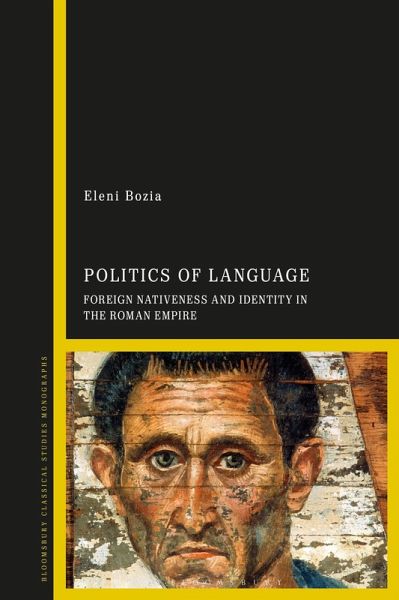
Examining the identity and belonging of native and non-native speakers of Greek during the time of the High Roman Empire, Eleni Bozia closely studies grammarians, lexicographers and literary writers who used Attic Greek. Bozia argues that transculturalism and translingualism created a new space for both the naturalised and native citizenry. In the act of imitating, emulating and recreating Attic Greek, speakers formed a socio-politically distinct and nuanced mode of expression in the social echelons of the Roman world. Additionally, this is the first book to explore Greek and Latin texts from both a philological and a computational linguistics perspective. The result is a consideration of how imitation and innovation affect the social positioning of native and bilingual speakers. As such, this combined reading of data derived from classical studies in conjunction with computational linguistics, offers the context of how to serve a new interpretation of our understanding and appreciation of identity.