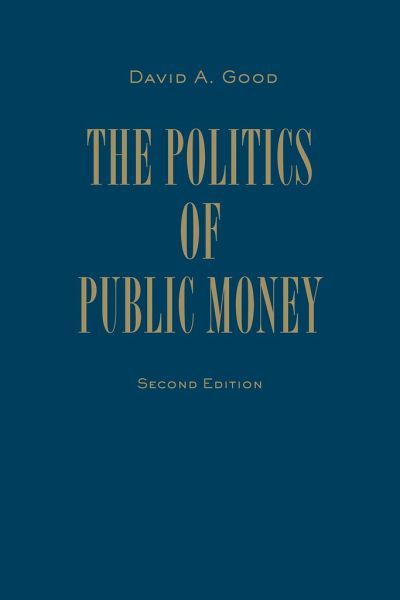
Public money is one of the primary currencies of influence for politicians and public servants. It affects the standards by which they undertake the nation’s business and impacts the standard of living of the nation’s citizens. David A. Good’s The Politics of Public Money examines the extent to which the Canadian federal budgetary process is shifting from one based on a bilateral relationship between departmental spenders and central guardians to one based on a more complex, multilateral relationship involving a variety of players. This new edition offers an up-to-date account of the Canadian…mehr
Public money is one of the primary currencies of influence for politicians and public servants. It affects the standards by which they undertake the nation’s business and impacts the standard of living of the nation’s citizens. David A. Good’s The Politics of Public Money examines the extent to which the Canadian federal budgetary process is shifting from one based on a bilateral relationship between departmental spenders and central guardians to one based on a more complex, multilateral relationship involving a variety of players. This new edition offers an up-to-date account of the Canadian system, including the creation of the Parliamentary Budget Officer, the government’s response to the global financial crisis, Canada’s Economic Action Plan, strategic and operating reviews, the most recent attempts to reform the Estimates, and much more. An insightful and incisive study of the changing budgetary process, The Politics of Public Money examines the promises and pitfalls of budgetary reform and sheds new light on the role insiders play in influencing government spending.
David A. Good is a professor in the School of Public Administration at the University of Victoria.
Inhaltsangabe
Foreword – Patrice Dutil Preface Introduction Part One: The Changing Politics of Public Money 1. Beyond Spenders and Guardians Spenders and Guardians From Old Village to New Town Beyond Spenders and Guardians Priority Setters Watchdogs Priority Setters and Watchdogs New Questions Part Two: The Public Money Players 2. The Guardians of the Changing Role of the Budget Office Guardians and Budget Functions Guardians and Budget Components Guardians and the Budgetary Process Different Guardians Guardians Diverging: ‘Let the Managers Manage … Come Hell or High Water’ Guardians and Central Reserves Guardians Apart 3. Why Spenders Keep Spending Getting Money Keeping Money Spending Money The Reciprocity of Expenditure Information and Expenditure Increases Priorities and Allocations, Not Performance and Allocations 4. The Priority Setters at the Centre The Centre The Most Important of all Relationships Priorities, Big and Small The Prime Minister’s Arms Priority Setters and Shift Points 5. The Watchdogs: Barks that Bite Building Credibility on Professionalism and Independence The Performance Audit: The Audit for All Reasons Mutual Expectations Watching Both Spenders and Guardians The Financial Watchdog and Internal Department Auditors The Watchdogs and Parliamentarians Indirect Influence, but Influence Part Three: The Public Money Processes 6. Fiscal Aggregates: Controlling Totals Credibility and Uncertainty The Prudent Economic and Fiscal Outlook The Prudent Fiscal Framework: Achieving Achievable Targets Economic Stimulus The Elastic Fiscal Dividend Prudence and Its Consequences Exposing the Fiscal Framework Containing Aggregates by Making Allocations 7. Budget Allocations Allocations Types The Big Fixes The Big-Ticket Items The Must Dos Small Budget Items Tax Expenditures Reductions Reallocations Budget Allocations Are Incremental 8. Budget Implementation: Financial Management and Efficiency On Paper Successfully Implementing the Economic Action Plan The First Line of Defence Victims of Conflicting Norms: The Chief Financial Officer The Second Line of Defence Victims of the Intractability of Cultural Change: The Comptroller General On Becoming Players Part Four: New Prospects for Public Money 9. Parliament and Public Money Parliament as Watchdog Shaping Government Spending: The Commons Finance Committee Approving Government Spending: The Business of Supply Holding Government Accountable for Spending: The Public Accounts Committee Realism and Reform 10. Budget Reforms Budgets and Reforms ‘Rational’ Reform: The Road to Program Budgeting (pre-1962-78) The Grand Design: Policy and Expenditure Management System (1979-83) Incremental and Continuous Change (1984-93) Program Review and Prudent Budgeting (1994-2003) ‘A Continuous Culture of Reallocation’ (2004-6) Strengthening the Watchdogs: The Federal Accountability Act (2006-8) Recalibration: Strategic and Operating Review (2007 and onward) Reflections on Reforms 11. Doing Better with Public Money? Theory and Practice Reactive, but with Some Resilience The Uneasy Balance of Competing Budgetary Objectives Establish an Expenditure Review Committee of Cabinet Restore a Treasury Board Secretariat Role in Expenditure Review and Allocation Link Priorities, Expenditure Programs, and Performance Institutionalize the Role of the Parliamentary Budget Officer The Politics of Public Money Notes Index
Foreword – Patrice Dutil Preface Introduction Part One: The Changing Politics of Public Money 1. Beyond Spenders and Guardians Spenders and Guardians From Old Village to New Town Beyond Spenders and Guardians Priority Setters Watchdogs Priority Setters and Watchdogs New Questions Part Two: The Public Money Players 2. The Guardians of the Changing Role of the Budget Office Guardians and Budget Functions Guardians and Budget Components Guardians and the Budgetary Process Different Guardians Guardians Diverging: ‘Let the Managers Manage … Come Hell or High Water’ Guardians and Central Reserves Guardians Apart 3. Why Spenders Keep Spending Getting Money Keeping Money Spending Money The Reciprocity of Expenditure Information and Expenditure Increases Priorities and Allocations, Not Performance and Allocations 4. The Priority Setters at the Centre The Centre The Most Important of all Relationships Priorities, Big and Small The Prime Minister’s Arms Priority Setters and Shift Points 5. The Watchdogs: Barks that Bite Building Credibility on Professionalism and Independence The Performance Audit: The Audit for All Reasons Mutual Expectations Watching Both Spenders and Guardians The Financial Watchdog and Internal Department Auditors The Watchdogs and Parliamentarians Indirect Influence, but Influence Part Three: The Public Money Processes 6. Fiscal Aggregates: Controlling Totals Credibility and Uncertainty The Prudent Economic and Fiscal Outlook The Prudent Fiscal Framework: Achieving Achievable Targets Economic Stimulus The Elastic Fiscal Dividend Prudence and Its Consequences Exposing the Fiscal Framework Containing Aggregates by Making Allocations 7. Budget Allocations Allocations Types The Big Fixes The Big-Ticket Items The Must Dos Small Budget Items Tax Expenditures Reductions Reallocations Budget Allocations Are Incremental 8. Budget Implementation: Financial Management and Efficiency On Paper Successfully Implementing the Economic Action Plan The First Line of Defence Victims of Conflicting Norms: The Chief Financial Officer The Second Line of Defence Victims of the Intractability of Cultural Change: The Comptroller General On Becoming Players Part Four: New Prospects for Public Money 9. Parliament and Public Money Parliament as Watchdog Shaping Government Spending: The Commons Finance Committee Approving Government Spending: The Business of Supply Holding Government Accountable for Spending: The Public Accounts Committee Realism and Reform 10. Budget Reforms Budgets and Reforms ‘Rational’ Reform: The Road to Program Budgeting (pre-1962-78) The Grand Design: Policy and Expenditure Management System (1979-83) Incremental and Continuous Change (1984-93) Program Review and Prudent Budgeting (1994-2003) ‘A Continuous Culture of Reallocation’ (2004-6) Strengthening the Watchdogs: The Federal Accountability Act (2006-8) Recalibration: Strategic and Operating Review (2007 and onward) Reflections on Reforms 11. Doing Better with Public Money? Theory and Practice Reactive, but with Some Resilience The Uneasy Balance of Competing Budgetary Objectives Establish an Expenditure Review Committee of Cabinet Restore a Treasury Board Secretariat Role in Expenditure Review and Allocation Link Priorities, Expenditure Programs, and Performance Institutionalize the Role of the Parliamentary Budget Officer The Politics of Public Money Notes Index
Es gelten unsere Allgemeinen Geschäftsbedingungen: www.buecher.de/agb
Impressum
www.buecher.de ist ein Internetauftritt der buecher.de internetstores GmbH
Geschäftsführung: Monica Sawhney | Roland Kölbl | Günter Hilger
Sitz der Gesellschaft: Batheyer Straße 115 - 117, 58099 Hagen
Postanschrift: Bürgermeister-Wegele-Str. 12, 86167 Augsburg
Amtsgericht Hagen HRB 13257
Steuernummer: 321/5800/1497
USt-IdNr: DE450055826