
Andere Kunden interessierten sich auch für
 Top-Down Democracy in South Korea102,99 €
 Christian Mission in Seventeenth-Century Taiwan189,99 €
 How Three Kingdoms Became a National Novel of Korea120,99 €
 Mirzā ʿali-Qoli Khoʾi: The Master Illustrator of Persian Lithographed Books in the Qajar Period. Vol. 2183,99 €
 Mirzā ʿali-Qoli Khoʾi: The Master Illustrator of Persian Lithographed Books in the Qajar Period. Vol. 1183,99 €
 Ottoman Jewry112,99 €
") Qing Imperial Illustrations of Tributary Peoples (Huang Qing Zhigong Tu)244,99 €
Qing Imperial Illustrations of Tributary Peoples (Huang Qing Zhigong Tu)244,99 €
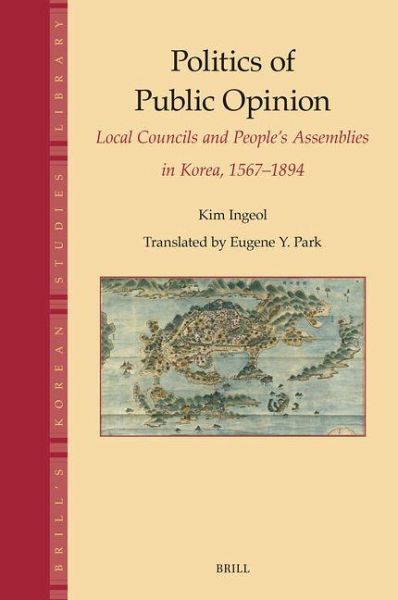
Eugene Y. Park's annotated translation of a long-awaited book by Kim Ingeol introduces Anglophone readers to a path-breaking scholarship on the widening social base of political actors who shaped "public opinion" ( kongnon) in early modern Korea. Initially limited to high officials, the articulators of public opinion as the state and elites recognized grew in number to include mid-level civil officials, State Confucian College students, all Confucian literati (yurim), influential commoners who took over local councils (hyanghoe), and the general population. Marshaling evidence from a wealth of documents, Kim presents a compelling case for the indigenous origins of Korean democracy.