
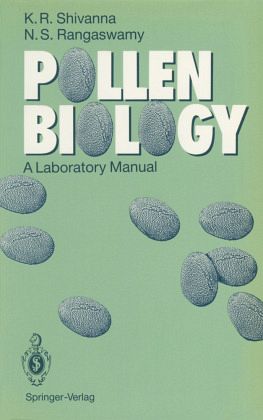
- Broschiertes Buch
- Merkliste
- Auf die Merkliste
- Bewerten Bewerten
- Teilen
- Produkt teilen
- Produkterinnerung
- Produkterinnerung
Jeder, der mit Pollen umgeht - sei es als Student biologischer oder landwirtschaftlicher Praktika, in der Forschung oder biotechnologischen Anwendung, Landwirtschaft und Pflanzenzüchtung oder in der Ökotoxikologie und Allergologie - wird diese übersichtliche Anleitung zu den Standardmethoden der Pollenbiologie äußerst hilfreich finden.
Andere Kunden interessierten sich auch für
 Joseph DiStefano IIIDynamic Systems Biology Modeling and Simulation75,99 €
 Rainer FlindtAmazing Numbers in Biology75,99 €
 Werner KrabsModelling, Analysis and Optimization of Biosystems113,99 €
 James W. HaefnerModeling Biological Systems:121,99 €
 Alan H. FieldingCluster and Classification Techniques for the Biosciences48,99 €
 Michael L. MorrisonWildlife Study Design76,99 €
 Reviews in Fluorescence 2005151,99 €
-
-
-


Jeder, der mit Pollen umgeht - sei es als Student biologischer oder landwirtschaftlicher Praktika, in der Forschung oder biotechnologischen Anwendung, Landwirtschaft und Pflanzenzüchtung oder in der Ökotoxikologie und Allergologie - wird diese übersichtliche Anleitung zu den Standardmethoden der Pollenbiologie äußerst hilfreich finden.
Produktdetails
- Produktdetails
- Verlag: Springer / Springer Berlin Heidelberg / Springer, Berlin
- Artikelnr. des Verlages: 978-3-540-55170-6
- 1992.
- Seitenzahl: 132
- Erscheinungstermin: 22. Juli 1992
- Englisch
- Abmessung: 235mm x 155mm x 8mm
- Gewicht: 221g
- ISBN-13: 9783540551706
- ISBN-10: 3540551700
- Artikelnr.: 26728641
- Herstellerkennzeichnung
- Springer-Verlag KG
- Sachsenplatz 4-6
- 1201 Wien, AT
- ProductSafety@springernature.com
- Verlag: Springer / Springer Berlin Heidelberg / Springer, Berlin
- Artikelnr. des Verlages: 978-3-540-55170-6
- 1992.
- Seitenzahl: 132
- Erscheinungstermin: 22. Juli 1992
- Englisch
- Abmessung: 235mm x 155mm x 8mm
- Gewicht: 221g
- ISBN-13: 9783540551706
- ISBN-10: 3540551700
- Artikelnr.: 26728641
- Herstellerkennzeichnung
- Springer-Verlag KG
- Sachsenplatz 4-6
- 1201 Wien, AT
- ProductSafety@springernature.com
K.R. Shivanna, formerly Professor and Head, Department of Botany, University of Delhi is now associated with Ashoka Trust for Research in Ecology and the Environment, Bangalore as INSA Honorary Scientist and Honorary Senior Fellow. He has been doing research on reproductive biology of flowering plants for over 50 years. He has published over 150 original research papers in refereed journals and authored/edited five books on pollen biology and biotechnology. He has worked at the Royal Botanic Gardens, Kew, UK, Welsh Plant Breeding Station, Wales, UK, University of Melbourne, Australia, University of Siena, Italy and University of Saskatchewan, Saskatoon, Canada as a Visiting Scientist/Professor. He is a recipient of many awards including Panchanan Maheshwari Medal, and a Fellow of the Indian National Science Academy, Indian Academy of Sciences, National Academy of Agricultural Sciences and National Academy of Sciences, India. Rajesh Tandon is currently working as Associate Professor at Department of Botany in University of Delhi. He did his Ph.D. in 1998 from the University of Delhi. Since then he has been teaching and conducting research at the Department of Botany, University of Delhi, and his research interests have been plant reproduction, developmental biology and conservation biology. He has published over 30 research papers in reputed international journals and contributed chapters to several books. He is a recipient of Dr Y.S. Murthy Young Scientist Award by the Indian Botanical Society.
1 Introduction.- 2 Pollen Collection.- 3 In Vitro Germination Methods.- Controlled Hydration/Prehydration.- Culture Medium.- Fixation of Pollen Cultures.- Scoring of Pollen Cultures.- General Precautions.- Methods.- Exercise 1 Hanging Drop Culture.- Exercise 2 Sitting Drop Culture.- Exercise 3 Suspension Culture.- Exercise 4 Surface Culture.- Exercise 5 Estimation of Pollen Tube Growth by the Alcian Blue Method.- 4 Pollen Germination and Pollen Tube Growth in Vitro.- Exercise 6 Effects of Boron and Calcium on Pollen Germination and Pollen Tube Growth.- Exercise 7 Leaching of Pollen Substances in Vitro.- Exercise 8 Regulation of pH by Pollen Leachate.- Exercise 9 Role of Transcription and Translation in Pollen Germination and Pollen Tube Growth.- 5 Tests for Pollen Viability.- Exercise 10 In Vitro Germination Test.- Exercise 11 Tetrazolium Test.- Exercise 12 Fluorochromatic Reaction (FCR) Test.- Exercise 13 Fruit Set and Seed Set Test.- Exercise 14 In Vivo Germination and Pollen Tube Growth.- 6 Pollen Storage.- Exercise 15 Effects of Temperature and RH on Viability of Stored Pollen.- Exercise 16 Storage of Pollen Grains in Organic Solvents.- 7 Pollen-Pistil Interaction.- Exercise 17 Cytochemical Localization of Esterases on Stigma Surface.- Exercise 18 Aniline Blue Fluorescence Method to Study Pollen Germination and Pollen Tube Growth in the Pistil.- Exercise 19 Multiple Staining for Localizing Pollen Tubes in the Pistil.- Exercise 20 Semi-Vivo Technique to Study Pollen Germination and Pollen Tube Growth.- Exercise 21 Use of DNA Fluorochromes for Studies on Pollen Grain and Pollen Tube Nuclei.- Exercise 22 Controlled Pollinations.- 8 Self-Incompatibility.- Exercise 23 Confirmation of Self-Incompatibility.- Exercise 24 Studies on Heteromorphic Self-Incompatibility.- Exercise 25 Bud Pollination and Delayed Pollination to Overcome Self-Incompatibility.- Exercise 26 In Vitro Placental Pollination and Fertilization.- 9 Isolation of Protoplasts.- Exercise 27 Isolation of Microspore Protoplasts.- Exercise 28 Isolation of Protoplasts from Pollen Grains.- Exercise 29 Isolation of Sperm Cells (Male Gametes).- Exercise 30 Isolation of Embryo Sacs and Protoplasts from Embryo Sacs.- 10 Appendices.- Appendix 1 Basic Requirements for Laboratory Exercises.- Appendix 2 Suitable Plant Systems.- Appendix 3 Pollen Morphology.- Appendix 4 Pollen Counts.- Appendix 5 Methods to Obtain Constant Relative Humidity.- Appendix 6 Principles of Fluorescence Microscopy.- Appendix 7 Commonly Used Fluorochromes, and Their Excitation and Fluorescence Ranges.- Appendix 8 Filter Combinations Commonly Used for Different Excitation Ranges.- Appendix 9 Basic Statistical Analyses.- References.
1 Introduction.- 2 Pollen Collection.- 3 In Vitro Germination Methods.- Controlled Hydration/Prehydration.- Culture Medium.- Fixation of Pollen Cultures.- Scoring of Pollen Cultures.- General Precautions.- Methods.- Exercise 1 Hanging Drop Culture.- Exercise 2 Sitting Drop Culture.- Exercise 3 Suspension Culture.- Exercise 4 Surface Culture.- Exercise 5 Estimation of Pollen Tube Growth by the Alcian Blue Method.- 4 Pollen Germination and Pollen Tube Growth in Vitro.- Exercise 6 Effects of Boron and Calcium on Pollen Germination and Pollen Tube Growth.- Exercise 7 Leaching of Pollen Substances in Vitro.- Exercise 8 Regulation of pH by Pollen Leachate.- Exercise 9 Role of Transcription and Translation in Pollen Germination and Pollen Tube Growth.- 5 Tests for Pollen Viability.- Exercise 10 In Vitro Germination Test.- Exercise 11 Tetrazolium Test.- Exercise 12 Fluorochromatic Reaction (FCR) Test.- Exercise 13 Fruit Set and Seed Set Test.- Exercise 14 In Vivo Germination and Pollen Tube Growth.- 6 Pollen Storage.- Exercise 15 Effects of Temperature and RH on Viability of Stored Pollen.- Exercise 16 Storage of Pollen Grains in Organic Solvents.- 7 Pollen-Pistil Interaction.- Exercise 17 Cytochemical Localization of Esterases on Stigma Surface.- Exercise 18 Aniline Blue Fluorescence Method to Study Pollen Germination and Pollen Tube Growth in the Pistil.- Exercise 19 Multiple Staining for Localizing Pollen Tubes in the Pistil.- Exercise 20 Semi-Vivo Technique to Study Pollen Germination and Pollen Tube Growth.- Exercise 21 Use of DNA Fluorochromes for Studies on Pollen Grain and Pollen Tube Nuclei.- Exercise 22 Controlled Pollinations.- 8 Self-Incompatibility.- Exercise 23 Confirmation of Self-Incompatibility.- Exercise 24 Studies on Heteromorphic Self-Incompatibility.- Exercise 25 Bud Pollination and Delayed Pollination to Overcome Self-Incompatibility.- Exercise 26 In Vitro Placental Pollination and Fertilization.- 9 Isolation of Protoplasts.- Exercise 27 Isolation of Microspore Protoplasts.- Exercise 28 Isolation of Protoplasts from Pollen Grains.- Exercise 29 Isolation of Sperm Cells (Male Gametes).- Exercise 30 Isolation of Embryo Sacs and Protoplasts from Embryo Sacs.- 10 Appendices.- Appendix 1 Basic Requirements for Laboratory Exercises.- Appendix 2 Suitable Plant Systems.- Appendix 3 Pollen Morphology.- Appendix 4 Pollen Counts.- Appendix 5 Methods to Obtain Constant Relative Humidity.- Appendix 6 Principles of Fluorescence Microscopy.- Appendix 7 Commonly Used Fluorochromes, and Their Excitation and Fluorescence Ranges.- Appendix 8 Filter Combinations Commonly Used for Different Excitation Ranges.- Appendix 9 Basic Statistical Analyses.- References.