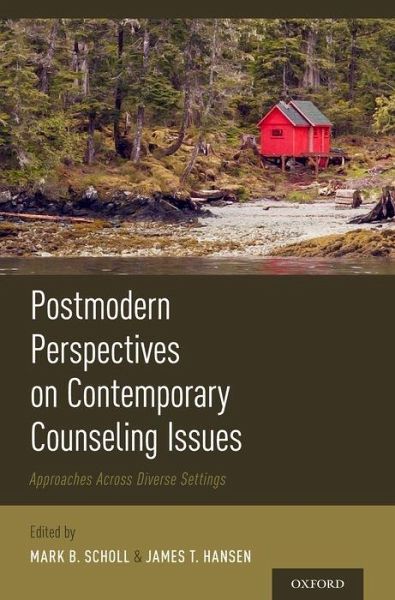
Postmodernism is one of the most revolutionary and transformative ideological movements to emerge in the history of counseling and psychotherapy. However, descriptions of postmodernism are often abstract and philosophical, thereby making it difficult for practitioners to discern concrete ways that the ideology might enrich their ability to help clients. In Postmodern Perspectives on Contemporary Counseling Issues, contributions from expert scholars and practitioners clearly detail the implications of postmodern ideology for counseling practice. Contemporary issues such as trauma, addiction,…mehr
Postmodernism is one of the most revolutionary and transformative ideological movements to emerge in the history of counseling and psychotherapy. However, descriptions of postmodernism are often abstract and philosophical, thereby making it difficult for practitioners to discern concrete ways that the ideology might enrich their ability to help clients. In Postmodern Perspectives on Contemporary Counseling Issues, contributions from expert scholars and practitioners clearly detail the implications of postmodern ideology for counseling practice. Contemporary issues such as trauma, addiction, social justice advocacy, couples counseling, and education are conceptualized within a postmodern context, and creative treatment options are illustrated with numerous case examples. Although the broad, conceptual details of postmodernism are reviewed, the primary focus of this text is on innovative ways to help clients with solution-focused, narrative, and other postmodern approaches. The rich descriptions of the implementation of postmodern approaches and techniques make it an invaluable training tool for supervisors and counselor educators. The book is also ideal for counselors, psychotherapists, and other helping professionals who would like to bolster and enliven their practice with cutting-edge methods, tools, and techniques derived from postmodern ideology.
Mark B. Scholl, PhD, MEd, is an Associate Professor in the Department of Counseling at Wake Forest University. He is a past two-term Editor of The Journal of Humanistic Counseling and Past President of the Association for Humanistic Counseling (AHC). His research interests include constructivist career counseling, counselor identity development, and the counseling needs of community ex-offenders. In 2017 he began a three-year term as AHC's ACA Governing Council Representative. James T. Hansen, PhD, MA, is a Professor in the Department of Counseling at Oakland University. His primary scholarly interests are philosophical and theoretical issues in counseling and critical examination of contemporary mental health culture. Dr. Hansen has published over fifty articles in leading counseling journals and several books. Two of his books have won awards for their contributions to humanistic philosophy in counseling. Dr. Hansen has over twenty-five years of experience as a practitioner, supervisor, and consultant.
Inhaltsangabe
* Introduction * Chapter 1 - Introduction to Postmodern Perspectives on Contemporary Counseling Issues * By James T. Hansen and Mark B. Scholl * Section I: Solution-Focused Therapy * Introduction to Solution-Focused Therapy * Chapter 2 - Solution-Focused Counseling with Adolescent Survivors of Sexual Abuse * By Michelle Hinkle and Caroline Perjessy * Chapter 3 - Solution-Focused Approaches in the Treatment of Substance Addiction * By Todd F. Lewis * Section II: Narrative Therapy * Introduction to Narrative Therapy * Chapter 4 - Sacred Privilege: Using Narrative Reconstruction as a Postmodern Approach with Grieving Children and Adolescents * By Laura Wheat and Peggy Whiting * Chapter 5 - Postmodern Perspectives on Contemporary Counseling Issues: Re-storying the Survivor Narrative with Sexually Abused Adolescents * By Jane M. Webber and J. Barry Mascari * Section III: Other Postmodern Therapeutic Models * Introduction to Other Postmodern Therapeutic Models * Chapter 6 - Acceptance, Empowerment, and Meaning: A Collaborative Therapy Approach for College-age Clients Struggling with Eating Disorder Symptoms * By Juleen K. Buser * Chapter 7 - The Practice of Possibilities: Using Dialectical Humanism to Help Clients with Sexual Concerns * By Megan Speciale and Matthew Lemberger * Chapter 8 - Counselor-Advocate-Scholar Model: A Postmodern Approach to Social Justice Counseling * By Manivong Ratts * Section IV: Integrative Postmodern Therapeutic Models * Introduction to Integrative Postmodern Therapeutic Models * Chapter 9 - Career Support Workshop Series: A Postmodern Counseling Intervention Designed for the Ex-Offender Population * By Mark B. Scholl, Jason Perry, Brian Calhoun, and Heidi Robinson * Chapter 10 - Integrating Emerging Understandings of Neuropsychology and Affect for Narrative Therapy with Couples * By Gerald Monk and Navid J. Zamani * Chapter 11 - Obscuring Masculine Truths: A Postmodern, Clinical Framework for Counseling Men * By Adam M. Clevenger and Corina Maria Teofilo Mattson * Section V: Counselor Education from a Postmodern Perspective * Introduction to Counselor Education from a Postmodern Perspective * Chapter 12 - Counselor Education from a Postmodern Perspective: Empowering Students * By Colette T. Dollarhide, Allisha Berendts, Todd A. Gibbs, Sean A. Gorby, and J. P. Oehrtman * Epilogue * By Mark B. Scholl and James T. Hansen * Author Index * Subject Index
* Introduction * Chapter 1 - Introduction to Postmodern Perspectives on Contemporary Counseling Issues * By James T. Hansen and Mark B. Scholl * Section I: Solution-Focused Therapy * Introduction to Solution-Focused Therapy * Chapter 2 - Solution-Focused Counseling with Adolescent Survivors of Sexual Abuse * By Michelle Hinkle and Caroline Perjessy * Chapter 3 - Solution-Focused Approaches in the Treatment of Substance Addiction * By Todd F. Lewis * Section II: Narrative Therapy * Introduction to Narrative Therapy * Chapter 4 - Sacred Privilege: Using Narrative Reconstruction as a Postmodern Approach with Grieving Children and Adolescents * By Laura Wheat and Peggy Whiting * Chapter 5 - Postmodern Perspectives on Contemporary Counseling Issues: Re-storying the Survivor Narrative with Sexually Abused Adolescents * By Jane M. Webber and J. Barry Mascari * Section III: Other Postmodern Therapeutic Models * Introduction to Other Postmodern Therapeutic Models * Chapter 6 - Acceptance, Empowerment, and Meaning: A Collaborative Therapy Approach for College-age Clients Struggling with Eating Disorder Symptoms * By Juleen K. Buser * Chapter 7 - The Practice of Possibilities: Using Dialectical Humanism to Help Clients with Sexual Concerns * By Megan Speciale and Matthew Lemberger * Chapter 8 - Counselor-Advocate-Scholar Model: A Postmodern Approach to Social Justice Counseling * By Manivong Ratts * Section IV: Integrative Postmodern Therapeutic Models * Introduction to Integrative Postmodern Therapeutic Models * Chapter 9 - Career Support Workshop Series: A Postmodern Counseling Intervention Designed for the Ex-Offender Population * By Mark B. Scholl, Jason Perry, Brian Calhoun, and Heidi Robinson * Chapter 10 - Integrating Emerging Understandings of Neuropsychology and Affect for Narrative Therapy with Couples * By Gerald Monk and Navid J. Zamani * Chapter 11 - Obscuring Masculine Truths: A Postmodern, Clinical Framework for Counseling Men * By Adam M. Clevenger and Corina Maria Teofilo Mattson * Section V: Counselor Education from a Postmodern Perspective * Introduction to Counselor Education from a Postmodern Perspective * Chapter 12 - Counselor Education from a Postmodern Perspective: Empowering Students * By Colette T. Dollarhide, Allisha Berendts, Todd A. Gibbs, Sean A. Gorby, and J. P. Oehrtman * Epilogue * By Mark B. Scholl and James T. Hansen * Author Index * Subject Index
Es gelten unsere Allgemeinen Geschäftsbedingungen: www.buecher.de/agb
Impressum
www.buecher.de ist ein Internetauftritt der buecher.de internetstores GmbH
Geschäftsführung: Monica Sawhney | Roland Kölbl | Günter Hilger
Sitz der Gesellschaft: Batheyer Straße 115 - 117, 58099 Hagen
Postanschrift: Bürgermeister-Wegele-Str. 12, 86167 Augsburg
Amtsgericht Hagen HRB 13257
Steuernummer: 321/5800/1497
USt-IdNr: DE450055826