
Andere Kunden interessierten sich auch für
 Understanding Poverty171,99 €
 An Accident of Geography: Compassion, Innovation and the Fight Against Poverty18,99 €
 Financialisation and Poverty Alleviation in Ghana192,99 €
 Industrial Development and Poverty Reduction. A Case Study of Pakistan42,95 €
 Understanding Mainland Puerto Rican Poverty76,99 €
 Crisis, Inequalities and Poverty159,99 €
 Household Behaviour, Prices, and Welfare76,99 €
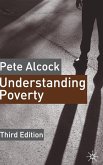

Using newly-available data on all 27 EU member states, this book combines a focus on multidimensionality with a comparative approach to survey the role of non-monetary indicators of deprivation. It shows how poverty varies across countries and over time, who is affected, and which groups should be targeted in framing anti-poverty strategies.
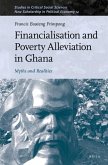
Research on poverty in rich countries relies primarily on household income to capture living standards and distinguish those in poverty, and this is also true of official poverty measurement and monitoring. However, awareness of the limitations of income has been heightening interest in the role that non-monetary measures of deprivation can play. This book takes as starting-point that research on poverty and social exclusion has been undergoing a fundamental shift towards a multidimensional approach; that researchers and policy-makers alike have struggled to develop concepts and indicators that do this approach justice; and that this is highly salient not only within individual countries (including both Britain and the USA) but also for the European Union post-enlargement. The difficulties encountered in applying a multidimensional approach reflect limitations in the information available but also in the conceptual and empirical underpinnings provided by existing research.
Research on poverty in rich countries relies primarily on household income to capture living standards and distinguish those in poverty, and this is also true of official poverty measurement and monitoring. However, awareness of the limitations of income has been heightening interest in the role that non-monetary measures of deprivation can play. This book takes as starting-point that research on poverty and social exclusion has been undergoing a fundamental shift towards a multidimensional approach; that researchers and policy-makers alike have struggled to develop concepts and indicators that do this approach justice; and that this is highly salient not only within individual countries (including both Britain and the USA) but also for the European Union post-enlargement. The difficulties encountered in applying a multidimensional approach reflect limitations in the information available but also in the conceptual and empirical underpinnings provided by existing research.