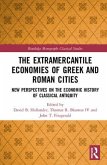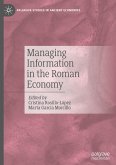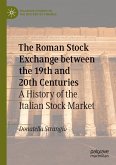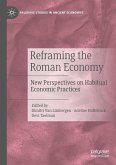
If poor individuals have always been with us, societies have not always seen the poor as a distinct social group. But within the Roman world, from at least the Late Republic onwards, the poor were an important force in social and political life and how to treat the poor was a topic of philosophical as well as political discussion. This book explains what poverty meant in antiquity, and why the poor came to be an important group in the Roman world, and it explores the issues which poverty and the poor raised for Roman society and for Roman writers. In essays which range widely in space and time…mehr
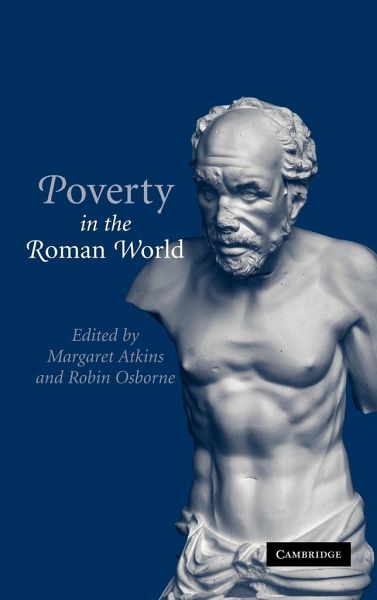
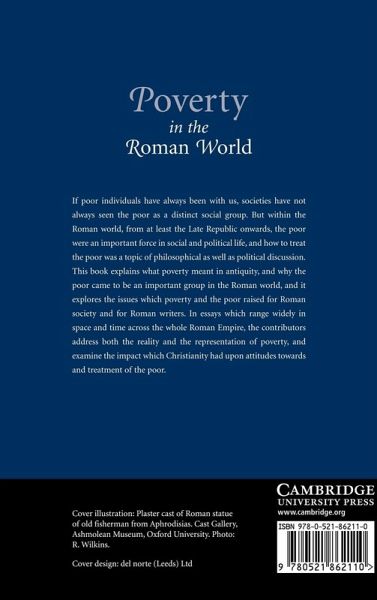
If poor individuals have always been with us, societies have not always seen the poor as a distinct social group. But within the Roman world, from at least the Late Republic onwards, the poor were an important force in social and political life and how to treat the poor was a topic of philosophical as well as political discussion. This book explains what poverty meant in antiquity, and why the poor came to be an important group in the Roman world, and it explores the issues which poverty and the poor raised for Roman society and for Roman writers. In essays which range widely in space and time across the whole Roman Empire, the contributors address both the reality and the representation of poverty, and examine the impact which Christianity had upon attitudes towards and treatment of the poor.
Margaret Atkins is a Senior Research Fellow at Blackfriars Hall, Oxford. She was previously Senior Lecturer in Theology at Trinity and All Saints College, Leeds. She has published with Cambridge University Press translations of Cicero's De Officiis, Augustine's political writings and Aquinas' Disputed Questions on the Virtues. Robin Osborne is Professor of Ancient History at the University of Cambridge and a Fellow of King's College. His numerous publications include Greece in the Making (1996), Archaic and Classical Greek Art (1998), Performance Culture and Athenian Democracy (1999, edited with Simon Goldhill) and Greek Historical Inscriptions from the End of the Peloponnesian War to the Death of Alexander (2003, edited with P. J. Rhodes).
Inhaltsangabe
1. Introduction: Roman poverty in context Robin Osborne 2. The poor in the city of Rome Neville Morley 3. Stratification, deprivation and quality of life Walter Scheidel 4. 'You do him no service': an exploration of pagan almsgiving Anneliese Parkin 5. Writing poverty in Rome Greg Woolf 6. Population and poverty in Roman Egypt Dominic Rathbone 7. A pragmatic approach to poverty and riches: Ambrosiaster's Quaestio CXXIV Sophie Lunn-Rockliffe 8. Portraying the poor: descriptions of poverty in Christian texts from the Late Roman Empire Richard Finn 9. Throwing parties for the poor: poverty and splendour in the late antique Church Lucy Grig 10. Rhetoric and reality in Salvian of Marseille's portrayal of the poor Cam Grey 11. Poverty and Roman law Caroline Humfress Bibliography Index.
Es gelten unsere Allgemeinen Geschäftsbedingungen: www.buecher.de/agb
Impressum
www.buecher.de ist ein Internetauftritt der buecher.de internetstores GmbH
Geschäftsführung: Monica Sawhney | Roland Kölbl | Günter Hilger
Sitz der Gesellschaft: Batheyer Straße 115 - 117, 58099 Hagen
Postanschrift: Bürgermeister-Wegele-Str. 12, 86167 Augsburg
Amtsgericht Hagen HRB 13257
Steuernummer: 321/5800/1497
USt-IdNr: DE450055826