E. A. Wrigley
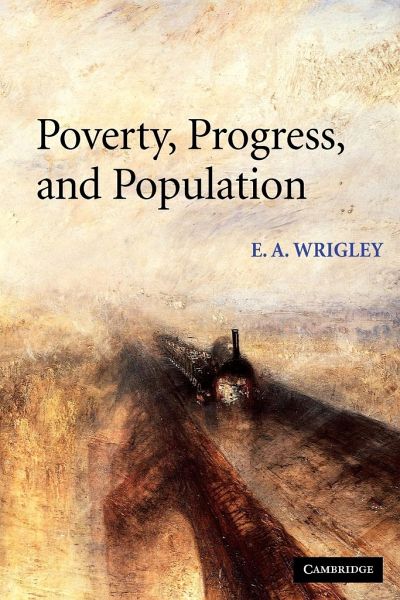
Poverty, Progress, and Population
E. A. Wrigley
Poverty, Progress, and Population
- Broschiertes Buch
- Merkliste
- Auf die Merkliste
- Bewerten Bewerten
- Teilen
- Produkt teilen
- Produkterinnerung
- Produkterinnerung
Definitive account of England's transformation through industrial revolution, from one of the nation's leading historians.
Andere Kunden interessierten sich auch für
E. A. WrigleyEnglish Population History from Family Reconstitution 1580 183742,99 €
E. A. WrigleyNineteenth Century Society65,99 €
David AbulafiaThe Two Italies32,99 €
F. Donald LoganRunaway Religious in Medieval England, C.1240 154050,99 €
Jesus CruzGentlemen, Bourgeois, and Revolutionaries45,99 €
Francis HillGeorgian Lincoln47,99 €
A. J. BlackMonarchy and Community45,99 €-
-
-
Definitive account of England's transformation through industrial revolution, from one of the nation's leading historians.
Produktdetails
- Produktdetails
- Verlag: Cambridge University Press
- Seitenzahl: 478
- Erscheinungstermin: 1. Dezember 2010
- Englisch
- Abmessung: 229mm x 152mm x 28mm
- Gewicht: 770g
- ISBN-13: 9780521529747
- ISBN-10: 0521529743
- Artikelnr.: 23241160
- Herstellerkennzeichnung
- Libri GmbH
- Europaallee 1
- 36244 Bad Hersfeld
- gpsr@libri.de
- Verlag: Cambridge University Press
- Seitenzahl: 478
- Erscheinungstermin: 1. Dezember 2010
- Englisch
- Abmessung: 229mm x 152mm x 28mm
- Gewicht: 770g
- ISBN-13: 9780521529747
- ISBN-10: 0521529743
- Artikelnr.: 23241160
- Herstellerkennzeichnung
- Libri GmbH
- Europaallee 1
- 36244 Bad Hersfeld
- gpsr@libri.de
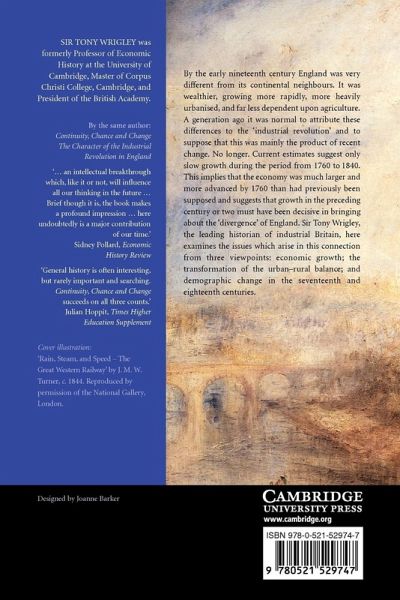
Professor Sir E. A. Wrigley is Emeritus Professor of Economic History at the University of Cambridge, former Master of Corpus Christi College, Cambridge, and former President of the British Academy.
Introduction: 1. In search of the industrial revolution; Part I. The
Wellsprings of Growth: 2. The divergence of England: the growth of the
English economy in the seventeenth and eighteenth centuries; 3. Reflections
on the history of energy supply, living standards and economic growth; 4.
Two kinds of capitalism, two kinds of growth; 5. Men on the land and men in
the countryside: employment in agriculture in early nineteenth-century
England; 6. Corn and crisis: Malthus on the high price of provisions; 7.
Why poverty was inevitable in traditional societies; 8. Malthus on the
prospects for the labouring poor; 9. The occupational structure of England
in the nineteenth century; Part II. Town and Country: 10. City and country
in the past: a sharp divide or a continuum?; 11. 'The great commerce of
every civilised society': urban growth in early modern Europe; 12. Country
and town: the primary, secondary and tertiary peopling of England in the
early modern period; 13. Brake or accelerator? Urban growth and population
growth before the industrial revolution; Part III. The Numbers Game: 14.
How reliable is our knowledge of the demographic characteristics of the
English population in the early modern period?; 15. Explaining the rise in
marital fertility in the 'long' eighteenth century; 16. No death without
birth: the implications of English mortality in the early modern period;
17. Demographic retrospective; Bibliography.
Wellsprings of Growth: 2. The divergence of England: the growth of the
English economy in the seventeenth and eighteenth centuries; 3. Reflections
on the history of energy supply, living standards and economic growth; 4.
Two kinds of capitalism, two kinds of growth; 5. Men on the land and men in
the countryside: employment in agriculture in early nineteenth-century
England; 6. Corn and crisis: Malthus on the high price of provisions; 7.
Why poverty was inevitable in traditional societies; 8. Malthus on the
prospects for the labouring poor; 9. The occupational structure of England
in the nineteenth century; Part II. Town and Country: 10. City and country
in the past: a sharp divide or a continuum?; 11. 'The great commerce of
every civilised society': urban growth in early modern Europe; 12. Country
and town: the primary, secondary and tertiary peopling of England in the
early modern period; 13. Brake or accelerator? Urban growth and population
growth before the industrial revolution; Part III. The Numbers Game: 14.
How reliable is our knowledge of the demographic characteristics of the
English population in the early modern period?; 15. Explaining the rise in
marital fertility in the 'long' eighteenth century; 16. No death without
birth: the implications of English mortality in the early modern period;
17. Demographic retrospective; Bibliography.
Introduction: 1. In search of the industrial revolution; Part I. The
Wellsprings of Growth: 2. The divergence of England: the growth of the
English economy in the seventeenth and eighteenth centuries; 3. Reflections
on the history of energy supply, living standards and economic growth; 4.
Two kinds of capitalism, two kinds of growth; 5. Men on the land and men in
the countryside: employment in agriculture in early nineteenth-century
England; 6. Corn and crisis: Malthus on the high price of provisions; 7.
Why poverty was inevitable in traditional societies; 8. Malthus on the
prospects for the labouring poor; 9. The occupational structure of England
in the nineteenth century; Part II. Town and Country: 10. City and country
in the past: a sharp divide or a continuum?; 11. 'The great commerce of
every civilised society': urban growth in early modern Europe; 12. Country
and town: the primary, secondary and tertiary peopling of England in the
early modern period; 13. Brake or accelerator? Urban growth and population
growth before the industrial revolution; Part III. The Numbers Game: 14.
How reliable is our knowledge of the demographic characteristics of the
English population in the early modern period?; 15. Explaining the rise in
marital fertility in the 'long' eighteenth century; 16. No death without
birth: the implications of English mortality in the early modern period;
17. Demographic retrospective; Bibliography.
Wellsprings of Growth: 2. The divergence of England: the growth of the
English economy in the seventeenth and eighteenth centuries; 3. Reflections
on the history of energy supply, living standards and economic growth; 4.
Two kinds of capitalism, two kinds of growth; 5. Men on the land and men in
the countryside: employment in agriculture in early nineteenth-century
England; 6. Corn and crisis: Malthus on the high price of provisions; 7.
Why poverty was inevitable in traditional societies; 8. Malthus on the
prospects for the labouring poor; 9. The occupational structure of England
in the nineteenth century; Part II. Town and Country: 10. City and country
in the past: a sharp divide or a continuum?; 11. 'The great commerce of
every civilised society': urban growth in early modern Europe; 12. Country
and town: the primary, secondary and tertiary peopling of England in the
early modern period; 13. Brake or accelerator? Urban growth and population
growth before the industrial revolution; Part III. The Numbers Game: 14.
How reliable is our knowledge of the demographic characteristics of the
English population in the early modern period?; 15. Explaining the rise in
marital fertility in the 'long' eighteenth century; 16. No death without
birth: the implications of English mortality in the early modern period;
17. Demographic retrospective; Bibliography.