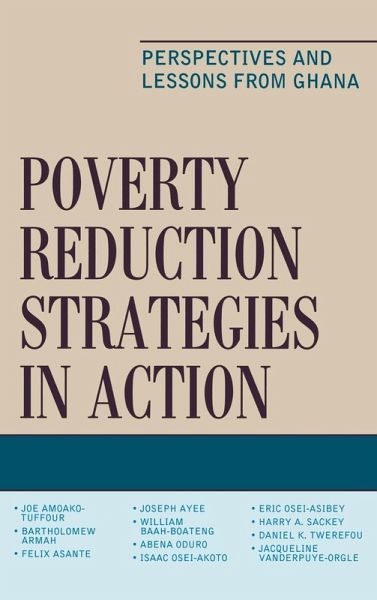
This book examines the efforts of Ghana to reduce poverty and initiate changes that it believes are essential to ensure a prosperous future for its citizens in the 21st century. It chronicles the achievements, pitfalls, and looming challenges of a government, its people, and its external partners in fashioning out and implementing anti-poverty and pro-growth policies.
This book examines the efforts of Ghana to reduce poverty and initiate changes that it believes are essential to ensure a prosperous future for its citizens in the 21st century. It chronicles the achievements, pitfalls, and looming challenges of a government, its people, and its external partners in fashioning out and implementing anti-poverty and pro-growth policies.
Joe Amoako-Tuffour is associate professor of economics at St. Francis Xavier University in Nova Scotia and a research associate at the Centre for Policy Analysis in Ghana. Bartholomew Armah is senior policy advisor at the United Nations Economic Commission of Africa in Addis Ababa.
Inhaltsangabe
Part 1 Part I. Poverty, Inequality, and Reform Approaches Chapter 2 Chapter 1. Introduction: Poverty Reduction in Ghana Chapter 3 Chapter 2. The Evolution of Poverty in Ghana: 1960-2000 Chapter 4 Chapter 3. The North-South Divide and the Disappearing Middle-Class: An Analysis of Spatial Inequality and Polarization in Ghana Chapter 5 Chapter 4. From SAPs to PRSPs: A Tale of Two Paradigms or Simply a Tale? Part 6 Part II. Designing, Implementing, Financing, and Monitoring the GPRS Chapter 7 Chapter 5. Public Consultations, the Role of Civil Servants, and Development Partners in Ghana's Poverty Reduction Strategy Chapter 8 Chapter 6. Linking Poverty Reduction Strategies to the Budget Chapter 9 Chapter 7. Towards an Architecture for the Delivery of International Development Assistance Chapter 10 Chapter 8. Monitoring Poverty Reduction Strategies Part 11 Part III. Special Topics in Poverty Reduction Chapter 12 Chapter 9. Decentralization, Poverty Reduction, and the Ghana Poverty Reduction Strategy Chapter 13 Chapter 10. Tackling Child Poverty in Ghana Chapter 14 Chapter 11. Employment Generation for Poverty Alleviation Chapter 15 Chapter 12. Informal Sector Activities and Urban Poverty in Ghana: Patterns and Poverty Policy Options Chapter 16 Chapter 13. Achieving Gender Equity in Ghana: How Useful is the Ghana Poverty Reduction Strategy? Chapter 17 Chapter 14. Environmental Sustainability and Poverty Reduction in Ghana Part 18 Part IV. Lessons and What Next Chapter 19 Chapter 15. Conclusions and Policy Lessons: The Next Generation of Poverty Reduction Strategies
Part 1 Part I. Poverty, Inequality, and Reform Approaches Chapter 2 Chapter 1. Introduction: Poverty Reduction in Ghana Chapter 3 Chapter 2. The Evolution of Poverty in Ghana: 1960-2000 Chapter 4 Chapter 3. The North-South Divide and the Disappearing Middle-Class: An Analysis of Spatial Inequality and Polarization in Ghana Chapter 5 Chapter 4. From SAPs to PRSPs: A Tale of Two Paradigms or Simply a Tale? Part 6 Part II. Designing, Implementing, Financing, and Monitoring the GPRS Chapter 7 Chapter 5. Public Consultations, the Role of Civil Servants, and Development Partners in Ghana's Poverty Reduction Strategy Chapter 8 Chapter 6. Linking Poverty Reduction Strategies to the Budget Chapter 9 Chapter 7. Towards an Architecture for the Delivery of International Development Assistance Chapter 10 Chapter 8. Monitoring Poverty Reduction Strategies Part 11 Part III. Special Topics in Poverty Reduction Chapter 12 Chapter 9. Decentralization, Poverty Reduction, and the Ghana Poverty Reduction Strategy Chapter 13 Chapter 10. Tackling Child Poverty in Ghana Chapter 14 Chapter 11. Employment Generation for Poverty Alleviation Chapter 15 Chapter 12. Informal Sector Activities and Urban Poverty in Ghana: Patterns and Poverty Policy Options Chapter 16 Chapter 13. Achieving Gender Equity in Ghana: How Useful is the Ghana Poverty Reduction Strategy? Chapter 17 Chapter 14. Environmental Sustainability and Poverty Reduction in Ghana Part 18 Part IV. Lessons and What Next Chapter 19 Chapter 15. Conclusions and Policy Lessons: The Next Generation of Poverty Reduction Strategies
Es gelten unsere Allgemeinen Geschäftsbedingungen: www.buecher.de/agb
Impressum
www.buecher.de ist ein Internetauftritt der buecher.de internetstores GmbH
Geschäftsführung: Monica Sawhney | Roland Kölbl | Günter Hilger
Sitz der Gesellschaft: Batheyer Straße 115 - 117, 58099 Hagen
Postanschrift: Bürgermeister-Wegele-Str. 12, 86167 Augsburg
Amtsgericht Hagen HRB 13257
Steuernummer: 321/5800/1497
USt-IdNr: DE450055826