
Andere Kunden interessierten sich auch für
 The European Parliament Election of 2019 in East-Central Europe98,99 €
 The European Parliament Election of 2019 in East-Central Europe98,99 €
 The Politics of Social In/Exclusion in the EU106,99 €
 The Politics of Social In/Exclusion in the EU106,99 €
 Deforming the Reform38,99 €
 Deforming the Reform31,99 €
 Pan-Slavism and Slavophilia in Contemporary Central and Eastern Europe113,99 €





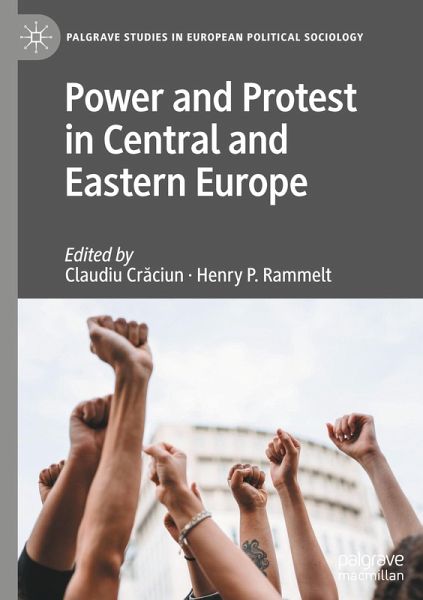
This book offers a detailed overview of the politics of contemporary social movements in Central and Eastern Europe. The analysis of 11 countries reveals the relevance of protest events, social movements, and civil society in shaping democratic transition and consolidation, electoral politics and institutions, socio-economic policies, and geopolitical orientation. This volume shows how power structures and government institutions respond to civic mobilisations and protests, using diverse tactics ranging from co-option to repression and how protests and mobilisations became consequential in the region's politics.
This is a valuable collection, drawing on contributors with deep knowledge of the countries examined to present a comprehensive overview of protest in the region. It is enriched by the inclusion of less examined cases such as Albania (Hoxha) and North Macedonia (Stefanovski). ... The book serves as a valuable record of the evolution of protest in Central and Eastern Europe, as well as pointing to potential challenges facing civil society and social movement actors in the region moving forward. (Thomas O Brien, Journal of Contemporary European Studies, May 29, 2025)