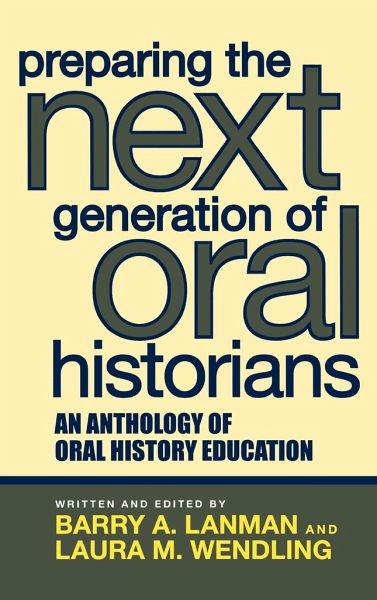
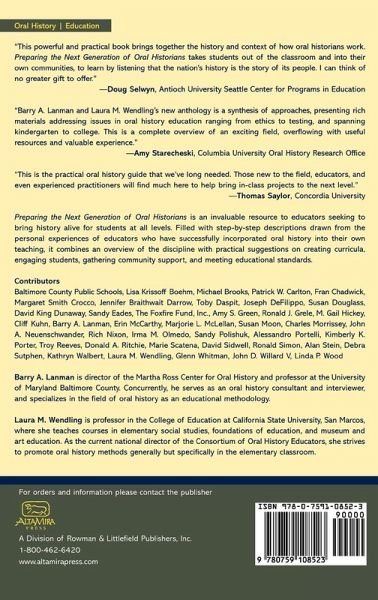
Preparing the Next Generation of Oral Historians is an invaluable resource to educators seeking to bring history alive for students at all levels. The anthology opens with chapters on the fundamentals of oral history and its place in the classroom, but its heart lies in nearly two dozen insightful personal essays by educators who have successfully incorporated oral history into their own teaching. Filled with step by step descriptions and positive student feedback, these chapters offers practical suggestions on creating curricula, engaging students, gathering community support, and meeting…mehr
Preparing the Next Generation of Oral Historians is an invaluable resource to educators seeking to bring history alive for students at all levels. The anthology opens with chapters on the fundamentals of oral history and its place in the classroom, but its heart lies in nearly two dozen insightful personal essays by educators who have successfully incorporated oral history into their own teaching. Filled with step by step descriptions and positive student feedback, these chapters offers practical suggestions on creating curricula, engaging students, gathering community support, and meeting educational standards. Lanman and Wendling open each chapter with thoughtful questions that guide readers, whether unfamiliar with oral history or seeking to refine their approach, in applying the examples to their own classrooms. The bibliography of further resources at the anthology's close provides interested educators with all the information necessary to transform their lessons and show their students' history's power as a living force within their own lives and communities.
Barry A. Lanman is the Director of the Martha Ross Center for Oral History and a professor at the University of Maryland Baltimore County. Concurrently, he serves as an oral history consultant/interviewer and specializes in the field of oral history as an educational methodology. Laura Wendling has also served on the Executive Board of the California Council for the Social Studies and on the Archives Committee for the National Council for the Social Studies. And she was honored with California State University San Marcos' Distinguished Professor award in 2000.
Inhaltsangabe
Part 1 Foreword Part 2 Introduction Part 3 Part I: Foundations of Oral History Education Chapter 4 Introduction: Foundation of Oral History Education Chapter 5 Chapter 1: Foxfire and the Foxfire Approach: Excerpts from the Publications of the Foxfire Fund, Inc. Chapter 6 Chapter 2: Stud's Place in Oral History Education Chapter 7 Chapter 3: Voices of Experience: Oral History in the Classroom Chapter 8 Chapter 4: The Oral History Experience: A Model for the Use of Oral History in Education Chapter 9 Chapter 5: Remembering Virginia Sloan: Teacher-Student Collaborations in Oral History Projects Chapter 10 Chapter 6: Oral History: From Sound to Print and Back Again Chapter 11 Chapter 7: Meeting Standards Chapter 12 Chapter 8: Fits and Starts: Oral History Education at the Idaho Oral History Center Chapter 13 Chapter 9: Public Oral History: Reflections on Educating Citizen-Historians Chapter 14 Chapter 10: Excerpts from Oral History and the Law: Teaching Considerations and Institutional Review Boards & the Law Part 15 Part II: Oral History in Elementary Schools Chapter 16 Introduction: Oral History in Elementary Schools Chapter 17 Chapter 11: Oral History Projects in the Elementary Social Studies Classroom Chapter 18 Chapter 12: Creating Contexts for Studying History with Students Learning English Chapter 19 Chapter 13: From the Ashes: Making Meaning, Meeting Standards Chapter 20 Chapter 14: Family Stories and Memorabilia: Oral History Projects in Elementary Schools Chapter 21 Chapter 15: Connecting the Past to the Present for Students with Special Needs Chapter 22 Chapter 16: The Young, the Old, and Something New : Sixth Graders Learn from Alzheimer Elderly Chapter 23 Chapter 17: Oral History in Elementary Schools: Program and Project Vignettes Part 24 Part III: Oral History in Secondary Schools Chapter 25 Introduction: Oral History in Secondary Schools Chapter 26 Chapter 18: Putting the Actors Back on Stage: Oral History in the Secondary School Classroom Chapter 27 Chapter 19: Teaching Students How to Be Historians: An Oral History Project for the Secondary Classroom Chapter 28 Chapter 20: "Long, Long Ago": Recipe for a Middle School Oral History Program Chapter 29 Chapter 21: The Grade Eight Gifted and Talented Oral History Program: Baltimore County Public Schools Chapter 30 Chapter 22: Turbulent Times: Grade Eleven Unit Overview Chapter 31 Chapter 23: The Family in the Fifties: Hope, Fear, and Rock 'n' Roll Chapter 32 Chapter 24: Oral History in Secondary Schools: Program and Project Vignettes Part 33 Part IV: Oral History in Colleges and Universities Chapter 34 Introduction: Oral History in Colleges and Universities Chapter 35 Chapter 25: Oral History: Authentic Task Learning for the College Classroom Chapter 36 Chapter 26: Oral History in the Undergraduate Classroom: Getting Students into History Chapter 37 Chapter 27: Values and Methods in the Classroom Transformation of Oral History Chapter 38 Chapter 28: Bringing the Life Stories of Women into the Classroom through Oral Histories and Autobiographical Texts Chapter 39 Chapter 29: All the Worlds a Stage: Oral History Performance in the Classroom Chapter 40 Chapter 30: Turning Tragedy into Theater: The September 11th Testimony Project Chapter 41 Chapter 31: Sierra College's "Standing Guard" Japanese American Internment Oral History Project: Oral History as an Engine to the Power of Education Chapter 42 Chapter 32: Preparing the Next Generation of Educational Administrators: An Application of Philosophy, Theory, and Pedagogy in "Real-World" Settings Chapter 43 Chapter 33: Destroyer Escorts of World War II-"The Little Warship that Could" Chapter 44 Chapter 34: Interviewing Radical Elders Chapter 45 Chapter 35: Learning Oral History: Reflections on a Graduate School Education Chapter 46 Chapter 36: Oral History in Colleges and Universities: Program and Project Vignettes Part 47 Part V: Resources for the Oral History Educator Chapter 48 Introduction: Resources for the Oral History Educator Chapter 49 A Collection of Thought Questions: Compiled for the Articles Published in Preparing the Next Generation of Oral Historians: An Anthology of Oral History Education Chapter 50 Sample Syllabus Chapter 51 A Bibliography of Oral History Education Chapter 52 Principles and Standards of the Oral History Association
Part 1 Foreword Part 2 Introduction Part 3 Part I: Foundations of Oral History Education Chapter 4 Introduction: Foundation of Oral History Education Chapter 5 Chapter 1: Foxfire and the Foxfire Approach: Excerpts from the Publications of the Foxfire Fund, Inc. Chapter 6 Chapter 2: Stud's Place in Oral History Education Chapter 7 Chapter 3: Voices of Experience: Oral History in the Classroom Chapter 8 Chapter 4: The Oral History Experience: A Model for the Use of Oral History in Education Chapter 9 Chapter 5: Remembering Virginia Sloan: Teacher-Student Collaborations in Oral History Projects Chapter 10 Chapter 6: Oral History: From Sound to Print and Back Again Chapter 11 Chapter 7: Meeting Standards Chapter 12 Chapter 8: Fits and Starts: Oral History Education at the Idaho Oral History Center Chapter 13 Chapter 9: Public Oral History: Reflections on Educating Citizen-Historians Chapter 14 Chapter 10: Excerpts from Oral History and the Law: Teaching Considerations and Institutional Review Boards & the Law Part 15 Part II: Oral History in Elementary Schools Chapter 16 Introduction: Oral History in Elementary Schools Chapter 17 Chapter 11: Oral History Projects in the Elementary Social Studies Classroom Chapter 18 Chapter 12: Creating Contexts for Studying History with Students Learning English Chapter 19 Chapter 13: From the Ashes: Making Meaning, Meeting Standards Chapter 20 Chapter 14: Family Stories and Memorabilia: Oral History Projects in Elementary Schools Chapter 21 Chapter 15: Connecting the Past to the Present for Students with Special Needs Chapter 22 Chapter 16: The Young, the Old, and Something New : Sixth Graders Learn from Alzheimer Elderly Chapter 23 Chapter 17: Oral History in Elementary Schools: Program and Project Vignettes Part 24 Part III: Oral History in Secondary Schools Chapter 25 Introduction: Oral History in Secondary Schools Chapter 26 Chapter 18: Putting the Actors Back on Stage: Oral History in the Secondary School Classroom Chapter 27 Chapter 19: Teaching Students How to Be Historians: An Oral History Project for the Secondary Classroom Chapter 28 Chapter 20: "Long, Long Ago": Recipe for a Middle School Oral History Program Chapter 29 Chapter 21: The Grade Eight Gifted and Talented Oral History Program: Baltimore County Public Schools Chapter 30 Chapter 22: Turbulent Times: Grade Eleven Unit Overview Chapter 31 Chapter 23: The Family in the Fifties: Hope, Fear, and Rock 'n' Roll Chapter 32 Chapter 24: Oral History in Secondary Schools: Program and Project Vignettes Part 33 Part IV: Oral History in Colleges and Universities Chapter 34 Introduction: Oral History in Colleges and Universities Chapter 35 Chapter 25: Oral History: Authentic Task Learning for the College Classroom Chapter 36 Chapter 26: Oral History in the Undergraduate Classroom: Getting Students into History Chapter 37 Chapter 27: Values and Methods in the Classroom Transformation of Oral History Chapter 38 Chapter 28: Bringing the Life Stories of Women into the Classroom through Oral Histories and Autobiographical Texts Chapter 39 Chapter 29: All the Worlds a Stage: Oral History Performance in the Classroom Chapter 40 Chapter 30: Turning Tragedy into Theater: The September 11th Testimony Project Chapter 41 Chapter 31: Sierra College's "Standing Guard" Japanese American Internment Oral History Project: Oral History as an Engine to the Power of Education Chapter 42 Chapter 32: Preparing the Next Generation of Educational Administrators: An Application of Philosophy, Theory, and Pedagogy in "Real-World" Settings Chapter 43 Chapter 33: Destroyer Escorts of World War II-"The Little Warship that Could" Chapter 44 Chapter 34: Interviewing Radical Elders Chapter 45 Chapter 35: Learning Oral History: Reflections on a Graduate School Education Chapter 46 Chapter 36: Oral History in Colleges and Universities: Program and Project Vignettes Part 47 Part V: Resources for the Oral History Educator Chapter 48 Introduction: Resources for the Oral History Educator Chapter 49 A Collection of Thought Questions: Compiled for the Articles Published in Preparing the Next Generation of Oral Historians: An Anthology of Oral History Education Chapter 50 Sample Syllabus Chapter 51 A Bibliography of Oral History Education Chapter 52 Principles and Standards of the Oral History Association
Es gelten unsere Allgemeinen Geschäftsbedingungen: www.buecher.de/agb
Impressum
www.buecher.de ist ein Internetauftritt der buecher.de internetstores GmbH
Geschäftsführung: Monica Sawhney | Roland Kölbl | Günter Hilger
Sitz der Gesellschaft: Batheyer Straße 115 - 117, 58099 Hagen
Postanschrift: Bürgermeister-Wegele-Str. 12, 86167 Augsburg
Amtsgericht Hagen HRB 13257
Steuernummer: 321/5800/1497
USt-IdNr: DE450055826