Laura W. Perna is Professor in the Graduate School of Education at the University of Pennsylvania and editor of Understanding the Working College Student: New Research and Its Implications for Policy and Practice.
Laura W. Perna is Professor in the Graduate School of Education at the University of Pennsylvania and editor of Understanding the Working College Student: New Research and Its Implications for Policy and Practice.
Laura W. Perna is Professor in the Graduate School of Education at the University of Pennsylvania and editor of Understanding the Working College Student: New Research and Its Implications for Policy and Practice.
Inhaltsangabe
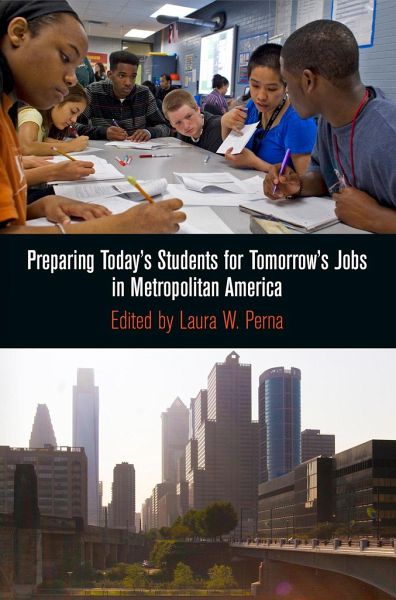
Introduction -Laura W. Perna I. DEFINING SUCCESS IN PREPARING INDIVIDUALS FOR WORK Chapter 1. Tinker, Tailor, Soldier, Sailor: A Public Policy Agenda for Today's Students and Tomorrow's Jobs -Alan Ruby Chapter 2. Assessing and Measuring Workforce Readiness: Toward the Development of a Universal and Valid Measure -Katherine M. Barghaus, Eric T. Bradlow, Jennifer McMaken, and Samuel H. Rikoon Chapter 3. Work-Based Learning: Initiatives and Impact -Bridget N. O'Connor II. THE ROLE OF DIFFERENT EDUCATIONAL PROVIDERS IN PREPARING STUDENTS FOR WORK Chapter 4. Improving Career and Technical Education in the United States -Nancy Hoffman Chapter 5. Postsecondary Education and Economic Opportunity -Anthony P. Carnevale, Nicole Smith, and Jeff Strohl Chapter 6. Community College Occupational Degrees: Are They Worth It? -Thomas Bailey and Clive R. Belfield Chapter 7. The Conundrum of Profit-Making Institutions in Higher Education -William G. Tierney III. IMPLICATIONS FOR INSTITUTIONAL PRACTICE AND PUBLIC POLICY Chapter 8. Strengthening the Education and Workforce Connection: What Types of Research Are Required to Determine How Well Career Pathways Programs Prepare Students for College and Careers? -Lashawn Richburg-Hayes, Michael Armijo, and Lisa Merrill Chapter 9. Conceiving Regional Pathways to Prosperity Systems -Ronald F. Ferguson Chapter 10. Aligning Secondary and Postsecondary Credentialization with Economic Development Strategy, or If Low Educational Attainment = Poor Metropolitan Competitiveness, What Can Be Done About It? -Laura Wolf-Powers and Stuart Andreason Chapter 11. Creating Effective Education and Workforce Policies for Metropolitan Labor Markets in the United States -Harry J. Holzer Conclusion -Laura W. Perna Notes List of References List of Contributors Index Acknowledgments
Introduction -Laura W. Perna I. DEFINING SUCCESS IN PREPARING INDIVIDUALS FOR WORK Chapter 1. Tinker, Tailor, Soldier, Sailor: A Public Policy Agenda for Today's Students and Tomorrow's Jobs -Alan Ruby Chapter 2. Assessing and Measuring Workforce Readiness: Toward the Development of a Universal and Valid Measure -Katherine M. Barghaus, Eric T. Bradlow, Jennifer McMaken, and Samuel H. Rikoon Chapter 3. Work-Based Learning: Initiatives and Impact -Bridget N. O'Connor II. THE ROLE OF DIFFERENT EDUCATIONAL PROVIDERS IN PREPARING STUDENTS FOR WORK Chapter 4. Improving Career and Technical Education in the United States -Nancy Hoffman Chapter 5. Postsecondary Education and Economic Opportunity -Anthony P. Carnevale, Nicole Smith, and Jeff Strohl Chapter 6. Community College Occupational Degrees: Are They Worth It? -Thomas Bailey and Clive R. Belfield Chapter 7. The Conundrum of Profit-Making Institutions in Higher Education -William G. Tierney III. IMPLICATIONS FOR INSTITUTIONAL PRACTICE AND PUBLIC POLICY Chapter 8. Strengthening the Education and Workforce Connection: What Types of Research Are Required to Determine How Well Career Pathways Programs Prepare Students for College and Careers? -Lashawn Richburg-Hayes, Michael Armijo, and Lisa Merrill Chapter 9. Conceiving Regional Pathways to Prosperity Systems -Ronald F. Ferguson Chapter 10. Aligning Secondary and Postsecondary Credentialization with Economic Development Strategy, or If Low Educational Attainment = Poor Metropolitan Competitiveness, What Can Be Done About It? -Laura Wolf-Powers and Stuart Andreason Chapter 11. Creating Effective Education and Workforce Policies for Metropolitan Labor Markets in the United States -Harry J. Holzer Conclusion -Laura W. Perna Notes List of References List of Contributors Index Acknowledgments
Es gelten unsere Allgemeinen Geschäftsbedingungen: www.buecher.de/agb
Impressum
www.buecher.de ist ein Internetauftritt der buecher.de internetstores GmbH
Geschäftsführung: Monica Sawhney | Roland Kölbl | Günter Hilger
Sitz der Gesellschaft: Batheyer Straße 115 - 117, 58099 Hagen
Postanschrift: Bürgermeister-Wegele-Str. 12, 86167 Augsburg
Amtsgericht Hagen HRB 13257
Steuernummer: 321/5800/1497
USt-IdNr: DE450055826