
Preserving and Exhibiting Media Art
Challenges and Perspectives
Herausgeber: Noordegraaf, Julia; Saba, Cosetta; Hediger, Vinzenz
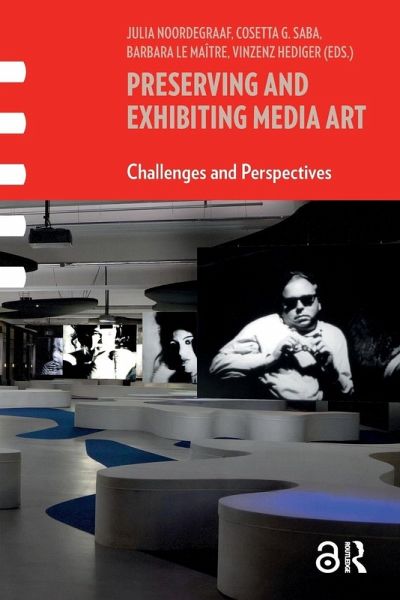

Preserving and Exhibiting Media Art
Challenges and Perspectives
Herausgeber: Noordegraaf, Julia; Saba, Cosetta; Hediger, Vinzenz
- Broschiertes Buch
- Merkliste
- Auf die Merkliste
- Bewerten Bewerten
- Teilen
- Produkt teilen
- Produkterinnerung
- Produkterinnerung
This important and first-of-its-kind collection addresses the emerging challenges in the field of media art preservation and exhibition, providing an outline for the training of professionals in this field.
This important and first-of-its-kind collection addresses the emerging challenges in the field of media art preservation and exhibition, providing an outline for the training of professionals in this field.
Produktdetails
- Produktdetails
- Verlag: Routledge
- Seitenzahl: 430
- Erscheinungstermin: 28. Januar 2013
- Englisch
- Abmessung: 234mm x 156mm x 23mm
- Gewicht: 649g
- ISBN-13: 9789089642912
- ISBN-10: 9089642919
- Artikelnr.: 35564079
- Herstellerkennzeichnung
- Libri GmbH
- Europaallee 1
- 36244 Bad Hersfeld
- gpsr@libri.de
- Verlag: Routledge
- Seitenzahl: 430
- Erscheinungstermin: 28. Januar 2013
- Englisch
- Abmessung: 234mm x 156mm x 23mm
- Gewicht: 649g
- ISBN-13: 9789089642912
- ISBN-10: 9089642919
- Artikelnr.: 35564079
- Herstellerkennzeichnung
- Libri GmbH
- Europaallee 1
- 36244 Bad Hersfeld
- gpsr@libri.de
Julia Noordegraaf is Professor of Heritage and Digital Culture in the Faculty of Humanities at the University of Amsterdam. Vinzenz Hediger is professor of cinema studies at Goethe University Frankfurt, where he directs the Graduate Research Training Program Configurations of film (www.konfigrationen-des-films.de). His publications include Films that Work. Industrial Film and the Productivity of Media (Amsterdam University Press 2009, with Patrick Vonderau) and Essays zur Filmphilosophie (Fink 2015, with Lorenz Engell, Oliver Fahle and Christiane Voss). He is a co-founder of NECS - European Network of Cinema and Media Studies (www.necs.org) and the founding editor of Zeitschrift für Medienwissenschaft (www.zfmedienwissenschaft.de) Cosetta G. Saba is associate professor of film analysis and audiovisual practices in media art at the University of Udine, Italy. Barbara Le Maître is associate professor of film studies at Paris-III Sorbonne Nouvelle.
Introduction Part I History, Archaeology, Aesthetics, Archive: Theoretical
Paths 1 Between Art History and Media History: A Brief Introduction to
Media Art 2 Media Archaeology: Where Film History, Media Art, and New Media
(Can) Meet 3 Media Aesthetics 4 Media Art and the Digital Archive Part II
Analysis, Documentation, Archive 5 The Analysis of the Artwork 6
Methodologies of Multimedial Documentation and Archiving 6.1 Enjoying the
Gap: Comparing Contemporary Documentation Strategies 6.2 Case Study: No
Ghost Just a Shell by Pierre Huyghe, Philippe Parreno, and Many Others 6.3
The Artist's Interview as a Tool for Documenting and Recreating a Complex
Installation: The Example of Mbube, an AudioInstallation by Roberto Cuoghi
in the Museo Del Novecento, Milan 6.4 MAXXI Pilot Tests Regarding the
Documentation of Installation Art Part III Technological Platforms,
Preservation and Restoration 7 Technological Platforms 7.1 The History and
Technological Characteristics of Cinematographic Production and Reception
Devices 7.2 The History and Technological Characteristics of Video
Production and Reception Devices 7.3 Computers and Digital Reception
Devices: History and Technological Characteristics 7.4 Obsolete Equipment:
Ethics and Practices of Media Art Conservation 8 Theories, Techniques,
Decision-making Models: The European Context 8.1 Operational Practices for
a Film and Video Preservation and Restoration Protocol 8.2 Operational
Practices for a Digital Preservation and Restoration Protocol 8.3 Case
Study: The Conservation of Media Art at Tate Part IV Access, Reuse and
Exhibition, 9 Exhibition Strategies 9.1 From Cinema to the Museum: A State
of Affairs 9.1.1 A "Cinema Effect" in Contemporary Art 9.2 Exhibiting
Images in Movement 9.2.1 Exhibiting/Editing: Dominique Païni and
Programming at the Cinémathèque française at the Turn of the Centenary
9.2.2 The Expanded Archive: The Mind Frames exhibition 9.2.3 Exhibiting
Film and Reinventing the Painting 9.3 The Image Traveling across
Territories: Cinema, Video, TV, Museum, the Web, and beyond 9.3.1 On
Passages Between Art and Cinema 9.3.2 Across the Territories: Exhibiting
Music Video 9.3.3 Developing, Presenting, and Documenting Unstable Media at
V2_ 9.4 New Dispositifs, New Modes of Reception 9.4.1 Video Installations
as Experiences in Montage 9.4.2 From the Film to the Map: Patrick Keiller
and The City of the Future 9.4.3 Site-specific Exhibition and Reexhibition
Strategies: Max Neuhaus's Times Square 9.4.4 From Archival Model to
Exhibition Platform? Video Art As a Web 10 On Curating New Media Art
Epilogue. List of contributors. Index.
Paths 1 Between Art History and Media History: A Brief Introduction to
Media Art 2 Media Archaeology: Where Film History, Media Art, and New Media
(Can) Meet 3 Media Aesthetics 4 Media Art and the Digital Archive Part II
Analysis, Documentation, Archive 5 The Analysis of the Artwork 6
Methodologies of Multimedial Documentation and Archiving 6.1 Enjoying the
Gap: Comparing Contemporary Documentation Strategies 6.2 Case Study: No
Ghost Just a Shell by Pierre Huyghe, Philippe Parreno, and Many Others 6.3
The Artist's Interview as a Tool for Documenting and Recreating a Complex
Installation: The Example of Mbube, an AudioInstallation by Roberto Cuoghi
in the Museo Del Novecento, Milan 6.4 MAXXI Pilot Tests Regarding the
Documentation of Installation Art Part III Technological Platforms,
Preservation and Restoration 7 Technological Platforms 7.1 The History and
Technological Characteristics of Cinematographic Production and Reception
Devices 7.2 The History and Technological Characteristics of Video
Production and Reception Devices 7.3 Computers and Digital Reception
Devices: History and Technological Characteristics 7.4 Obsolete Equipment:
Ethics and Practices of Media Art Conservation 8 Theories, Techniques,
Decision-making Models: The European Context 8.1 Operational Practices for
a Film and Video Preservation and Restoration Protocol 8.2 Operational
Practices for a Digital Preservation and Restoration Protocol 8.3 Case
Study: The Conservation of Media Art at Tate Part IV Access, Reuse and
Exhibition, 9 Exhibition Strategies 9.1 From Cinema to the Museum: A State
of Affairs 9.1.1 A "Cinema Effect" in Contemporary Art 9.2 Exhibiting
Images in Movement 9.2.1 Exhibiting/Editing: Dominique Païni and
Programming at the Cinémathèque française at the Turn of the Centenary
9.2.2 The Expanded Archive: The Mind Frames exhibition 9.2.3 Exhibiting
Film and Reinventing the Painting 9.3 The Image Traveling across
Territories: Cinema, Video, TV, Museum, the Web, and beyond 9.3.1 On
Passages Between Art and Cinema 9.3.2 Across the Territories: Exhibiting
Music Video 9.3.3 Developing, Presenting, and Documenting Unstable Media at
V2_ 9.4 New Dispositifs, New Modes of Reception 9.4.1 Video Installations
as Experiences in Montage 9.4.2 From the Film to the Map: Patrick Keiller
and The City of the Future 9.4.3 Site-specific Exhibition and Reexhibition
Strategies: Max Neuhaus's Times Square 9.4.4 From Archival Model to
Exhibition Platform? Video Art As a Web 10 On Curating New Media Art
Epilogue. List of contributors. Index.
Introduction Part I History, Archaeology, Aesthetics, Archive: Theoretical
Paths 1 Between Art History and Media History: A Brief Introduction to
Media Art 2 Media Archaeology: Where Film History, Media Art, and New Media
(Can) Meet 3 Media Aesthetics 4 Media Art and the Digital Archive Part II
Analysis, Documentation, Archive 5 The Analysis of the Artwork 6
Methodologies of Multimedial Documentation and Archiving 6.1 Enjoying the
Gap: Comparing Contemporary Documentation Strategies 6.2 Case Study: No
Ghost Just a Shell by Pierre Huyghe, Philippe Parreno, and Many Others 6.3
The Artist's Interview as a Tool for Documenting and Recreating a Complex
Installation: The Example of Mbube, an AudioInstallation by Roberto Cuoghi
in the Museo Del Novecento, Milan 6.4 MAXXI Pilot Tests Regarding the
Documentation of Installation Art Part III Technological Platforms,
Preservation and Restoration 7 Technological Platforms 7.1 The History and
Technological Characteristics of Cinematographic Production and Reception
Devices 7.2 The History and Technological Characteristics of Video
Production and Reception Devices 7.3 Computers and Digital Reception
Devices: History and Technological Characteristics 7.4 Obsolete Equipment:
Ethics and Practices of Media Art Conservation 8 Theories, Techniques,
Decision-making Models: The European Context 8.1 Operational Practices for
a Film and Video Preservation and Restoration Protocol 8.2 Operational
Practices for a Digital Preservation and Restoration Protocol 8.3 Case
Study: The Conservation of Media Art at Tate Part IV Access, Reuse and
Exhibition, 9 Exhibition Strategies 9.1 From Cinema to the Museum: A State
of Affairs 9.1.1 A "Cinema Effect" in Contemporary Art 9.2 Exhibiting
Images in Movement 9.2.1 Exhibiting/Editing: Dominique Païni and
Programming at the Cinémathèque française at the Turn of the Centenary
9.2.2 The Expanded Archive: The Mind Frames exhibition 9.2.3 Exhibiting
Film and Reinventing the Painting 9.3 The Image Traveling across
Territories: Cinema, Video, TV, Museum, the Web, and beyond 9.3.1 On
Passages Between Art and Cinema 9.3.2 Across the Territories: Exhibiting
Music Video 9.3.3 Developing, Presenting, and Documenting Unstable Media at
V2_ 9.4 New Dispositifs, New Modes of Reception 9.4.1 Video Installations
as Experiences in Montage 9.4.2 From the Film to the Map: Patrick Keiller
and The City of the Future 9.4.3 Site-specific Exhibition and Reexhibition
Strategies: Max Neuhaus's Times Square 9.4.4 From Archival Model to
Exhibition Platform? Video Art As a Web 10 On Curating New Media Art
Epilogue. List of contributors. Index.
Paths 1 Between Art History and Media History: A Brief Introduction to
Media Art 2 Media Archaeology: Where Film History, Media Art, and New Media
(Can) Meet 3 Media Aesthetics 4 Media Art and the Digital Archive Part II
Analysis, Documentation, Archive 5 The Analysis of the Artwork 6
Methodologies of Multimedial Documentation and Archiving 6.1 Enjoying the
Gap: Comparing Contemporary Documentation Strategies 6.2 Case Study: No
Ghost Just a Shell by Pierre Huyghe, Philippe Parreno, and Many Others 6.3
The Artist's Interview as a Tool for Documenting and Recreating a Complex
Installation: The Example of Mbube, an AudioInstallation by Roberto Cuoghi
in the Museo Del Novecento, Milan 6.4 MAXXI Pilot Tests Regarding the
Documentation of Installation Art Part III Technological Platforms,
Preservation and Restoration 7 Technological Platforms 7.1 The History and
Technological Characteristics of Cinematographic Production and Reception
Devices 7.2 The History and Technological Characteristics of Video
Production and Reception Devices 7.3 Computers and Digital Reception
Devices: History and Technological Characteristics 7.4 Obsolete Equipment:
Ethics and Practices of Media Art Conservation 8 Theories, Techniques,
Decision-making Models: The European Context 8.1 Operational Practices for
a Film and Video Preservation and Restoration Protocol 8.2 Operational
Practices for a Digital Preservation and Restoration Protocol 8.3 Case
Study: The Conservation of Media Art at Tate Part IV Access, Reuse and
Exhibition, 9 Exhibition Strategies 9.1 From Cinema to the Museum: A State
of Affairs 9.1.1 A "Cinema Effect" in Contemporary Art 9.2 Exhibiting
Images in Movement 9.2.1 Exhibiting/Editing: Dominique Païni and
Programming at the Cinémathèque française at the Turn of the Centenary
9.2.2 The Expanded Archive: The Mind Frames exhibition 9.2.3 Exhibiting
Film and Reinventing the Painting 9.3 The Image Traveling across
Territories: Cinema, Video, TV, Museum, the Web, and beyond 9.3.1 On
Passages Between Art and Cinema 9.3.2 Across the Territories: Exhibiting
Music Video 9.3.3 Developing, Presenting, and Documenting Unstable Media at
V2_ 9.4 New Dispositifs, New Modes of Reception 9.4.1 Video Installations
as Experiences in Montage 9.4.2 From the Film to the Map: Patrick Keiller
and The City of the Future 9.4.3 Site-specific Exhibition and Reexhibition
Strategies: Max Neuhaus's Times Square 9.4.4 From Archival Model to
Exhibition Platform? Video Art As a Web 10 On Curating New Media Art
Epilogue. List of contributors. Index.