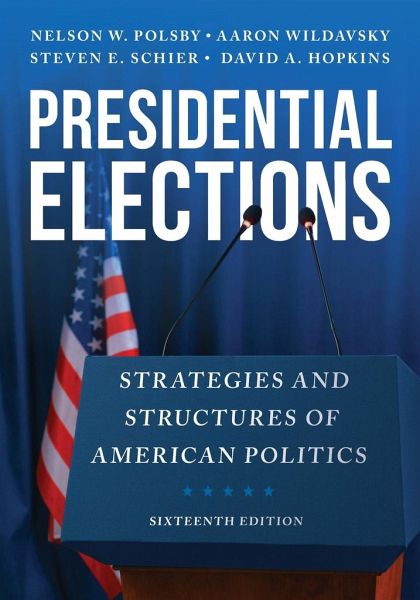
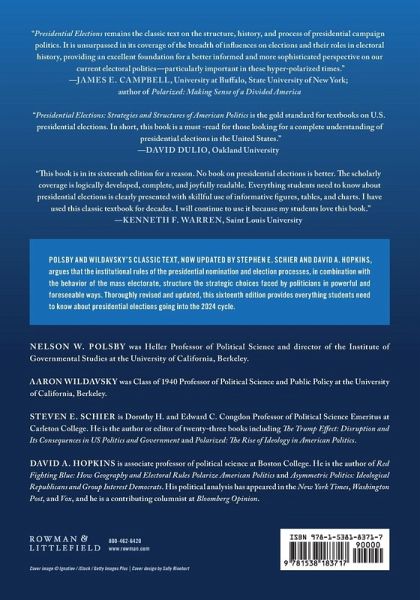
This classic text argues that the institutional rules of the presidential election process, in combination with the behavior of the mass electorate, structure the strategic choices faced by politicians. Thoroughly revised and updated, this 16th edition provides everything students need to know about presidential elections going into the 2024 cycle.
This classic text argues that the institutional rules of the presidential election process, in combination with the behavior of the mass electorate, structure the strategic choices faced by politicians. Thoroughly revised and updated, this 16th edition provides everything students need to know about presidential elections going into the 2024 cycle.
Nelson W. Polsby was Heller Professor of Political Science and past Director of the Institute of Governmental Studies at the University of California, Berkeley, where he taught American politics for forty years.
Inhaltsangabe
List of Figures, Tables, and Boxes Preface PART I. THE STRATEGIC ENVIRONMENT 1. VOTERS Why People Don't Vote Why People Do Vote: A Theory of Social Connectedness Party Identification as Social Identity Parties as Aggregates of Loyal Voters Ideologies, Issues, and National Conditions in the Minds of Voters Changes in Party Identification: Social Habit versus Contemporary Evaluation A Central Strategic Problem: The Attentiveness of Voters 2. GROUPS The Presidential Vote as an Aggregation of Interest Groups Variations among Interest Groups "Special" Interests, Campaign Spending, and Public Interest Groups Political Parties as Organizations Third Parties 3. RULES AND RESOURCES Rules: The Electoral College Thinking About Resources Resources: Money Resources: Control over Information Incumbency as a Resource: The Presidency Incumbency as a Liability: The Vice Presidency The Balance of Resources PART II. SEQUENCES 4. THE NOMINATION PROCESS Before the Voting Begins: The "Invisible Primary" The Early States What Do These Historical Vignettes Teach? Super Tuesday and Later Primaries State and Territorial Caucuses Delegate Allocation Superdelegates An Ever-Changing Nomination Process The National Party Conventions The Convention as Advertising The Vice Presidential Nominee The Future of National Conventions 5. THE CAMPAIGN The Well-Traveled Candidates Persuading Voters Winning the Media Game Campaign Professionals Televised Debates Getting Out the Vote Campaign Blunders Forecasting the Outcome Counting the Vote PART III. ISSUES 6. APPRAISALS Reform upon Reform The Political Theory of Policy Government Reform by Means of Participatory Democracy Some Specific Reforms Party Platforms and Party Differences 7. AMERICAN PARTIES AND DEMOCRACY Elections and Public Policy Parties of Advocacy versus Parties of Intermediation APPENDIXES A. Vote by Groups in Presidential Elections, 1984-2020 B. Voter Turnout in Presidential Elections, by Population Characteristics, 1984-2020 C. Selections from the Democratic and Republican Party Platforms, 2020 Notes Index
List of Figures, Tables, and Boxes Preface PART I. THE STRATEGIC ENVIRONMENT 1. VOTERS Why People Don't Vote Why People Do Vote: A Theory of Social Connectedness Party Identification as Social Identity Parties as Aggregates of Loyal Voters Ideologies, Issues, and National Conditions in the Minds of Voters Changes in Party Identification: Social Habit versus Contemporary Evaluation A Central Strategic Problem: The Attentiveness of Voters 2. GROUPS The Presidential Vote as an Aggregation of Interest Groups Variations among Interest Groups "Special" Interests, Campaign Spending, and Public Interest Groups Political Parties as Organizations Third Parties 3. RULES AND RESOURCES Rules: The Electoral College Thinking About Resources Resources: Money Resources: Control over Information Incumbency as a Resource: The Presidency Incumbency as a Liability: The Vice Presidency The Balance of Resources PART II. SEQUENCES 4. THE NOMINATION PROCESS Before the Voting Begins: The "Invisible Primary" The Early States What Do These Historical Vignettes Teach? Super Tuesday and Later Primaries State and Territorial Caucuses Delegate Allocation Superdelegates An Ever-Changing Nomination Process The National Party Conventions The Convention as Advertising The Vice Presidential Nominee The Future of National Conventions 5. THE CAMPAIGN The Well-Traveled Candidates Persuading Voters Winning the Media Game Campaign Professionals Televised Debates Getting Out the Vote Campaign Blunders Forecasting the Outcome Counting the Vote PART III. ISSUES 6. APPRAISALS Reform upon Reform The Political Theory of Policy Government Reform by Means of Participatory Democracy Some Specific Reforms Party Platforms and Party Differences 7. AMERICAN PARTIES AND DEMOCRACY Elections and Public Policy Parties of Advocacy versus Parties of Intermediation APPENDIXES A. Vote by Groups in Presidential Elections, 1984-2020 B. Voter Turnout in Presidential Elections, by Population Characteristics, 1984-2020 C. Selections from the Democratic and Republican Party Platforms, 2020 Notes Index
Es gelten unsere Allgemeinen Geschäftsbedingungen: www.buecher.de/agb
Impressum
www.buecher.de ist ein Internetauftritt der buecher.de internetstores GmbH
Geschäftsführung: Monica Sawhney | Roland Kölbl | Günter Hilger
Sitz der Gesellschaft: Batheyer Straße 115 - 117, 58099 Hagen
Postanschrift: Bürgermeister-Wegele-Str. 12, 86167 Augsburg
Amtsgericht Hagen HRB 13257
Steuernummer: 321/5800/1497
USt-IdNr: DE450055826