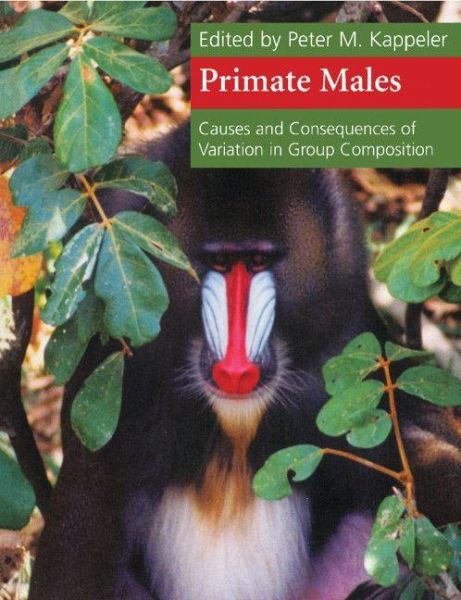
Why do some primate groups have only one adult male, monopolizing several females, whereas in others, several males live side by side with several females? What are the consequences for male-female relationships and the evolution of mating systems? This book uses both fieldwork and theory to unravel this complex issue.
Why do some primate groups have only one adult male, monopolizing several females, whereas in others, several males live side by side with several females? What are the consequences for male-female relationships and the evolution of mating systems? This book uses both fieldwork and theory to unravel this complex issue.
Preface; Part I. Introduction: 1. The socioecology of primate males: history and theory Peter M. Kappeler; Part II. Comparative Perspectives on Male-Female Association: 2. Multi-male breeding groups in birds: ecological causes and social conflicts Nick B. Davies; 3. Males in macropod society Peter Jarman; 4. Social counterstrategies against infanticide by males in primates and other mammals Carel van Schaik; Part III. Variation in Male Numbers: Taxon-Level Analyses: 5. Causes and consequences of unusual sex ratios in lemurs Peter M. Kappeler; 6. The number of adult males in callitrichine groups and its implications for callitrichine social evolution Eckhard W. Heymann; 7. From binding brotherhoods to short-term sovereignty: the betwixting dilemma of male Cebidae Karen B. Strier; 8. The number of males in guenon groups Marina Cords; 9. Socioecology of baboons: the interaction of male and female strategies Robert A. Barton; 10. Variation in adult sex ratios of red colobus monkey social groups: implications for interspecific comparisons Thomas T. Struhsaker; 11. The number of males in langur groups: monopolizability of females or demographic process? Elisabeth H. M. Sterck and Jan A. R. A. M. van Hooff; 12. Costs and benefits of the one-male, age-graded and all-male phase in wild Thomas langur groups Romy Steenbeek, Elisabeth H. M. Sterck, Han de Vries and Jan A. R. A. M. van Hooff; 13. Male dispersal and mating season influxes in Hanuman langurs living in multi-male groups Carola Borries; 14. Rethinking monogamy: the gibbon case Volker Sommer and Ulrich Reichard; 15. Causes and consequences of variation in male mountain gorilla life histories and group membership David P. Watts; Part IV. Behavioural Aspects of Male Coexistence: 16. Relationships among nonhuman primate males: a deductive framework Jan A. R. A. M. van Hooff; 17. Collective benefits, free-riders and male extragroup conflict Charles L. Nunn; 18. Dominance, egalitarianism and stalemate: an experimental approach to male-male competition in Barbary macaques Signe Preuschoft and Andreas Paul; Part V. Evolutionary Determinants and Consequences: 19. The evolution of male philopatry in neotropical monkeys Theresa Pope; 20. Models of outcome and process: predicting the number of males in primate groups Jeanne Altmann; 21. Why are male chimpanzees more gregarious than mothers? A scramble competition hypothesis Richard W. Wrangham; 22. Male mating strategies: a modeling approach Robin I. M. Dunbar; Part VI. Conclusions: 23. Understanding male primates Michael E. Pereira, Timothy H. Clutton-Brock and Peter M. Kappeler; References; Index.
Preface; Part I. Introduction: 1. The socioecology of primate males: history and theory Peter M. Kappeler; Part II. Comparative Perspectives on Male-Female Association: 2. Multi-male breeding groups in birds: ecological causes and social conflicts Nick B. Davies; 3. Males in macropod society Peter Jarman; 4. Social counterstrategies against infanticide by males in primates and other mammals Carel van Schaik; Part III. Variation in Male Numbers: Taxon-Level Analyses: 5. Causes and consequences of unusual sex ratios in lemurs Peter M. Kappeler; 6. The number of adult males in callitrichine groups and its implications for callitrichine social evolution Eckhard W. Heymann; 7. From binding brotherhoods to short-term sovereignty: the betwixting dilemma of male Cebidae Karen B. Strier; 8. The number of males in guenon groups Marina Cords; 9. Socioecology of baboons: the interaction of male and female strategies Robert A. Barton; 10. Variation in adult sex ratios of red colobus monkey social groups: implications for interspecific comparisons Thomas T. Struhsaker; 11. The number of males in langur groups: monopolizability of females or demographic process? Elisabeth H. M. Sterck and Jan A. R. A. M. van Hooff; 12. Costs and benefits of the one-male, age-graded and all-male phase in wild Thomas langur groups Romy Steenbeek, Elisabeth H. M. Sterck, Han de Vries and Jan A. R. A. M. van Hooff; 13. Male dispersal and mating season influxes in Hanuman langurs living in multi-male groups Carola Borries; 14. Rethinking monogamy: the gibbon case Volker Sommer and Ulrich Reichard; 15. Causes and consequences of variation in male mountain gorilla life histories and group membership David P. Watts; Part IV. Behavioural Aspects of Male Coexistence: 16. Relationships among nonhuman primate males: a deductive framework Jan A. R. A. M. van Hooff; 17. Collective benefits, free-riders and male extragroup conflict Charles L. Nunn; 18. Dominance, egalitarianism and stalemate: an experimental approach to male-male competition in Barbary macaques Signe Preuschoft and Andreas Paul; Part V. Evolutionary Determinants and Consequences: 19. The evolution of male philopatry in neotropical monkeys Theresa Pope; 20. Models of outcome and process: predicting the number of males in primate groups Jeanne Altmann; 21. Why are male chimpanzees more gregarious than mothers? A scramble competition hypothesis Richard W. Wrangham; 22. Male mating strategies: a modeling approach Robin I. M. Dunbar; Part VI. Conclusions: 23. Understanding male primates Michael E. Pereira, Timothy H. Clutton-Brock and Peter M. Kappeler; References; Index.
Es gelten unsere Allgemeinen Geschäftsbedingungen: www.buecher.de/agb
Impressum
www.buecher.de ist ein Internetauftritt der buecher.de internetstores GmbH
Geschäftsführung: Monica Sawhney | Roland Kölbl | Günter Hilger
Sitz der Gesellschaft: Batheyer Straße 115 - 117, 58099 Hagen
Postanschrift: Bürgermeister-Wegele-Str. 12, 86167 Augsburg
Amtsgericht Hagen HRB 13257
Steuernummer: 321/5800/1497
USt-IdNr: DE450055826