Implied constitutional principles form part of the landscape of the development of fundamental rights in common law jurisdictions, affecting issues ranging from the remuneration of judges to the appropriation of property by the state. Principled Reasoning in Human Rights Adjudication offers thematic analysis of the use of the implied constitutional principles of the rule of law and separation of powers in human rights cases. The book examines the functions played by those principles in rights adjudication in Australia, Canada, the Commonwealth Caribbean, and the United Kingdom. It argues that…mehr
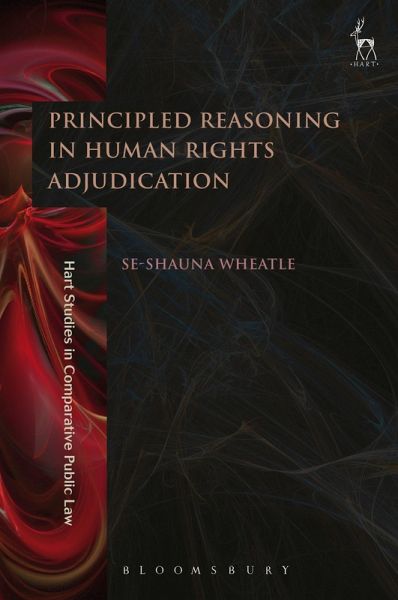
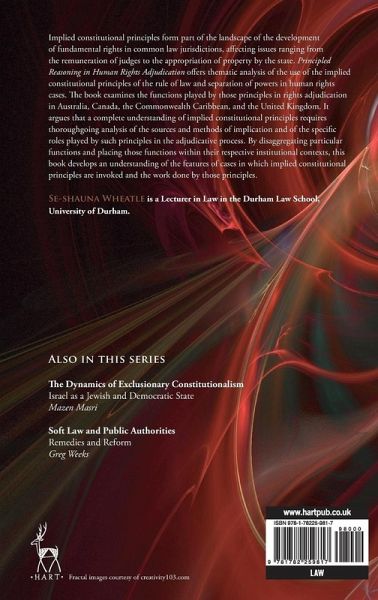
Implied constitutional principles form part of the landscape of the development of fundamental rights in common law jurisdictions, affecting issues ranging from the remuneration of judges to the appropriation of property by the state. Principled Reasoning in Human Rights Adjudication offers thematic analysis of the use of the implied constitutional principles of the rule of law and separation of powers in human rights cases. The book examines the functions played by those principles in rights adjudication in Australia, Canada, the Commonwealth Caribbean, and the United Kingdom. It argues that a complete understanding of implied constitutional principles requires thoroughgoing analysis of the sources and methods of implication and of the specific roles played by such principles in the adjudicative process. By disaggregating particular functions and placing those functions within their respective institutional contexts, this book develops an understanding of the features of cases in which implied constitutional principles are invoked and the work done by those principles.
Se-shauna Wheatle is a Lecturer in Law at Durham Law School, University of Durham. She was previously Lecturer in Law at Exeter College, University of Oxford, where she taught Constitutional Law and Administrative Law. She achieved her Bachelor of Laws (LLB) at the University of the West Indies before attending the University of Oxford as a Rhodes Scholar to read for the Bachelor of Civil Law (BCL). She subsequently completed a Master of Philosophy in Law on the constitutionality of the criminalization of same-sex relations in Jamaica and a Doctor of Philosophy in Law at the University of Oxford on 'The Impact of Implied Constitutional Principles on Fundamental Rights Adjudication in Common Law Jurisdictions'. Se-shauna pursues research in the fields of comparative human rights, common law constitutionalism, implied constitutional principles, sexual orientation and the law, and comparative constitutionalism.
Inhaltsangabe
1. Introduction: The Doctrinal and Institutional Context I. Map of the Book II. Recurring Themes Part I: The Conceptual Context and the Meanings of the Implied Constitutional Principles 2. Implied Principles and Constitutionalism I. Introduction II. On Implied Principles III. Separation of Powers and the Rule of Law in Constitutionalism IV. Conclusion 3. Judicial Conceptions of the Rule of Law I. Introduction II. Conceptions of the Rule of Law III. Development of Heads of Judicial Review IV. Explicit References to the Rule of Law in Applying a Constitution or Bill of Rights V. Conflicts Within the Rule of Law: Equality as an Application of the Rule of Law VI. Conclusion 4. Applications of the Separation of Powers I. Introduction II. Varying Separations of Powers III. Practical Application of the Separation of Powers Principle in Courts in the Westminster-style System IV. Effect of the Separation of Powers on Human Rights V. The Separation of Powers in UK Courts post-HRA VI. Conclusion Part II: Functions Played by the Implied Constitutional Principles of the Rule of Law and Separation of Powers 5. Implied Principles as Interpretative Aids I. Introduction II. Distancing Devices in Hard Cases III. Common Ground IV. Institutional Respect V. Conclusion 6. Implied Principles as Grounds for Invalidating Legislation I. Introduction II. The Practice of Invoking Implied Principles as Grounds for Invalidating Legislation III. Trends and Fault Lines IV. Conclusion 7. Implied Principles as Gateways to Comparative Law I. Introduction II. Comparativism in Constitutional Law and Human Rights III. Inheritance from Former Colonial Power IV. Principled Borrowing and a Colonial Legacy V. Developing Common Approaches to Common Problems VI. Cyclical Borrowing VII. Conclusion 8. The Legitimacy of Reliance on Implied Constitutional Principles in Fundamental Rights Adjudication I. Introduction II. Process of Implication of the Implied Constitutional Principle III. The Type of Use Involved IV. Determinacy V. The Road to Defeat of Constitutional Amendments? VI. Conclusion 9. Conclusion I. Decisional Flexibility II. Distancing Devices and Institutional Defence III. Invitations IV. Continuity and Transition V. Autochthony VI. Concluding Thoughts
1. Introduction: The Doctrinal and Institutional Context I. Map of the Book II. Recurring Themes Part I: The Conceptual Context and the Meanings of the Implied Constitutional Principles 2. Implied Principles and Constitutionalism I. Introduction II. On Implied Principles III. Separation of Powers and the Rule of Law in Constitutionalism IV. Conclusion 3. Judicial Conceptions of the Rule of Law I. Introduction II. Conceptions of the Rule of Law III. Development of Heads of Judicial Review IV. Explicit References to the Rule of Law in Applying a Constitution or Bill of Rights V. Conflicts Within the Rule of Law: Equality as an Application of the Rule of Law VI. Conclusion 4. Applications of the Separation of Powers I. Introduction II. Varying Separations of Powers III. Practical Application of the Separation of Powers Principle in Courts in the Westminster-style System IV. Effect of the Separation of Powers on Human Rights V. The Separation of Powers in UK Courts post-HRA VI. Conclusion Part II: Functions Played by the Implied Constitutional Principles of the Rule of Law and Separation of Powers 5. Implied Principles as Interpretative Aids I. Introduction II. Distancing Devices in Hard Cases III. Common Ground IV. Institutional Respect V. Conclusion 6. Implied Principles as Grounds for Invalidating Legislation I. Introduction II. The Practice of Invoking Implied Principles as Grounds for Invalidating Legislation III. Trends and Fault Lines IV. Conclusion 7. Implied Principles as Gateways to Comparative Law I. Introduction II. Comparativism in Constitutional Law and Human Rights III. Inheritance from Former Colonial Power IV. Principled Borrowing and a Colonial Legacy V. Developing Common Approaches to Common Problems VI. Cyclical Borrowing VII. Conclusion 8. The Legitimacy of Reliance on Implied Constitutional Principles in Fundamental Rights Adjudication I. Introduction II. Process of Implication of the Implied Constitutional Principle III. The Type of Use Involved IV. Determinacy V. The Road to Defeat of Constitutional Amendments? VI. Conclusion 9. Conclusion I. Decisional Flexibility II. Distancing Devices and Institutional Defence III. Invitations IV. Continuity and Transition V. Autochthony VI. Concluding Thoughts
Es gelten unsere Allgemeinen Geschäftsbedingungen: www.buecher.de/agb
Impressum
www.buecher.de ist ein Internetauftritt der buecher.de internetstores GmbH
Geschäftsführung: Monica Sawhney | Roland Kölbl | Günter Hilger
Sitz der Gesellschaft: Batheyer Straße 115 - 117, 58099 Hagen
Postanschrift: Bürgermeister-Wegele-Str. 12, 86167 Augsburg
Amtsgericht Hagen HRB 13257
Steuernummer: 321/5800/1497
USt-IdNr: DE450055826