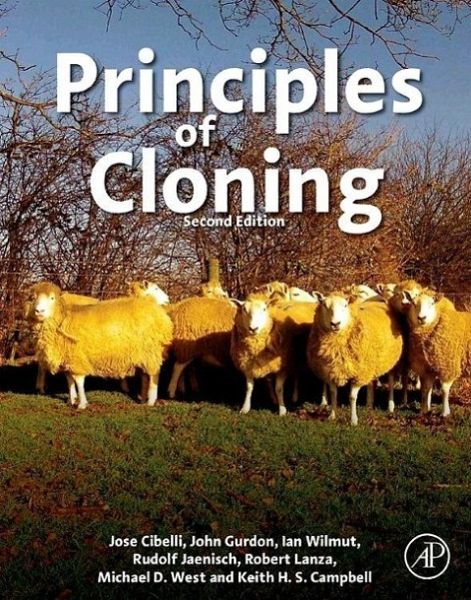
Principles of Cloning, Second Edition is the fully revised edition of the authoritative book on the science of cloning. The book presents the basic biological mechanisms of how cloning works and progresses to discuss current and potential applications in basic biology, agriculture, biotechnology, and medicine. Beginning with the history and theory behind cloning, the book goes on to examine methods of micromanipulation, nuclear transfer, genetic modification, and pregnancy and neonatal care of cloned animals. The cloning of various species-including mice, sheep, cattle, and non-mammals-is…mehr
Principles of Cloning, Second Edition is the fully revised edition of the authoritative book on the science of cloning. The book presents the basic biological mechanisms of how cloning works and progresses to discuss current and potential applications in basic biology, agriculture, biotechnology, and medicine. Beginning with the history and theory behind cloning, the book goes on to examine methods of micromanipulation, nuclear transfer, genetic modification, and pregnancy and neonatal care of cloned animals. The cloning of various species-including mice, sheep, cattle, and non-mammals-is considered as well. The Editors have been involved in a number of breakthroughs using cloning technique, including the first demonstration that cloning works in differentiated cells done by the Recipient of the 2012 Nobel Prize for Physiology or Medicine - Dr John Gurdon; the cloning of the first mammal from a somatic cell - Drs Keith Campbell and Ian Wilmut; the demonstration that cloning can reset the biological clock - Drs Michael West and Robert Lanza; the demonstration that a terminally differentiated cell can give rise to a whole new individual - Dr Rudolf Jaenisch and the cloning of the first transgenic bovine from a differentiated cell - Dr Jose Cibelli. The majority of the contributing authors are the principal investigators on each of the animal species cloned to date and are expertly qualified to present the state-of-the-art information in their respective areas.
Handbook of Nanosafety: Measurement, Exposure and Toxicology, written by leading international experts in nanosafety, provides a comprehensive understanding of engineered nanomaterials (ENM), current international nanosafety regulation, and how ENM can be safely handled in the workplace. Increasingly, the importance of safety needs to be considered when promoting the use of novel technologies like ENM. With its use of case studies and exposure scenarios, Handbook of Nanosafety demonstrates techniques to assess exposure and risks and how these assessments can be applied to improve workers' safety. Topics covered include the effects of ENM on human health, characterization of ENM, aerosol dynamics and measurement, exposure and risk assessment, and safe handling of ENM. Based on outcomes from the NANODEVICE initiative, this is an essential resource for those who need to apply current nanotoxicological thinking in the workplace and anyone who advises on nanosafety, such as professionals in toxicology, occupational safety and risk assessment.
Inhaltsangabe
List of Contributors. Preface. Introduction. Historical Perspective. PART ONE-BASIC BIOLOGICAL PROCESES Activation of Mammalian Oocytes. The Nucleus. Nuclear Reprogramming: Biological and Technological Constraints. Plasticity of Somatic Nucleus by Epigenetic Reprogramming via Cell Hybridization. Cell Cycle. Determinants of Pluripotency in Mammals. Cloning and Aging. PART TWO-METHODS Micromanipulation Techniques for Cloning. Microinsemination and Nuclear Transfer with Male Germ Cells. Development of Viable Mammalian Embryos in Vitro: Evolution of Sequential Media. Genetic and Phenotypic Similarity Among Members of Mammalian Clonal Sets. Genetic Modification and Cloning in Mammals. Pregnancy and Neonatal Care of Clone Animals. Donor Cell Type and Cloning Efficiency in Mammals. PART THREE-CLONING BY SPECIES The Cloning of Amphibians. Cloning of Fish. Cloning of Mice. Cloning of Rabbits. Nuclear Transfer in Swine. Cloning of Cattle. Cloning of Sheep. Cloning of Goats. PART FOUR-CURRENTLY SOUGHT AFTER SPECIES Cloning of Endangered Species. Cloning of Rats. PART FIVE-NUCLEAR TRANSFER IN PRIMATES Cloning in Non-Human Primates. PART SIX-APPLICATIONS Nuclear Transfer for Stem Cells (CRNT). Current Research and Commercial Applications of Cloning Technology. Transgenic Cloned Goats and the Production of Therapeutic Proteins. PART SEVEN-ETHICAL AND LEGAL AFFAIRS Ethical Implications of Cloning. FINAL REMARKS Mammalian Cloning- Challenges for the Future.
Es gelten unsere Allgemeinen Geschäftsbedingungen: www.buecher.de/agb
Impressum
www.buecher.de ist ein Internetauftritt der buecher.de internetstores GmbH
Geschäftsführung: Monica Sawhney | Roland Kölbl | Günter Hilger
Sitz der Gesellschaft: Batheyer Straße 115 - 117, 58099 Hagen
Postanschrift: Bürgermeister-Wegele-Str. 12, 86167 Augsburg
Amtsgericht Hagen HRB 13257
Steuernummer: 321/5800/1497
USt-IdNr: DE450055826