
Andere Kunden interessierten sich auch für
 The Natural History Of The State24,99 €
 Problems in American Democracy33,99 €
 Contribution of local communities to the maintenance of natural capital27,99 €
 Socio-economic overview of natural resources in the DR of Congo45,99 €
 Governance of the provincial economy and finances:53,99 €
 Problems of monitoring development projects in Africa29,99 €
 Management of human and wildlife conflicts in DR Congo40,99 €


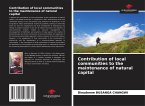




So far, science has assumed that there were three waves of migration from Africa to Eurasia: 2 million years ago it was Homo erectus, half a million years ago it was Neanderthal ancestors and 50,000 years ago it was our ancestors, Homo sapiens. We can now add a fourth wave to them, at least after analyzing the hereditary material. "There must have been another wave of migration of this new species of primitive man from Africa to Asia. But when it did, we can't say for sure yet," says biochemist Johannes Krause, a researcher at the Leipzig Institute who managed to decipher DNA. To do so, he compared the DNA of the little finger phalanx with that of Neanderthals and living people. The hereditary material was markedly different. "For me, it was completely unexpected. At first I didn't want to believe it, but when a variety of methods came up with the same result and my research team leader, Svante Peebo, was convinced of it," says the 30-year-old scientist who is now working as a junior professor at the University of Tuebingen to set up a working group on palaeogenetics.