
Andere Kunden interessierten sich auch für
 Food Wastes48,99 €
 Production of Bioethanol from Mahua Flower32,99 €
 Study on keratinophilic fungi and their keratinase production50,99 €
 Microbial Production of Enzyme from Dairy Effluent26,99 €
 Prodigiosin production from cassava waste26,99 €
 Role of Microbes in Environment26,99 €
 Internal Quality Control And Quality Assurance For Tanzania24,99 €
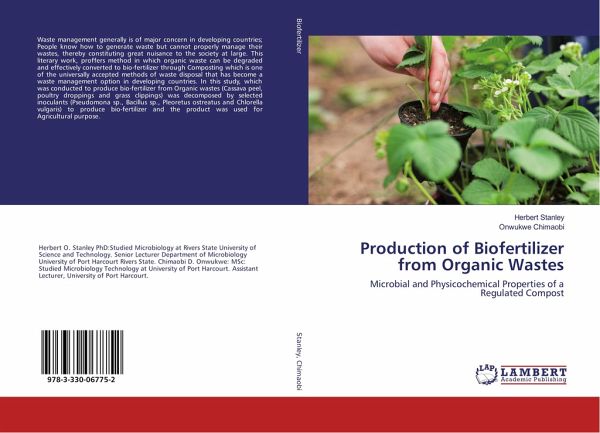
Waste management generally is of major concern in developing countries; People know how to generate waste but cannot properly manage their wastes, thereby constituting great nuisance to the society at large. This literary work, proffers method in which organic waste can be degraded and effectively converted to bio-fertilizer through Composting which is one of the universally accepted methods of waste disposal that has become a waste management option in developing countries. In this study, which was conducted to produce bio-fertilizer from Organic wastes (Cassava peel, poultry droppings and grass clippings) was decomposed by selected inoculants (Pseudomona sp., Bacillus sp., Pleoretus ostreatus and Chlorella vulgaris) to produce bio-fertilizer and the product was used for Agricultural purpose.