
Andere Kunden interessierten sich auch für
 Sexual Behaviours of Adolescents27,99 €
 Narcissistic Personality Disorder. Maladaptive and criminal behaviours15,95 €
 The role of health beliefs. Motivators for cardiovascular health preventative behaviours among postmenopausal women in Malaysia15,95 €
 Relapse Prevention for Addictive Behaviours52,99 €
 What practitioners consider to be the skills and behaviours of an effective people project manager17,95 €
 Morality Behind Bars47,05 €
 Promoting Healthy Attachments: Hands-On Techniques to Use with Your Clients34,99 €



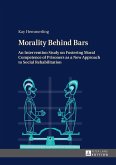

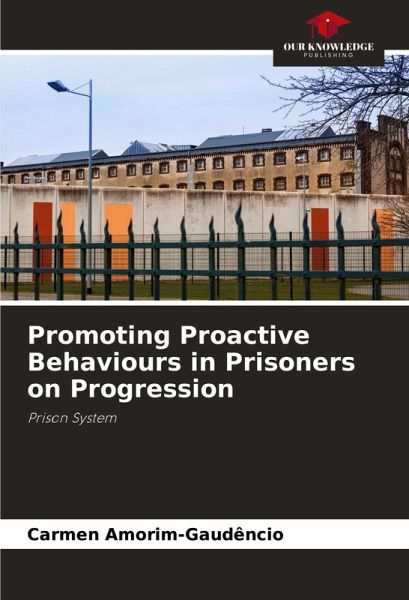
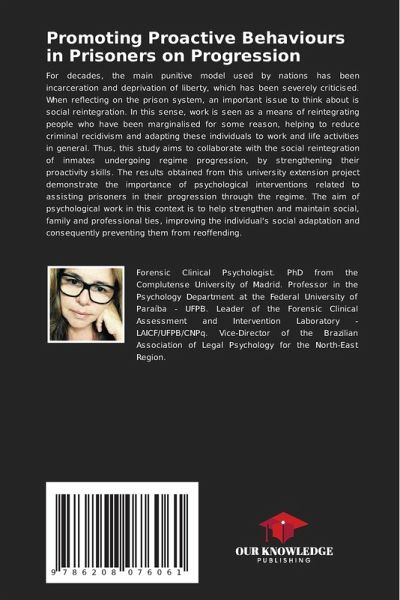
For decades, the main punitive model used by nations has been incarceration and deprivation of liberty, which has been severely criticised. When reflecting on the prison system, an important issue to think about is social reintegration. In this sense, work is seen as a means of reintegrating people who have been marginalised for some reason, helping to reduce criminal recidivism and adapting these individuals to work and life activities in general. Thus, this study aims to collaborate with the social reintegration of inmates undergoing regime progression, by strengthening their proactivity skills. The results obtained from this university extension project demonstrate the importance of psychological interventions related to assisting prisoners in their progression through the regime. The aim of psychological work in this context is to help strengthen and maintain social, family and professional ties, improving the individual's social adaptation and consequently preventing them from reoffending.