
- Broschiertes Buch
- Merkliste
- Auf die Merkliste
- Bewerten Bewerten
- Teilen
- Produkt teilen
- Produkterinnerung
- Produkterinnerung
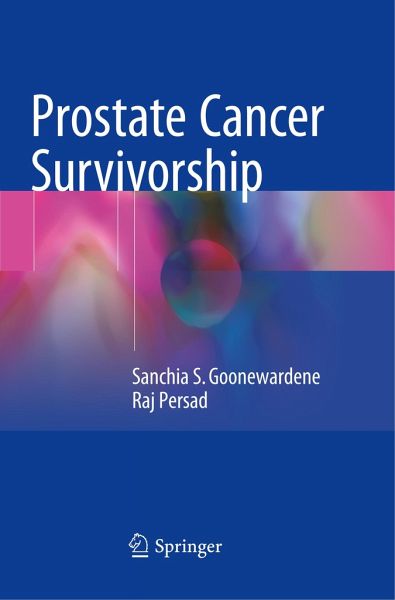
This book provides information on a range of issues related to prostate cancer survivorship, including; psychosexual care, health related quality of life, treatment, follow-up care, new psychosexual pathways, and acute and chronic co-morbidities. The book also covers the needs and challenges in survivorship care, the requirements of care, the future of survivorship care, and role of patient conferences.
This book aims to give oncologists, urologists, and specialist nurses help in how to manage patients in the prostate cancer survivorship phase. This guidance is based on real life…mehr
Andere Kunden interessierten sich auch für
 Tumor Liquid Biopsies61,99 €
 Sexually Transmitted Infections and Sexually Transmitted Diseases152,99 €
 Viruses, Genes, and Cancer121,99 €
 Domenico RibattiInflammation and Angiogenesis76,99 €
 Mahin KhatamiInflammation, Aging and Cancer113,99 €
 Molecular Pathology of Breast Cancer115,99 €
 Mahin KhatamiInflammation, Aging and Cancer113,99 €
-
-
-



This book provides information on a range of issues related to prostate cancer survivorship, including; psychosexual care, health related quality of life, treatment, follow-up care, new psychosexual pathways, and acute and chronic co-morbidities. The book also covers the needs and challenges in survivorship care, the requirements of care, the future of survivorship care, and role of patient conferences.
This book aims to give oncologists, urologists, and specialist nurses help in how to manage patients in the prostate cancer survivorship phase. This guidance is based on real life experiences handling prostate cancer survivorship, and is developed further through utilising the views of both health care professionals and patients.
This book aims to give oncologists, urologists, and specialist nurses help in how to manage patients in the prostate cancer survivorship phase. This guidance is based on real life experiences handling prostate cancer survivorship, and is developed further through utilising the views of both health care professionals and patients.
Produktdetails
- Produktdetails
- Verlag: Springer / Springer International Publishing / Springer, Berlin
- Artikelnr. des Verlages: 978-3-030-09738-7
- Seitenzahl: 396
- Erscheinungstermin: 21. Dezember 2018
- Englisch
- Abmessung: 235mm x 155mm x 20mm
- Gewicht: 670g
- ISBN-13: 9783030097387
- ISBN-10: 3030097382
- Artikelnr.: 56493295
- Herstellerkennzeichnung
- Springer-Verlag GmbH
- Tiergartenstr. 17
- 69121 Heidelberg
- ProductSafety@springernature.com
- Verlag: Springer / Springer International Publishing / Springer, Berlin
- Artikelnr. des Verlages: 978-3-030-09738-7
- Seitenzahl: 396
- Erscheinungstermin: 21. Dezember 2018
- Englisch
- Abmessung: 235mm x 155mm x 20mm
- Gewicht: 670g
- ISBN-13: 9783030097387
- ISBN-10: 3030097382
- Artikelnr.: 56493295
- Herstellerkennzeichnung
- Springer-Verlag GmbH
- Tiergartenstr. 17
- 69121 Heidelberg
- ProductSafety@springernature.com
Sanchia S. Goonewardene MBChB (Hons.Clin.Sc), BMedSc(Hons), PGCGC, Dip.SSc, MRCS (Ed and Eng). Sanchia Goonewardene qualified from Birmingham Medical School with Honours in Clinical Science. After that she completed her Foundation training at the Royal Centre for Defence Medicine. Her Core General Surgery training was completed in Coventry and Warwickshire. She has worked as Urology Registrar at Guys and St Thomas Hospitals and the Royal Free and UCL and has over 370 publications to her name. She has significantly contributed to the Urological Academic World with her first two books, Core Surgical Procedures for Urology Trainees and Prostate Cancer Survivorship -- she has since added a section to EAU on Prostate Cancer Survivorship and Supportive Care, is an associate member of an EAU guidelines panel and has currently been given her first editorial board position. David M. Albala graduated with a geology degree from Lafayette College in Easton, Pennsylvania. He completed his medical school training at Michigan State University and went on to complete his surgical residency at the Dartmouth-Hitchcock Medical Center. Following this, Dr. Albala was an endourology fellow at Washington University Medical Center under the direction of Ralph V. Clayman. He practiced at Loyola University Medical Center in Chicago and rose from the ranks of Instructor to full Professor in Urology and Radiology in eight years. After 10 years, he became a tenured Professor at Duke University Medical Center in North Carolina. At Duke, he was Co-Director of the Endourology fellowship and Director for the Center of Minimally Invasive and Robotic Urological Surgery. He has over 150 publications in peer-reviewed journals and has authored three textbooks in endourology and one in general urology. He serves on the editorial board for the Journal of Robotic Surgery, Journal of Endourology, Current Opinions in Urology and Urology Index and Reviews. He serves as a reviewerfor eight surgical journals. At the present time he is Chief of Urology at Crouse Hospital in Syracuse, New York and Medical Director for Associated Medical Professionals. He is considered a national and international authority in laparoscopic and robotic urological surgery and has been an active teacher in this area for over 20 years. His research and clinical interests have focused on robotic urological surgery. In addition, other clinical interests include minimally invasive treatment of benign prostatic hypertrophy (BPH) and the use of fibrin sealants in surgery. He has been a Visiting Professor at numerous institutions across the United States as well as oversea s in countries such as India, China, Iceland, Germany, France, Japan, Brazil, Australia, and Singapore. In addition, he has done operative demonstrations in over 32 countries and 23 states.
1. Acknowledgements.- 2. Introduction.- 3. Prostate cancer.- 4. Cancer survivorship.- 5. Prostate cancer and radical treatment.- 6. Definition of Psychosexual care and importance post-surgery for prostate cancer. 7.Barriers to psychosexual care.- 8. Impact of Psychosexual care on patient health related quality of life (QOL).- 9. Importance of addressing psychosexual concerns.- 10. Pharmacological and non-pharmacological treatment for improved sexual function.- 11. Post treatment monitoring for recurrence - the 'usual pathway.- 12. Current follow-up care pathway vs. a new 'psychosexual' pathway.- 13. Current prostate cancer survivorship care pathways.- 14. Impact of Acute and chronic co-morbidities on psychosexual concerns.- 15. Barriers to psychosexual care- the 'psycho-social' part.- 16. Assessment of psychosexual concerns, health related quality of life and acute and chronic co-morbidities in patients post-surgery for prostate cancer.- 17. Psychosexual interventions.- 18. Needs, challenges and UK survivorship initiative and solutions.- 19. Needs and challenges in survivorship care.- 20. Systematic review - Requirement for care.- 21 Systematic review - search strategy.- 22. Systematic Review - eligibility and types of studies to be included.- 23. Systematic review- identifying studies, data extraction and quality assessment of studies.- 24. Systematic review - characteristics of studies.- 25. Statement of main findings.- 26. Quality assessment of studies - systematic review.- 27. Did the studies address clearly focused issues?.- 28. Recruitment of cohorts.- 29. Tools used in assessment.- 30. Confounding factors and alteration of study design for studies in systematic review.- 31. Unmet needs and psychosexual concerns.- 32. Medical components of psychosexual pathways- medications and erectile devices.- 33. Medical components of psychosexual pathways- intracavernosal injection therapy and penile prostheses.- 34. Requirement for psychosexual pathways.- 35. Communication and support.- 36. Psychosexual concerns and time since procedure.- 37. Patient age, co-morbidities and psychosexual concerns.- 38. Psychosexual impairment, degree of surgery and erectile aids.- 39. Psychosexual care and quality of life.- 40. Psychosexual care and Integration back into society.- 41. Strengths and limitations- systematic review.- 42. Findings in relation to other psychosexual studies and trends in literature - systematic review.- 43. Current systematic reviews relating to systematic review.- 44. Psychosexual care and unmet need, Requirements for a psychosexual pathway and components of pathways.- 45. Psychosexual care and role of couple.- 46. Interventions on psychosexual concerns.- 47. Statement of main findings and specific areas of unmet needs arising from systematic review.- 48. Systematic review - conclusion.- 49. Follow-up pathway structures.- 50. Research methods in survivorship.- 51. Patient focus group results.- 52. Healthcare professional focus group results.- 53. Generation of themes.- 54. Survivorship care an unmet need.- 55. A new model of care.- 56. Areas to address in psychosexual care and survivorship.- 57. The future for survivorship care.- 58. Impact of psychosexual care on uro oncology.- 59. Impact of acute and chronic co-morbidities on survivorship.- 60. Assessment of psychosexual concerns, health related quality of life and acute and chronic co-morbidities in patients post-surgery for prostate cancer.- 61. Psychosexual interventions in survivorship care.- 62. Psychosexual care - the literature.- 63. Current NHS care.- 64. Unmet needs.- 65. The Worcestershire Prostate cancer database.- 66. The Prostate Cancer Survivorship care assessment tool.- 67. Role of patient conferences in current care.- 68. Prostate cancer survivorship- a systematic review.- 69. Medical requirements in survivorship.- 70. Sexual impairment in survivorship.- 71. Work related symptoms and support.- 72. Diet and exercise.- 73. Survivorship Inerventions.- 74.Development of survivorship interventions.- 75. Survivorship studies, methods of follow-up.- 76. Survivorship needs.- 77. Lack of care.- 78. Exercise and nutrition.- 79. Communication and families.- 80. Areas of care to be developed.- 81. Mixed methods research.- 82. Symptom control in survivorship care.- 83. Ongoing health needs.- 84. Medical requirements in survivorship.- 85. Work related symptoms.- 86. Medical care and communication.- 87. Psychosexual impairment and adjuvant therapy.- 88. Psychosexual care- what the literature says.- 89. Systematic review- diet and exercise therapy.- 90. UK diet and exercise studies.- 91. Medical requirements in survivorship.- 92. Diet and exercise- is it important?.- 93. Diet and exercise interventions.- 94. Patient diet and exercise needs.
1. Acknowledgements.- 2. Introduction.- 3. Prostate cancer.- 4. Cancer survivorship.- 5. Prostate cancer and radical treatment.- 6. Definition of Psychosexual care and importance post-surgery for prostate cancer. 7.Barriers to psychosexual care.- 8. Impact of Psychosexual care on patient health related quality of life (QOL).- 9. Importance of addressing psychosexual concerns.- 10. Pharmacological and non-pharmacological treatment for improved sexual function.- 11. Post treatment monitoring for recurrence - the 'usual pathway.- 12. Current follow-up care pathway vs. a new 'psychosexual' pathway.- 13. Current prostate cancer survivorship care pathways.- 14. Impact of Acute and chronic co-morbidities on psychosexual concerns.- 15. Barriers to psychosexual care- the 'psycho-social' part.- 16. Assessment of psychosexual concerns, health related quality of life and acute and chronic co-morbidities in patients post-surgery for prostate cancer.- 17. Psychosexual interventions.- 18. Needs, challenges and UK survivorship initiative and solutions.- 19. Needs and challenges in survivorship care.- 20. Systematic review - Requirement for care.- 21 Systematic review - search strategy.- 22. Systematic Review - eligibility and types of studies to be included.- 23. Systematic review- identifying studies, data extraction and quality assessment of studies.- 24. Systematic review - characteristics of studies.- 25. Statement of main findings.- 26. Quality assessment of studies - systematic review.- 27. Did the studies address clearly focused issues?.- 28. Recruitment of cohorts.- 29. Tools used in assessment.- 30. Confounding factors and alteration of study design for studies in systematic review.- 31. Unmet needs and psychosexual concerns.- 32. Medical components of psychosexual pathways- medications and erectile devices.- 33. Medical components of psychosexual pathways- intracavernosal injection therapy and penile prostheses.- 34. Requirement for psychosexual pathways.- 35. Communication and support.- 36. Psychosexual concerns and time since procedure.- 37. Patient age, co-morbidities and psychosexual concerns.- 38. Psychosexual impairment, degree of surgery and erectile aids.- 39. Psychosexual care and quality of life.- 40. Psychosexual care and Integration back into society.- 41. Strengths and limitations- systematic review.- 42. Findings in relation to other psychosexual studies and trends in literature - systematic review.- 43. Current systematic reviews relating to systematic review.- 44. Psychosexual care and unmet need, Requirements for a psychosexual pathway and components of pathways.- 45. Psychosexual care and role of couple.- 46. Interventions on psychosexual concerns.- 47. Statement of main findings and specific areas of unmet needs arising from systematic review.- 48. Systematic review - conclusion.- 49. Follow-up pathway structures.- 50. Research methods in survivorship.- 51. Patient focus group results.- 52. Healthcare professional focus group results.- 53. Generation of themes.- 54. Survivorship care an unmet need.- 55. A new model of care.- 56. Areas to address in psychosexual care and survivorship.- 57. The future for survivorship care.- 58. Impact of psychosexual care on uro oncology.- 59. Impact of acute and chronic co-morbidities on survivorship.- 60. Assessment of psychosexual concerns, health related quality of life and acute and chronic co-morbidities in patients post-surgery for prostate cancer.- 61. Psychosexual interventions in survivorship care.- 62. Psychosexual care - the literature.- 63. Current NHS care.- 64. Unmet needs.- 65. The Worcestershire Prostate cancer database.- 66. The Prostate Cancer Survivorship care assessment tool.- 67. Role of patient conferences in current care.- 68. Prostate cancer survivorship- a systematic review.- 69. Medical requirements in survivorship.- 70. Sexual impairment in survivorship.- 71. Work related symptoms and support.- 72. Diet and exercise.- 73. Survivorship Inerventions.- 74.Development of survivorship interventions.- 75. Survivorship studies, methods of follow-up.- 76. Survivorship needs.- 77. Lack of care.- 78. Exercise and nutrition.- 79. Communication and families.- 80. Areas of care to be developed.- 81. Mixed methods research.- 82. Symptom control in survivorship care.- 83. Ongoing health needs.- 84. Medical requirements in survivorship.- 85. Work related symptoms.- 86. Medical care and communication.- 87. Psychosexual impairment and adjuvant therapy.- 88. Psychosexual care- what the literature says.- 89. Systematic review- diet and exercise therapy.- 90. UK diet and exercise studies.- 91. Medical requirements in survivorship.- 92. Diet and exercise- is it important?.- 93. Diet and exercise interventions.- 94. Patient diet and exercise needs.