
Andere Kunden interessierten sich auch für
 Protestants, Catholics, and University Education20,99 €
 Protestants, Catholics, and University Education32,99 €
 Catholics in London 1800 -185057,99 €
 Symbolism, Or, Exposition Of The Doctrinal Differences Between Catholics And Protestants, As Evidenced By Their Symbolical Writings37,99 €
") A True, Sincere And Modest Defense Of English Catholics That Suffer For Their Faith Both At Home And Abroad V2 (1914)23,99 €
A True, Sincere And Modest Defense Of English Catholics That Suffer For Their Faith Both At Home And Abroad V2 (1914)23,99 € The History of the Free Church of Scotland's Mission to the Jews in Budapest and its Impact on the Reformed Church of Hungary132,40 €
 Puritans and Catholics in the Trans-Atlantic World 1600-180022,99 €
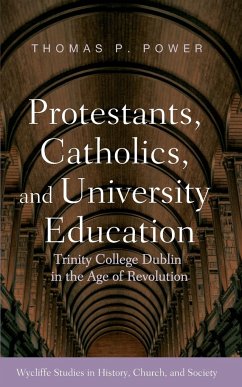




In the course of the nineteenth century, the boundaries that divided Protestants, Catholics and Jews in Germany were redrawn, challenged, rendered porous and built anew. This book addresses this redrawing. It considers the relations of three religious groups-Protestants, Catholics, and Jews-and asks how, by dint of their interaction, they affected one another.Previously, historians have written about these communities as if they lived in isolation. Yet these groups coexisted in common space, and interacted in complex ways. This is the first book that brings these separate stories together and lays the foundation for a new kind of religious history that foregrounds both cooperation and conflict across the religious divides. The authors analyze the influences that shaped religious coexistence and they place the valences of co-operation and conflict in deep social and cultural contexts. The result is a significantly altered understanding of the emergence of modern religious communities as well as new insights into the origins of the German tragedy, which involved the breakdown of religious coexistence.