
Andere Kunden interessierten sich auch für
 The Islands of the Aegean34,99 €
 The Islands of the Aegean34,99 €
 The Islands of the Aegean26,90 €
 Aegean Days36,99 €
 The Islands of the Aegean26,90 €
 Aegean Archaeology34,99 €
 Aegean Civilizations30,99 €



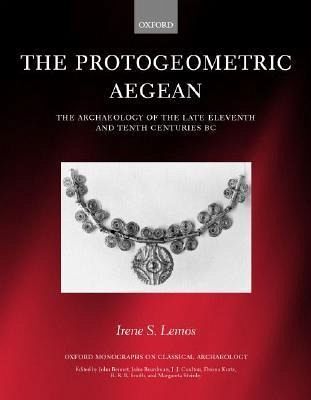
This is the first full and up-to-date survey of Aegean archaeology at the beginning of the Iron Age (late eleventh and tenth centuries BC) since Snodgrass's classic The Dark Age of Greece (1971). These crucial 150 years in the development of ancient Greek society are known as the Protogeometric period after the characteristic pottery which was commonly in use in the Aegean. The book offers a detailed account of old and new discoveries with chapters on pottery, metal finds, burial customs, and architectural remains (and how to use them to understand the social and political structure of the society). This analysis of the material culture of the period covers not only well-known sites such as Athens and Lefkandi but also other, less familiar, regions, many of which are discussed in English for the first time. In addition, Dr Lemos examines a number of specific issues such as relative and absolute chronology, the introduction of iron technology in the Aegean, and the use of handmade pottery and jewellery. The archaeological record is also used to suggest interpretations of the social and political structure of the society, cult practices, and the use of Homer in understanding the period. The book challenges the description of the period from the collapse of the Mycenean palace system to the formation of early Greek city-states as the 'Dark Age of Greece'. Dr Lemos argues that some of the advances on socio-economic structures towards the formation of states, which were thought to belong to the eighth century BC, might have started to develop much earlier, in the course of the tenth century.
Review quote:
... a useful bibliographical repository and a good starting point for anyone wishing to consult the primary traditional literature. (Bryn Mawr Classical Review)
Lemos's comprehensive assessment of the pottery, metal finds, settlements, buildings and burial practices of the time results in what seems set to become a standard work for many years to come. (Anglo-Hellenic Review)
This is an up-to-date survey of Aegean archaeology at the beginning of the Iron Age (late eleventh and tenth centuries BC). There are chapters on pottery, metal finds, burial customs, architectural remains (and how to use them to understand the social and political structure of the society), cult practices, and developments towards state formation. The book will be useful to field archaeologists, historians of ancient Greece, and students.
Review quote:
... a useful bibliographical repository and a good starting point for anyone wishing to consult the primary traditional literature. (Bryn Mawr Classical Review)
Lemos's comprehensive assessment of the pottery, metal finds, settlements, buildings and burial practices of the time results in what seems set to become a standard work for many years to come. (Anglo-Hellenic Review)
This is an up-to-date survey of Aegean archaeology at the beginning of the Iron Age (late eleventh and tenth centuries BC). There are chapters on pottery, metal finds, burial customs, architectural remains (and how to use them to understand the social and political structure of the society), cult practices, and developments towards state formation. The book will be useful to field archaeologists, historians of ancient Greece, and students.