
Proton Conductors
Solids, Membranes and Gels - Materials and Devices
Herausgeber: Colomban, Philippe
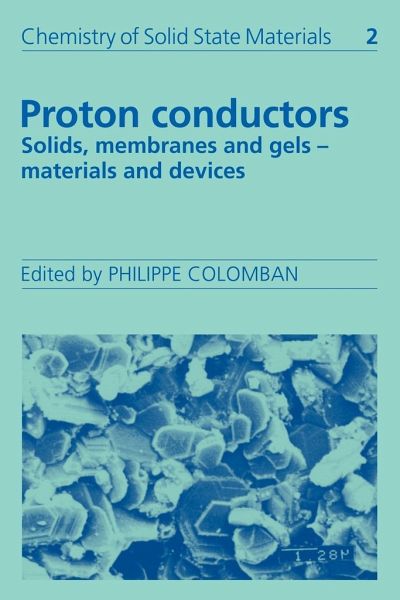
Proton Conductors
Solids, Membranes and Gels - Materials and Devices
Herausgeber: Colomban, Philippe
- Broschiertes Buch
- Merkliste
- Auf die Merkliste
- Bewerten Bewerten
- Teilen
- Produkt teilen
- Produkterinnerung
- Produkterinnerung
This book gives a comprehensive review of proton conductors, including theory, techniques, the materials themselves and applications.
Andere Kunden interessierten sich auch für
 V. G. PeschanskyKinetic Phenomena and Collective Modes in Highly Anisotropic Organic Conductors40,99 €
 J. S. DugdaleThe Electrical Properties of Disordered Metals63,99 €
 Brian K. TannerIntroduction to the Physics of Electrons in Solids75,99 €
 Delchasss WoodruffModern Techniques of Surface Science126,99 €
 Solids Far from Equilibrium79,99 €
 David RedfieldPhoto-Induced Defects in Semiconductors62,99 €
 R. H. TredgoldOrder in Thin Organic Films44,99 €
-
-
-



This book gives a comprehensive review of proton conductors, including theory, techniques, the materials themselves and applications.
Produktdetails
- Produktdetails
- Verlag: Cambridge University Press
- Seitenzahl: 616
- Erscheinungstermin: 31. Mai 2008
- Englisch
- Abmessung: 229mm x 152mm x 36mm
- Gewicht: 986g
- ISBN-13: 9780521078900
- ISBN-10: 0521078903
- Artikelnr.: 24488125
- Herstellerkennzeichnung
- Libri GmbH
- Europaallee 1
- 36244 Bad Hersfeld
- gpsr@libri.de
- Verlag: Cambridge University Press
- Seitenzahl: 616
- Erscheinungstermin: 31. Mai 2008
- Englisch
- Abmessung: 229mm x 152mm x 36mm
- Gewicht: 986g
- ISBN-13: 9780521078900
- ISBN-10: 0521078903
- Artikelnr.: 24488125
- Herstellerkennzeichnung
- Libri GmbH
- Europaallee 1
- 36244 Bad Hersfeld
- gpsr@libri.de
List of contributors; Preface; Part I. The Hydrogen Bond and Protonic
Species: 1. The hydrogen bond and chemical parameters favouring proton
mobility in solids A. Potier; 2. Protonic species and their structures D.
J. Jones and J. Rozière; 3. Proton conductors: classification and
conductivity Ph. Colomban and A. Novak; 4. Defects, non-stoichiometry and
phase transitions Ph. Colomban and A. Novak; 5. Structural studies of
proton conductors J. O. Thomas; 6. Hydrogen in metals: structure, diffusion
and tunnelling I. Svare; Part II. Materials: Preparation, Structures and
Properties: 7. Structure and characterization of hydrogen insertion
compounds of metal oxides P. G. Dickens and A. M. Chippindale; 8. High
temperature proton conductors based on perovskite-type oxides H. Iwahara;
9. Highly ionic hydroxides: unexpected proton conductivity in Mg(OH)2 and
homologues F. Freund; 10. Ice I. A. Ryzhkin; 11. Anhydrous materials:
oxonium perchlorate, acid phosphates, arsenates, sulphates and selenates
Ph. Colomban and A. Novak; 12. Hydrogen behaviour in graphite-nitric acid
intercalation compounds H. Fuzellier and J. Conard; Section 1. A. Inorganic
Ion Exchangers: 13. Proton-containing ß- and ß"-alumina structure type
compounds H. Ikawa; 14. Proton conduction in zeolites E. Krogh Andersen, I.
G. Krogh Anderson and E. Skou; 15. Proton containing NASICON phases A.
Clearfield; Section 2. B. Layer Hydrates: 16. Phosphates and phosphonates
of tetravalent metals as protonic conductors G. Alberti and M. Casciola;
17. Hydrogen uranyl phosphate H3OUO2PO4.3H2O (HUP), and related materials
Ph. Colomban and A. Novak; 18. From crystalline to amorphous (particle)
hydrates: inorganic polymers, glasses, clays, gels and porous media Ph.
Colomban and A. Novak; 19. Perfluorinated membranes G. Pourcelly and C.
Gavach; 20. Mixed inorganic-organic systems: the acid/polymer blends J. C.
Lassègues; Part III. Proton Dynamics and Charge Transport: 21. Incoherent
neutron scattering studies of proton conductors: from the anhydrous solid
state to aqueous solutions J. C. Lassègues; 22. NMR studies of local
motions in fast protonic conductors S. V. Bhat; 23. Vibrational
spectroscopy of proton conductors Ph. Colomban and A. Novak; 24. Raman
spectroscopic studies of proton conductors R. Frech; 25. Frequency
dependent conductivity, microwave dielectric relaxation and proton dynamics
Ph. Colomban and J. C. Badot; 26. Measuring the true proton conductivity
K.-D. Kreuer; 27. D.c. techniques and a.c./d.c. combination techniques E.
Skou, I. G. Krogh Andersen and E. Krogh Andersen; 28. NMR in gels and
porous media J. P. Korb and F. Devreux; Part IV. Proton Diffusion
Mechanisms: 29. Mobility in hydrogen-containing oxide bronzes: the
atomic-level detail R. C. T. Slade; 30. Conductivity mechanisms and models
in anhydrous protonic conductors Ph. Colomban and A. Novak; 31. Conduction
mechanisms in materials with volatile molecules K.-D. Kreuer; Part V.
Devices: Section 1. A. Energy Storage and Production: 32. Applications of
perfluorinated proton conductors (Nafions) C. Gavach and G. Pourcelly; 33.
Synthesis of polycrystalline H30+ and NH4+ß/ß"Al203 and potential
application in steam electrolysis/fuel-cells P. S. Nicholson; 34.
Fuel-cells, steam-electrolysis for hydrogen production and hydrogen
separation using high temperature protonic conductors H. Iwahara; Section
2. B. Small Components and Microionic Devices: 35. Ice-based devices I. A.
Ryzhkin; 36. Solid-state gas sensors operating at room temperature N. Miura
and N. Ymazoe; 37. All solid-state protonic batteries J. Guitton, C.
Poinsignon and J. Y. Sanchez; 38. Applications of proton conductors in
electrochromic devices (ECDs) O. Bohnke; 39. Supercapacitors and
interfacial charge accumulation devices Ph. Colomban and M. Pham-Thi;
Index.
Species: 1. The hydrogen bond and chemical parameters favouring proton
mobility in solids A. Potier; 2. Protonic species and their structures D.
J. Jones and J. Rozière; 3. Proton conductors: classification and
conductivity Ph. Colomban and A. Novak; 4. Defects, non-stoichiometry and
phase transitions Ph. Colomban and A. Novak; 5. Structural studies of
proton conductors J. O. Thomas; 6. Hydrogen in metals: structure, diffusion
and tunnelling I. Svare; Part II. Materials: Preparation, Structures and
Properties: 7. Structure and characterization of hydrogen insertion
compounds of metal oxides P. G. Dickens and A. M. Chippindale; 8. High
temperature proton conductors based on perovskite-type oxides H. Iwahara;
9. Highly ionic hydroxides: unexpected proton conductivity in Mg(OH)2 and
homologues F. Freund; 10. Ice I. A. Ryzhkin; 11. Anhydrous materials:
oxonium perchlorate, acid phosphates, arsenates, sulphates and selenates
Ph. Colomban and A. Novak; 12. Hydrogen behaviour in graphite-nitric acid
intercalation compounds H. Fuzellier and J. Conard; Section 1. A. Inorganic
Ion Exchangers: 13. Proton-containing ß- and ß"-alumina structure type
compounds H. Ikawa; 14. Proton conduction in zeolites E. Krogh Andersen, I.
G. Krogh Anderson and E. Skou; 15. Proton containing NASICON phases A.
Clearfield; Section 2. B. Layer Hydrates: 16. Phosphates and phosphonates
of tetravalent metals as protonic conductors G. Alberti and M. Casciola;
17. Hydrogen uranyl phosphate H3OUO2PO4.3H2O (HUP), and related materials
Ph. Colomban and A. Novak; 18. From crystalline to amorphous (particle)
hydrates: inorganic polymers, glasses, clays, gels and porous media Ph.
Colomban and A. Novak; 19. Perfluorinated membranes G. Pourcelly and C.
Gavach; 20. Mixed inorganic-organic systems: the acid/polymer blends J. C.
Lassègues; Part III. Proton Dynamics and Charge Transport: 21. Incoherent
neutron scattering studies of proton conductors: from the anhydrous solid
state to aqueous solutions J. C. Lassègues; 22. NMR studies of local
motions in fast protonic conductors S. V. Bhat; 23. Vibrational
spectroscopy of proton conductors Ph. Colomban and A. Novak; 24. Raman
spectroscopic studies of proton conductors R. Frech; 25. Frequency
dependent conductivity, microwave dielectric relaxation and proton dynamics
Ph. Colomban and J. C. Badot; 26. Measuring the true proton conductivity
K.-D. Kreuer; 27. D.c. techniques and a.c./d.c. combination techniques E.
Skou, I. G. Krogh Andersen and E. Krogh Andersen; 28. NMR in gels and
porous media J. P. Korb and F. Devreux; Part IV. Proton Diffusion
Mechanisms: 29. Mobility in hydrogen-containing oxide bronzes: the
atomic-level detail R. C. T. Slade; 30. Conductivity mechanisms and models
in anhydrous protonic conductors Ph. Colomban and A. Novak; 31. Conduction
mechanisms in materials with volatile molecules K.-D. Kreuer; Part V.
Devices: Section 1. A. Energy Storage and Production: 32. Applications of
perfluorinated proton conductors (Nafions) C. Gavach and G. Pourcelly; 33.
Synthesis of polycrystalline H30+ and NH4+ß/ß"Al203 and potential
application in steam electrolysis/fuel-cells P. S. Nicholson; 34.
Fuel-cells, steam-electrolysis for hydrogen production and hydrogen
separation using high temperature protonic conductors H. Iwahara; Section
2. B. Small Components and Microionic Devices: 35. Ice-based devices I. A.
Ryzhkin; 36. Solid-state gas sensors operating at room temperature N. Miura
and N. Ymazoe; 37. All solid-state protonic batteries J. Guitton, C.
Poinsignon and J. Y. Sanchez; 38. Applications of proton conductors in
electrochromic devices (ECDs) O. Bohnke; 39. Supercapacitors and
interfacial charge accumulation devices Ph. Colomban and M. Pham-Thi;
Index.
List of contributors; Preface; Part I. The Hydrogen Bond and Protonic
Species: 1. The hydrogen bond and chemical parameters favouring proton
mobility in solids A. Potier; 2. Protonic species and their structures D.
J. Jones and J. Rozière; 3. Proton conductors: classification and
conductivity Ph. Colomban and A. Novak; 4. Defects, non-stoichiometry and
phase transitions Ph. Colomban and A. Novak; 5. Structural studies of
proton conductors J. O. Thomas; 6. Hydrogen in metals: structure, diffusion
and tunnelling I. Svare; Part II. Materials: Preparation, Structures and
Properties: 7. Structure and characterization of hydrogen insertion
compounds of metal oxides P. G. Dickens and A. M. Chippindale; 8. High
temperature proton conductors based on perovskite-type oxides H. Iwahara;
9. Highly ionic hydroxides: unexpected proton conductivity in Mg(OH)2 and
homologues F. Freund; 10. Ice I. A. Ryzhkin; 11. Anhydrous materials:
oxonium perchlorate, acid phosphates, arsenates, sulphates and selenates
Ph. Colomban and A. Novak; 12. Hydrogen behaviour in graphite-nitric acid
intercalation compounds H. Fuzellier and J. Conard; Section 1. A. Inorganic
Ion Exchangers: 13. Proton-containing ß- and ß"-alumina structure type
compounds H. Ikawa; 14. Proton conduction in zeolites E. Krogh Andersen, I.
G. Krogh Anderson and E. Skou; 15. Proton containing NASICON phases A.
Clearfield; Section 2. B. Layer Hydrates: 16. Phosphates and phosphonates
of tetravalent metals as protonic conductors G. Alberti and M. Casciola;
17. Hydrogen uranyl phosphate H3OUO2PO4.3H2O (HUP), and related materials
Ph. Colomban and A. Novak; 18. From crystalline to amorphous (particle)
hydrates: inorganic polymers, glasses, clays, gels and porous media Ph.
Colomban and A. Novak; 19. Perfluorinated membranes G. Pourcelly and C.
Gavach; 20. Mixed inorganic-organic systems: the acid/polymer blends J. C.
Lassègues; Part III. Proton Dynamics and Charge Transport: 21. Incoherent
neutron scattering studies of proton conductors: from the anhydrous solid
state to aqueous solutions J. C. Lassègues; 22. NMR studies of local
motions in fast protonic conductors S. V. Bhat; 23. Vibrational
spectroscopy of proton conductors Ph. Colomban and A. Novak; 24. Raman
spectroscopic studies of proton conductors R. Frech; 25. Frequency
dependent conductivity, microwave dielectric relaxation and proton dynamics
Ph. Colomban and J. C. Badot; 26. Measuring the true proton conductivity
K.-D. Kreuer; 27. D.c. techniques and a.c./d.c. combination techniques E.
Skou, I. G. Krogh Andersen and E. Krogh Andersen; 28. NMR in gels and
porous media J. P. Korb and F. Devreux; Part IV. Proton Diffusion
Mechanisms: 29. Mobility in hydrogen-containing oxide bronzes: the
atomic-level detail R. C. T. Slade; 30. Conductivity mechanisms and models
in anhydrous protonic conductors Ph. Colomban and A. Novak; 31. Conduction
mechanisms in materials with volatile molecules K.-D. Kreuer; Part V.
Devices: Section 1. A. Energy Storage and Production: 32. Applications of
perfluorinated proton conductors (Nafions) C. Gavach and G. Pourcelly; 33.
Synthesis of polycrystalline H30+ and NH4+ß/ß"Al203 and potential
application in steam electrolysis/fuel-cells P. S. Nicholson; 34.
Fuel-cells, steam-electrolysis for hydrogen production and hydrogen
separation using high temperature protonic conductors H. Iwahara; Section
2. B. Small Components and Microionic Devices: 35. Ice-based devices I. A.
Ryzhkin; 36. Solid-state gas sensors operating at room temperature N. Miura
and N. Ymazoe; 37. All solid-state protonic batteries J. Guitton, C.
Poinsignon and J. Y. Sanchez; 38. Applications of proton conductors in
electrochromic devices (ECDs) O. Bohnke; 39. Supercapacitors and
interfacial charge accumulation devices Ph. Colomban and M. Pham-Thi;
Index.
Species: 1. The hydrogen bond and chemical parameters favouring proton
mobility in solids A. Potier; 2. Protonic species and their structures D.
J. Jones and J. Rozière; 3. Proton conductors: classification and
conductivity Ph. Colomban and A. Novak; 4. Defects, non-stoichiometry and
phase transitions Ph. Colomban and A. Novak; 5. Structural studies of
proton conductors J. O. Thomas; 6. Hydrogen in metals: structure, diffusion
and tunnelling I. Svare; Part II. Materials: Preparation, Structures and
Properties: 7. Structure and characterization of hydrogen insertion
compounds of metal oxides P. G. Dickens and A. M. Chippindale; 8. High
temperature proton conductors based on perovskite-type oxides H. Iwahara;
9. Highly ionic hydroxides: unexpected proton conductivity in Mg(OH)2 and
homologues F. Freund; 10. Ice I. A. Ryzhkin; 11. Anhydrous materials:
oxonium perchlorate, acid phosphates, arsenates, sulphates and selenates
Ph. Colomban and A. Novak; 12. Hydrogen behaviour in graphite-nitric acid
intercalation compounds H. Fuzellier and J. Conard; Section 1. A. Inorganic
Ion Exchangers: 13. Proton-containing ß- and ß"-alumina structure type
compounds H. Ikawa; 14. Proton conduction in zeolites E. Krogh Andersen, I.
G. Krogh Anderson and E. Skou; 15. Proton containing NASICON phases A.
Clearfield; Section 2. B. Layer Hydrates: 16. Phosphates and phosphonates
of tetravalent metals as protonic conductors G. Alberti and M. Casciola;
17. Hydrogen uranyl phosphate H3OUO2PO4.3H2O (HUP), and related materials
Ph. Colomban and A. Novak; 18. From crystalline to amorphous (particle)
hydrates: inorganic polymers, glasses, clays, gels and porous media Ph.
Colomban and A. Novak; 19. Perfluorinated membranes G. Pourcelly and C.
Gavach; 20. Mixed inorganic-organic systems: the acid/polymer blends J. C.
Lassègues; Part III. Proton Dynamics and Charge Transport: 21. Incoherent
neutron scattering studies of proton conductors: from the anhydrous solid
state to aqueous solutions J. C. Lassègues; 22. NMR studies of local
motions in fast protonic conductors S. V. Bhat; 23. Vibrational
spectroscopy of proton conductors Ph. Colomban and A. Novak; 24. Raman
spectroscopic studies of proton conductors R. Frech; 25. Frequency
dependent conductivity, microwave dielectric relaxation and proton dynamics
Ph. Colomban and J. C. Badot; 26. Measuring the true proton conductivity
K.-D. Kreuer; 27. D.c. techniques and a.c./d.c. combination techniques E.
Skou, I. G. Krogh Andersen and E. Krogh Andersen; 28. NMR in gels and
porous media J. P. Korb and F. Devreux; Part IV. Proton Diffusion
Mechanisms: 29. Mobility in hydrogen-containing oxide bronzes: the
atomic-level detail R. C. T. Slade; 30. Conductivity mechanisms and models
in anhydrous protonic conductors Ph. Colomban and A. Novak; 31. Conduction
mechanisms in materials with volatile molecules K.-D. Kreuer; Part V.
Devices: Section 1. A. Energy Storage and Production: 32. Applications of
perfluorinated proton conductors (Nafions) C. Gavach and G. Pourcelly; 33.
Synthesis of polycrystalline H30+ and NH4+ß/ß"Al203 and potential
application in steam electrolysis/fuel-cells P. S. Nicholson; 34.
Fuel-cells, steam-electrolysis for hydrogen production and hydrogen
separation using high temperature protonic conductors H. Iwahara; Section
2. B. Small Components and Microionic Devices: 35. Ice-based devices I. A.
Ryzhkin; 36. Solid-state gas sensors operating at room temperature N. Miura
and N. Ymazoe; 37. All solid-state protonic batteries J. Guitton, C.
Poinsignon and J. Y. Sanchez; 38. Applications of proton conductors in
electrochromic devices (ECDs) O. Bohnke; 39. Supercapacitors and
interfacial charge accumulation devices Ph. Colomban and M. Pham-Thi;
Index.