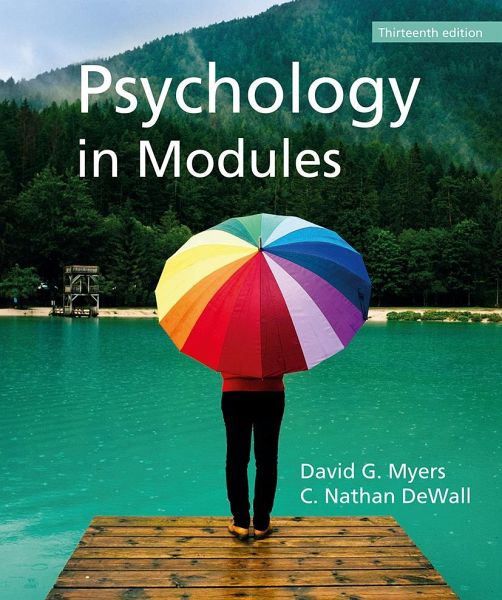
From its first edition Myers and DeWalls Psychology has found extraordinarily effective ways to involve students with the remarkable research underlying our understanding of human behaviour and help them develop critical thinking skills. In Psychology in Modules, Myers and DeWall break down the content into 55 independent modules. Assignable in any sequence and brief enough to be read in one sitting, this flexible format is favoured by a wide range of students and instructors who find working with shorter reading assignments helps to retain the concepts.
From its first edition Myers and DeWalls Psychology has found extraordinarily effective ways to involve students with the remarkable research underlying our understanding of human behaviour and help them develop critical thinking skills. In Psychology in Modules, Myers and DeWall break down the content into 55 independent modules. Assignable in any sequence and brief enough to be read in one sitting, this flexible format is favoured by a wide range of students and instructors who find working with shorter reading assignments helps to retain the concepts.
David Myers received his psychology Ph.D. from the University of Iowa. He has spent his career at Hope College, Michigan, where he has taught dozens of introductory psychology sections. Nathan DeWall is Professor of Psychology and Director of the Social Psychology Lab at the University of Kentucky. He received his Bachelors Degree from St. Olaf College, a Masters Degree in Social Science from the University of Chicago, and a Masters degree and Ph.D. in Social Psychology from Florida State University.
Inhaltsangabe
Instructor Preface Student Preface: Student Success How to Apply Psychology to Live Your Best Life The Story of Psychology Module 1, What Is Psychology? Thinking Critically With Psychological Science Module 2, Research Strategies: How Psychologists Ask and Answer Questions Module 3, Statistical Reasoning in Everyday Life The Biology of Mind Module 4, Neural and Hormonal Systems Module 5, Tools of Discovery, Older Brain Structures, and the Limbic System Module 6, The Cerebral Cortex Consciousness and the Two-Track Mind Module 7, Basic Consciousness Concepts Module 8, Sleep and Dreams Module 9, Drugs and Consciousness Nature, Nurture, and Human Diversity Module 10, Behavior Genetics: Predicting Individual Differences Module 11, Evolutionary Psychology: Explaining Human Nature and Nurture Module 12, Culture and Gender Diversity: Understanding Nature and Nurture Developing Through the Life Span Module 13, Developmental Issues, Prenatal Development, and the Newborn Module 14, Infancy and Childhood Module 15, Adolescence Module 16, Adulthood Sensation and Perception Module 17, Basic Concepts of Sensation and Perception Module 18, Vision: Sensory and Perceptual Processing Module 19, The Nonvisual Senses Learning Module 20, Basic Learning Concepts and Classical Conditioning Module 21, Operant Conditioning Module 22, Biology, Cognition, and Learning Memory Module 23, Studying and Encoding Memories Module 24, Storing and Retrieving Memories Module 25, Forgetting, Memory Construction, and Improving Memory Thinking and Language Module 26, Thinking Module 27, Language and Thought Intelligence Module 28, What Is Intelligence? Module 29 Intelligence Assessment and Dynamics Module 30, Genetic and Environmental Influences on Intelligence What Drives Us: Hunger, Sex, Belonging, and Achievement Module 31, Basic Motivational Concepts Module 32, Hunger Module 33, Sexual Motivation Module 34, Affiliation and Achievement Emotions, Stress, and Health Module 35, Introduction to Emotion Module 36, Expressing Emotion Module 37, Experiencing Emotion Module 38, Stress and Illness Module 39, Health and Coping Social Psychology Module 40, Social Thinking Module 41, Social Influence Module 42, Antisocial Relations Module 43, Prosocial Relations Personality Module 44, Introduction to Personality and Psychodynamic Theories Module 45, Humanistic Theories and Trait Theories Module 46, Social-Cognitive Theories and the Self Psychological Disorders Module 47, Introduction to Psychological Disorders Module 48, Anxiety-Related Disorders Module 49, Depressive Disorders and Bipolar Disorders Module 50, Schizophrenia Module 51, Dissociative, Personality, and Eating Disorders Module 52, Neurodevelopmental Disorders Therapy Module 53, Introduction to Therapy and the Psychological Therapies Module 54 Evaluating Psychotherapies Module 55, Biomedical Therapies and Preventing Psychological Disorders
Instructor Preface Student Preface: Student Success How to Apply Psychology to Live Your Best Life The Story of Psychology Module 1, What Is Psychology? Thinking Critically With Psychological Science Module 2, Research Strategies: How Psychologists Ask and Answer Questions Module 3, Statistical Reasoning in Everyday Life The Biology of Mind Module 4, Neural and Hormonal Systems Module 5, Tools of Discovery, Older Brain Structures, and the Limbic System Module 6, The Cerebral Cortex Consciousness and the Two-Track Mind Module 7, Basic Consciousness Concepts Module 8, Sleep and Dreams Module 9, Drugs and Consciousness Nature, Nurture, and Human Diversity Module 10, Behavior Genetics: Predicting Individual Differences Module 11, Evolutionary Psychology: Explaining Human Nature and Nurture Module 12, Culture and Gender Diversity: Understanding Nature and Nurture Developing Through the Life Span Module 13, Developmental Issues, Prenatal Development, and the Newborn Module 14, Infancy and Childhood Module 15, Adolescence Module 16, Adulthood Sensation and Perception Module 17, Basic Concepts of Sensation and Perception Module 18, Vision: Sensory and Perceptual Processing Module 19, The Nonvisual Senses Learning Module 20, Basic Learning Concepts and Classical Conditioning Module 21, Operant Conditioning Module 22, Biology, Cognition, and Learning Memory Module 23, Studying and Encoding Memories Module 24, Storing and Retrieving Memories Module 25, Forgetting, Memory Construction, and Improving Memory Thinking and Language Module 26, Thinking Module 27, Language and Thought Intelligence Module 28, What Is Intelligence? Module 29 Intelligence Assessment and Dynamics Module 30, Genetic and Environmental Influences on Intelligence What Drives Us: Hunger, Sex, Belonging, and Achievement Module 31, Basic Motivational Concepts Module 32, Hunger Module 33, Sexual Motivation Module 34, Affiliation and Achievement Emotions, Stress, and Health Module 35, Introduction to Emotion Module 36, Expressing Emotion Module 37, Experiencing Emotion Module 38, Stress and Illness Module 39, Health and Coping Social Psychology Module 40, Social Thinking Module 41, Social Influence Module 42, Antisocial Relations Module 43, Prosocial Relations Personality Module 44, Introduction to Personality and Psychodynamic Theories Module 45, Humanistic Theories and Trait Theories Module 46, Social-Cognitive Theories and the Self Psychological Disorders Module 47, Introduction to Psychological Disorders Module 48, Anxiety-Related Disorders Module 49, Depressive Disorders and Bipolar Disorders Module 50, Schizophrenia Module 51, Dissociative, Personality, and Eating Disorders Module 52, Neurodevelopmental Disorders Therapy Module 53, Introduction to Therapy and the Psychological Therapies Module 54 Evaluating Psychotherapies Module 55, Biomedical Therapies and Preventing Psychological Disorders
Es gelten unsere Allgemeinen Geschäftsbedingungen: www.buecher.de/agb
Impressum
www.buecher.de ist ein Internetauftritt der buecher.de internetstores GmbH
Geschäftsführung: Monica Sawhney | Roland Kölbl | Günter Hilger
Sitz der Gesellschaft: Batheyer Straße 115 - 117, 58099 Hagen
Postanschrift: Bürgermeister-Wegele-Str. 12, 86167 Augsburg
Amtsgericht Hagen HRB 13257
Steuernummer: 321/5800/1497
USt-IdNr: DE450055826