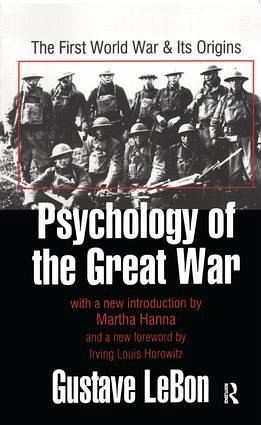
Psychology of the Great War
The First World War and Its Origins
Herausgeber: Le Bon, Gustav
Psychology of the Great War
The First World War and Its Origins
Herausgeber: Le Bon, Gustav
- Gebundenes Buch
- Merkliste
- Auf die Merkliste
- Bewerten Bewerten
- Teilen
- Produkt teilen
- Produkterinnerung
- Produkterinnerung
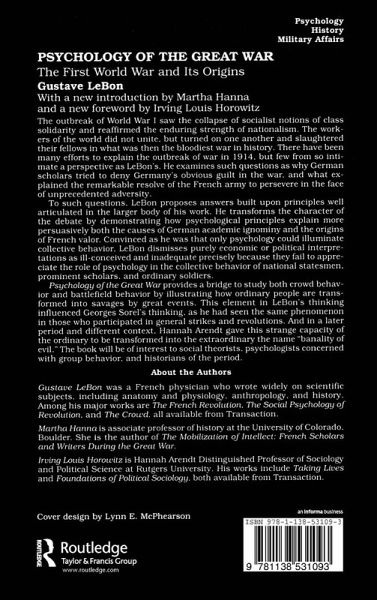
The outbreak of World War I saw the collapse of socialist notions of class solidarity and reaffirmed the enduring strength of nationalism
Andere Kunden interessierten sich auch für
Craig Speelman (Edith Cowan University)The Great Psychology Delusion176,99 €
David CohenGreat Psychologists as Parents203,99 €
Beer and the Body: Testimony of Physicians Against This Great Evil25,99 €
Richard CimbaloThe Great Bamboozle28,99 €
Jane R HunterThe Great Discovery27,99 €
Scott O. Lilienfeld / William T. O'DonohueThe Great Ideas of Clinical Science68,99 €
Robert D. BoydPersonal Transformations in Small Groups151,99 €-
-
-
The outbreak of World War I saw the collapse of socialist notions of class solidarity and reaffirmed the enduring strength of nationalism
Produktdetails
- Produktdetails
- Verlag: Routledge
- Seitenzahl: 518
- Erscheinungstermin: 28. Juni 2018
- Englisch
- Abmessung: 235mm x 157mm x 32mm
- Gewicht: 893g
- ISBN-13: 9781138531093
- ISBN-10: 113853109X
- Artikelnr.: 53211977
- Herstellerkennzeichnung
- Libri GmbH
- Europaallee 1
- 36244 Bad Hersfeld
- gpsr@libri.de
- Verlag: Routledge
- Seitenzahl: 518
- Erscheinungstermin: 28. Juni 2018
- Englisch
- Abmessung: 235mm x 157mm x 32mm
- Gewicht: 893g
- ISBN-13: 9781138531093
- ISBN-10: 113853109X
- Artikelnr.: 53211977
- Herstellerkennzeichnung
- Libri GmbH
- Europaallee 1
- 36244 Bad Hersfeld
- gpsr@libri.de
Gustav Le Bon
I: Psychological Principles Necessary for The Interpretation of The Present Work
Introduction: Psychological Study of The War
I: The Affective, Collective, and Mystic Forces, and The Part They Play in The Life of Nations
II: The Variations of Personality
II: Germany's Evolution in Modern Times
I: The Rise and Development of German Power
II: The State According to The Conceptions of The German Philosophers. Their Interpretation of History
III: The Economic Evolution of Germany
IV: The Modern German Mentality
III: The Remote Causes of The War
I: The Economic and Political Causes of The War
II: Race-Hatreds
III: Germany's Aggressive Attitude-The Idea of Revanche
IV: The Part Played by Mystic Influences in The Genesis of The War. The Hegemony Ideal
IV: The Immediate Causes of The War
I: The Austrian Ultimatum and The Week of Diplomatic Conversations
II: England's Original Antipathy to The War
III: Development of Feeling in England
IV: The Respective Parts Played by Germany, Austria, Russia, and France While The Diplomatic Conversations Were Proceeding
V: Influence of Popular Feeling Upon The Genesis of The War
VI: Part Played by The Wills of The Three Emperors
VII: Conclusion. Who Wanted The War?
VIII: Opinions Expressed in Germany and Various Other Countries as to The Causes of The War
V: Psychological Forces Involved in Battles
I: Changes in Methods of Warfare
II: Feelings Aroused by The War. Emergence of New Personalities
III: Military Courage: Its Genesis and Its Forms
IV: Consequences Due to Lack of Foresight and To Psychological Errors in The Genesis of Armed Encounters
V: Strategical Errors Resulting from Psychological Errors
VI: Psychological Elements in German Methods of Warfare
I: The Psychological Bases of The German Methods of Warfare
II: Application of The Principles Laid Down by The German General Staff. Incendiarism, Slaughter, and Pillage
III: Effects of German Methods of Warfare Upon Neutral Feeling
VII: Unknown Quantities in Warfare
I: Immediate Consequences of Modern Wars
II: Dubiousness in Accounts of Battles
III: Hypotheses Concerning The Battle of The Marne
IV: Peace Problems
Conclusion
Introduction: Psychological Study of The War
I: The Affective, Collective, and Mystic Forces, and The Part They Play in The Life of Nations
II: The Variations of Personality
II: Germany's Evolution in Modern Times
I: The Rise and Development of German Power
II: The State According to The Conceptions of The German Philosophers. Their Interpretation of History
III: The Economic Evolution of Germany
IV: The Modern German Mentality
III: The Remote Causes of The War
I: The Economic and Political Causes of The War
II: Race-Hatreds
III: Germany's Aggressive Attitude-The Idea of Revanche
IV: The Part Played by Mystic Influences in The Genesis of The War. The Hegemony Ideal
IV: The Immediate Causes of The War
I: The Austrian Ultimatum and The Week of Diplomatic Conversations
II: England's Original Antipathy to The War
III: Development of Feeling in England
IV: The Respective Parts Played by Germany, Austria, Russia, and France While The Diplomatic Conversations Were Proceeding
V: Influence of Popular Feeling Upon The Genesis of The War
VI: Part Played by The Wills of The Three Emperors
VII: Conclusion. Who Wanted The War?
VIII: Opinions Expressed in Germany and Various Other Countries as to The Causes of The War
V: Psychological Forces Involved in Battles
I: Changes in Methods of Warfare
II: Feelings Aroused by The War. Emergence of New Personalities
III: Military Courage: Its Genesis and Its Forms
IV: Consequences Due to Lack of Foresight and To Psychological Errors in The Genesis of Armed Encounters
V: Strategical Errors Resulting from Psychological Errors
VI: Psychological Elements in German Methods of Warfare
I: The Psychological Bases of The German Methods of Warfare
II: Application of The Principles Laid Down by The German General Staff. Incendiarism, Slaughter, and Pillage
III: Effects of German Methods of Warfare Upon Neutral Feeling
VII: Unknown Quantities in Warfare
I: Immediate Consequences of Modern Wars
II: Dubiousness in Accounts of Battles
III: Hypotheses Concerning The Battle of The Marne
IV: Peace Problems
Conclusion
I: Psychological Principles Necessary for The Interpretation of The Present Work
Introduction: Psychological Study of The War
I: The Affective, Collective, and Mystic Forces, and The Part They Play in The Life of Nations
II: The Variations of Personality
II: Germany's Evolution in Modern Times
I: The Rise and Development of German Power
II: The State According to The Conceptions of The German Philosophers. Their Interpretation of History
III: The Economic Evolution of Germany
IV: The Modern German Mentality
III: The Remote Causes of The War
I: The Economic and Political Causes of The War
II: Race-Hatreds
III: Germany's Aggressive Attitude-The Idea of Revanche
IV: The Part Played by Mystic Influences in The Genesis of The War. The Hegemony Ideal
IV: The Immediate Causes of The War
I: The Austrian Ultimatum and The Week of Diplomatic Conversations
II: England's Original Antipathy to The War
III: Development of Feeling in England
IV: The Respective Parts Played by Germany, Austria, Russia, and France While The Diplomatic Conversations Were Proceeding
V: Influence of Popular Feeling Upon The Genesis of The War
VI: Part Played by The Wills of The Three Emperors
VII: Conclusion. Who Wanted The War?
VIII: Opinions Expressed in Germany and Various Other Countries as to The Causes of The War
V: Psychological Forces Involved in Battles
I: Changes in Methods of Warfare
II: Feelings Aroused by The War. Emergence of New Personalities
III: Military Courage: Its Genesis and Its Forms
IV: Consequences Due to Lack of Foresight and To Psychological Errors in The Genesis of Armed Encounters
V: Strategical Errors Resulting from Psychological Errors
VI: Psychological Elements in German Methods of Warfare
I: The Psychological Bases of The German Methods of Warfare
II: Application of The Principles Laid Down by The German General Staff. Incendiarism, Slaughter, and Pillage
III: Effects of German Methods of Warfare Upon Neutral Feeling
VII: Unknown Quantities in Warfare
I: Immediate Consequences of Modern Wars
II: Dubiousness in Accounts of Battles
III: Hypotheses Concerning The Battle of The Marne
IV: Peace Problems
Conclusion
Introduction: Psychological Study of The War
I: The Affective, Collective, and Mystic Forces, and The Part They Play in The Life of Nations
II: The Variations of Personality
II: Germany's Evolution in Modern Times
I: The Rise and Development of German Power
II: The State According to The Conceptions of The German Philosophers. Their Interpretation of History
III: The Economic Evolution of Germany
IV: The Modern German Mentality
III: The Remote Causes of The War
I: The Economic and Political Causes of The War
II: Race-Hatreds
III: Germany's Aggressive Attitude-The Idea of Revanche
IV: The Part Played by Mystic Influences in The Genesis of The War. The Hegemony Ideal
IV: The Immediate Causes of The War
I: The Austrian Ultimatum and The Week of Diplomatic Conversations
II: England's Original Antipathy to The War
III: Development of Feeling in England
IV: The Respective Parts Played by Germany, Austria, Russia, and France While The Diplomatic Conversations Were Proceeding
V: Influence of Popular Feeling Upon The Genesis of The War
VI: Part Played by The Wills of The Three Emperors
VII: Conclusion. Who Wanted The War?
VIII: Opinions Expressed in Germany and Various Other Countries as to The Causes of The War
V: Psychological Forces Involved in Battles
I: Changes in Methods of Warfare
II: Feelings Aroused by The War. Emergence of New Personalities
III: Military Courage: Its Genesis and Its Forms
IV: Consequences Due to Lack of Foresight and To Psychological Errors in The Genesis of Armed Encounters
V: Strategical Errors Resulting from Psychological Errors
VI: Psychological Elements in German Methods of Warfare
I: The Psychological Bases of The German Methods of Warfare
II: Application of The Principles Laid Down by The German General Staff. Incendiarism, Slaughter, and Pillage
III: Effects of German Methods of Warfare Upon Neutral Feeling
VII: Unknown Quantities in Warfare
I: Immediate Consequences of Modern Wars
II: Dubiousness in Accounts of Battles
III: Hypotheses Concerning The Battle of The Marne
IV: Peace Problems
Conclusion