
Andere Kunden interessierten sich auch für
![First Lessons in the Scientific Principles of Agriculture [microform]: for Schools and Private Instruction]( "First Lessons in the Scientific Principles of Agriculture [microform]: for Schools and Private Instruction") First Lessons in the Scientific Principles of Agriculture [microform]: for Schools and Private Instruction32,99 €
First Lessons in the Scientific Principles of Agriculture [microform]: for Schools and Private Instruction32,99 € Public Private Partnership Extension Model for Tea Smallholding Sector62,99 €
 Public-Private-Partnership vis-à-vis Livestock Extension Services32,99 €
 Collaboration and Knowledge Sharing in Armyworm Management21,99 €
 Nutritional Status of Students in Public and Private Schools in Ghana47,99 €
 Agricultural Policy for the 21st Century137,99 €
 Statistical Procedures for Agricultural Research360,99 €
![First Lessons in the Scientific Principles of Agriculture [microform]: for Schools and Private Instruction](https://bilder.buecher.de/produkte/65/65545/65545332m.jpg "First Lessons in the Scientific Principles of Agriculture [microform]: for Schools and Private Instruction")




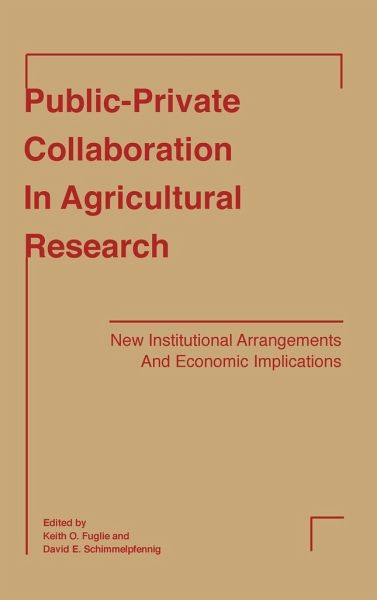
Historically the United States has looked to the publicly funded agricultural research institutions at the Department of Agriculture and land-grant universities as the primary sources of new agricultural science and technology. However, during the past several decades wide-reaching changes have taken place in the structure of the U.S. agricultural research system. One significant development is the growing capacity of the private sector for conducting agricultural research. In fact, private companies now spend more on agricultural research than public research institutions. The private sector is also the most rapidly growing source of funds for public research. In addition, new technology transfer mechanisms have been established to increase the flow of science and technology among public and private research laboratories, including cooperative research agreements, research consortia, and greater use of intellectual property rights and patent licensing. The agricultural research system has not escaped the forces of globalization, as sources and flows of agricultural science and technology become increasingly international in scope. These changes have important implications for how research in the U.S. is financed, who conducts it, the type of technology that is developed, and who is likely to benefit from it.