
- Broschiertes Buch
- Merkliste
- Auf die Merkliste
- Bewerten Bewerten
- Teilen
- Produkt teilen
- Produkterinnerung
- Produkterinnerung
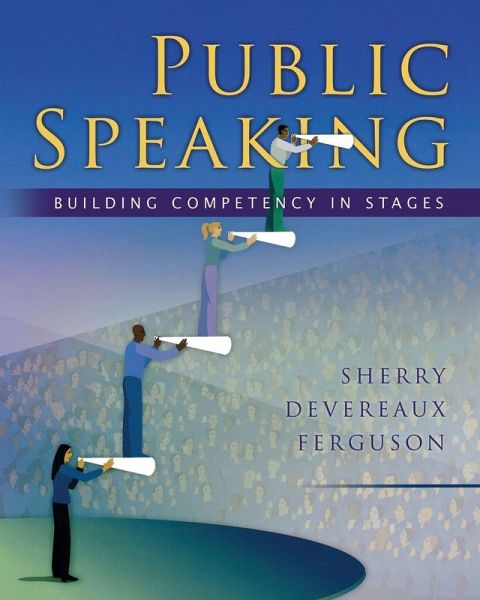
Public Speaking: Building Competency in Stages is an introduction to public speaking, a course that is found in nearly every 2 and 4 year college/university in the country. It is generally the first course students take in Communication, and many other disciplines require that their majors take this course - consequently the enrollments are huge. As the titles implies, Ferguson takes an incremental approach to the topic, and most importantly, she feels strongly about getting students throuh many chapters of theory and advice before getting to the different types of speeches that students do -…mehr
Andere Kunden interessierten sich auch für
 Introduction to Oracy124,99 €
 Michael GallagherSpeaking Out18,99 €
 Michael GallagherSpeaking Out20,99 €
 An Introduction to Composition Studies101,99 €
 Sandra Fehl Tropp / Ann Pierson D'Angelo (eds.)Essays in Context181,99 €
 Ralph HughesFrom Fear to Freedom13,99 €
") G. R. CarpenterExercises in Rhetoric and English Composition (Advanced Course)18,99 €
G. R. CarpenterExercises in Rhetoric and English Composition (Advanced Course)18,99 €-
-
-







Public Speaking: Building Competency in Stages is an introduction to public speaking, a course that is found in nearly every 2 and 4 year college/university in the country. It is generally the first course students take in Communication, and many other disciplines require that their majors take this course - consequently the enrollments are huge. As the titles implies, Ferguson takes an incremental approach to the topic, and most importantly, she feels strongly about getting students throuh many chapters of theory and advice before getting to the different types of speeches that students do - informative, persuassive, special occasion, and small group. Ferguson brings the genres up front, and teaches the concepts incrementally as the pertain to the genre. She also has an overview chapters, very early, that serves as a comprehensive introduction to the basics of speaking - a very sensible pedagogical element missing from most books. in addition, the book will offer greater emphasis on audience analysis and rhetorical criticism, which gives her book a distinctive and sophisticated feel.
Produktdetails
- Produktdetails
- Verlag: Oxford University Press
- Seitenzahl: 588
- Erscheinungstermin: 1. Februar 2007
- Englisch
- Abmessung: 254mm x 203mm x 31mm
- Gewicht: 1243g
- ISBN-13: 9780195187779
- ISBN-10: 0195187776
- Artikelnr.: 21142520
- Herstellerkennzeichnung
- Libri GmbH
- Europaallee 1
- 36244 Bad Hersfeld
- gpsr@libri.de
- Verlag: Oxford University Press
- Seitenzahl: 588
- Erscheinungstermin: 1. Februar 2007
- Englisch
- Abmessung: 254mm x 203mm x 31mm
- Gewicht: 1243g
- ISBN-13: 9780195187779
- ISBN-10: 0195187776
- Artikelnr.: 21142520
- Herstellerkennzeichnung
- Libri GmbH
- Europaallee 1
- 36244 Bad Hersfeld
- gpsr@libri.de
* Each chapter ends with a Conclusion.
* 1. Public Speaking in the Age of Accountability: A Critical Model
* I. The Roots of Critical Society
* II. Trends in the Environment
* A. Increasing Activism in the Political Sphere
* B. Increasing Activism in the Economic Sphere
* C. Increasing Activism in the Legal Sphere
* D. Increasing Diversity in the Cultural Environment
* E. Changes in Technological Environments
* F. Changes in Social Environments
* G. Changes in Rhetorical Conventions
* III. A Critical Model for Public Speaking (CCM)
* A. Speaker
* B. Message
* C. Channel
* D. Environment
* E. Audience
* F. Noise
* G. Feedback
* H. Impact of Speech
* I. Criteria for Judging Speech
* 2. Communication Apprehensiveness: Learning to Cope with Anxiety
* I. Causes of Communication Apprehension
* II. Situational Anxiety and Public Speaking
* III. Coping Strategies
* A. Before the Speech
* B. During the Speech
* C. After the Speech
* 3. Listening with a Purpose: Exercises in Hearing, Perceiving, and
Processing Information
* I. Purposeful Listening
* II. Influence of Perception on Message Reception
* A. Nature of Perception
* B. Influence of Perception on Communication
* C. How Listeners Respond
* D. Influences on Listening Effectiveness
* III. Reciprocal Responsibilities of Listeners and Speakers
* A. Giving Nonverbal Feedback
* B. Giving Verbal Feedback
* 4. Acquiring the Basic Skills: The Speech of Introduction
* I. Step 1: Getting Started
* A. Choosing a Theme
* B. Deciding upon a Purpose
* C. Framing a Thesis Statement
* II. Step 2: Getting Organized
* A. Identifying and Ordering Major Points
* B. Developing an Outline
* C. Writing a Preview Statement
* III. Step 3: Writing the Introduction
* A. Immediacy Techniques
* B. References to the Novel
* C. Suspense and Shock Techniques
* D. Linguistic Strategies
* E. Activity, Drama, and Conflict
* F. Humor
* G. Gimmicks
* IV. Step 4: Developing the Body of the Speech
* V. Step 5: Connecting your Thoughts
* A. Transitions
* B. Signposts
* C. Internal Summaries
* VI. Step 6: Closing with A Memorable Thought
* VII. Step 7: Practicing and Delivering the Speech
* A. Using Note Cards
* B. Practicing Timing the Speech
* C. Using Visual Aids
* 5. Researching, Analyzing, and Adapting to your Audience: The Speech
of Welcome
* I. Researching and Analyzing your Audience
* A. Creating a Demographic Profile
* B. Creating a Psychographic Profile
* C. Creating a Personality Profile
* II. Research and Analyzing your Speaking Environment
* III. Adapting to your Audience and Speaking Environment
* A. Choosing a Topic and Approach
* B. Framing a Realistic Purpose
* C. Recognizing your Audience
* D. Adapting to the Situation
* VI. Words of Caution
* 6. Putting Principles of Delivery into Practice: The One-Point Speech
* I. One-Point Speeches
* II. Delivery Options
* A. Extemporaneous SpeakingB. Impromptu SpeakingC. Memorizing the
SpeechD. Manuscript SpeakingE. Speaking from the Teleprompter
* III. Building Credibility through Delivery
* A. Composure
* B. Dynamism
* C. Trustworthiness
* D. Sociability
* E. Status
* F. Competency
* G. Objectivity
* IV. Meeting Technical Challenges
* V. Setting Realistic Goals
* 7. Visual Aids and Other Software Presentations: The
Computer-Assisted Presentation
* I. Purposes of Visual Supports
* II. Overview of General Principles
* III. Different Kinds of Visual Supports
* A. Three-Dimensional Objects and Models
* B. Chalkboards, Whiteboards, and Flannel Boards
* C. Flip Charts
* D. Handouts
* E. Posters
* F. Overhead and Data Projectors
* G. Audio and Video Tapes
* IV. PowerPoint and Other Computer-Generated Presentations
* A. Mixed Media Presentations
* B. Aesthetic Considerations
* C. Considerations Related to Continuity
* D. Use of Contrast and Colors
* E. Typeface and Font Size
* F. Grammar and Structures
* G. Fromatting
* H. Presentation Techniques
* 8. Researching and Supporting your Ideas: Preparing the Informative
Speech
* I. Different Types of Informative Speaking
* II. Steps in Preparing an Informative Speech
* A. Step 1. Choosing your Topic
* B. Step 2. Framing a Purpose Statement
* C. Step 3. Writing a Thesis Statement
* D. Step 4. Researching your Speech
* E. Step 5. Identifying Points of Possible Confusion
* F. Step 6. Choosing an Organizational Pattern
* G. Step 7. Developing an Outline
* H. Step 8. Writing a Preview Satement
* I. Step 9. Writing an Introduction
* J. Step 10. Developing your Speech
* K. Step 11. Linking the Parts of the Speech
* L. Step 12. Adding Interest with Visual Aids
* M. Step 13. Concluding the Speech
* N. Review of Major Structural Elements
* 9. The Building Blocks of Persuasive Discourse: A Debate Involving
Minority Voices
* I. Ethos as a Persuasive Strategy
* II. Pathos as a Persuasive Strategy
* III. Logos as a Persuasive Strategy
* 10. Arguing Eloquently and Convincingly: Speaking to Convince,
Stimulate, or Actuate
* I. Step 1: Selecting your Topic
* II. Step 2: Framing a Tentative Position Statement
* III. Step 3: Translating your Position Statement into a Thesis
Statement
* IV. Step 4: Researching your Audience
* V. Step 5: Defining your General Purpose
* VI. Step 6: Framing a Desired Outcome
* VII. Step 7: Matching Purposes and Audiences with Organizational
Patterns
* VIII. Step 8: Writing your Introduction
* IX. Step 9: Developing the Body of your Speech
* X. Step 10: Adapting your Materials to Your Audience
* XI. Step 11: Choosing Evocative Language
* XII. Step 12: Linking your Ideas
* XIII. Step 13: Writing your Conclusion
* XIV. Step 14: Delivering your Speech
* XV. Step 15: Responding to Questions
* 11. The Language of Propaganda: Engaging in a Coffee Shop Discussion
on Ethics
* . I. Defining Propaganda
* II. The Toolbox of the Propagandist
* 12. Speaking in Social Contexts: Preparing a Speech for Special
Occasions
* I. Types of Special Occasion Speeches
* II. The Use of Humor
* 13. Speaking in Classroom Contexts: Making a Team Presentation
* I. Choosing a Theme
* II. Setting Teaching and Learning Objectives
* III. Deciding upon an Agenda of Learning Activities
* IV. Managing Group Dynamics
* V. Making the Presentation
* 14. Professional Speechwriting: Preparing a "Ghostwritten" Speech
* I. History of Presidential Ghostwriting
* II. Steps in Producing a Ghostwritten Speech
* III. Techniques for Preparing the Manuscript for Delivery
* IV. Relinquishing Ownership
* V. Evaluating your Efforts
* VI. Getting Work as a Freelance Writer
* VII. Debat over the Ethics of Ghostwriting
* 15. The Nature and Function of Rhetorical Criticism: Preparing a
Rhetorical Analysis
* I. CCM Approach to Rhetorical Analysis
* II. Positioning the Speaker within a Larger Movement
* 1. Public Speaking in the Age of Accountability: A Critical Model
* I. The Roots of Critical Society
* II. Trends in the Environment
* A. Increasing Activism in the Political Sphere
* B. Increasing Activism in the Economic Sphere
* C. Increasing Activism in the Legal Sphere
* D. Increasing Diversity in the Cultural Environment
* E. Changes in Technological Environments
* F. Changes in Social Environments
* G. Changes in Rhetorical Conventions
* III. A Critical Model for Public Speaking (CCM)
* A. Speaker
* B. Message
* C. Channel
* D. Environment
* E. Audience
* F. Noise
* G. Feedback
* H. Impact of Speech
* I. Criteria for Judging Speech
* 2. Communication Apprehensiveness: Learning to Cope with Anxiety
* I. Causes of Communication Apprehension
* II. Situational Anxiety and Public Speaking
* III. Coping Strategies
* A. Before the Speech
* B. During the Speech
* C. After the Speech
* 3. Listening with a Purpose: Exercises in Hearing, Perceiving, and
Processing Information
* I. Purposeful Listening
* II. Influence of Perception on Message Reception
* A. Nature of Perception
* B. Influence of Perception on Communication
* C. How Listeners Respond
* D. Influences on Listening Effectiveness
* III. Reciprocal Responsibilities of Listeners and Speakers
* A. Giving Nonverbal Feedback
* B. Giving Verbal Feedback
* 4. Acquiring the Basic Skills: The Speech of Introduction
* I. Step 1: Getting Started
* A. Choosing a Theme
* B. Deciding upon a Purpose
* C. Framing a Thesis Statement
* II. Step 2: Getting Organized
* A. Identifying and Ordering Major Points
* B. Developing an Outline
* C. Writing a Preview Statement
* III. Step 3: Writing the Introduction
* A. Immediacy Techniques
* B. References to the Novel
* C. Suspense and Shock Techniques
* D. Linguistic Strategies
* E. Activity, Drama, and Conflict
* F. Humor
* G. Gimmicks
* IV. Step 4: Developing the Body of the Speech
* V. Step 5: Connecting your Thoughts
* A. Transitions
* B. Signposts
* C. Internal Summaries
* VI. Step 6: Closing with A Memorable Thought
* VII. Step 7: Practicing and Delivering the Speech
* A. Using Note Cards
* B. Practicing Timing the Speech
* C. Using Visual Aids
* 5. Researching, Analyzing, and Adapting to your Audience: The Speech
of Welcome
* I. Researching and Analyzing your Audience
* A. Creating a Demographic Profile
* B. Creating a Psychographic Profile
* C. Creating a Personality Profile
* II. Research and Analyzing your Speaking Environment
* III. Adapting to your Audience and Speaking Environment
* A. Choosing a Topic and Approach
* B. Framing a Realistic Purpose
* C. Recognizing your Audience
* D. Adapting to the Situation
* VI. Words of Caution
* 6. Putting Principles of Delivery into Practice: The One-Point Speech
* I. One-Point Speeches
* II. Delivery Options
* A. Extemporaneous SpeakingB. Impromptu SpeakingC. Memorizing the
SpeechD. Manuscript SpeakingE. Speaking from the Teleprompter
* III. Building Credibility through Delivery
* A. Composure
* B. Dynamism
* C. Trustworthiness
* D. Sociability
* E. Status
* F. Competency
* G. Objectivity
* IV. Meeting Technical Challenges
* V. Setting Realistic Goals
* 7. Visual Aids and Other Software Presentations: The
Computer-Assisted Presentation
* I. Purposes of Visual Supports
* II. Overview of General Principles
* III. Different Kinds of Visual Supports
* A. Three-Dimensional Objects and Models
* B. Chalkboards, Whiteboards, and Flannel Boards
* C. Flip Charts
* D. Handouts
* E. Posters
* F. Overhead and Data Projectors
* G. Audio and Video Tapes
* IV. PowerPoint and Other Computer-Generated Presentations
* A. Mixed Media Presentations
* B. Aesthetic Considerations
* C. Considerations Related to Continuity
* D. Use of Contrast and Colors
* E. Typeface and Font Size
* F. Grammar and Structures
* G. Fromatting
* H. Presentation Techniques
* 8. Researching and Supporting your Ideas: Preparing the Informative
Speech
* I. Different Types of Informative Speaking
* II. Steps in Preparing an Informative Speech
* A. Step 1. Choosing your Topic
* B. Step 2. Framing a Purpose Statement
* C. Step 3. Writing a Thesis Statement
* D. Step 4. Researching your Speech
* E. Step 5. Identifying Points of Possible Confusion
* F. Step 6. Choosing an Organizational Pattern
* G. Step 7. Developing an Outline
* H. Step 8. Writing a Preview Satement
* I. Step 9. Writing an Introduction
* J. Step 10. Developing your Speech
* K. Step 11. Linking the Parts of the Speech
* L. Step 12. Adding Interest with Visual Aids
* M. Step 13. Concluding the Speech
* N. Review of Major Structural Elements
* 9. The Building Blocks of Persuasive Discourse: A Debate Involving
Minority Voices
* I. Ethos as a Persuasive Strategy
* II. Pathos as a Persuasive Strategy
* III. Logos as a Persuasive Strategy
* 10. Arguing Eloquently and Convincingly: Speaking to Convince,
Stimulate, or Actuate
* I. Step 1: Selecting your Topic
* II. Step 2: Framing a Tentative Position Statement
* III. Step 3: Translating your Position Statement into a Thesis
Statement
* IV. Step 4: Researching your Audience
* V. Step 5: Defining your General Purpose
* VI. Step 6: Framing a Desired Outcome
* VII. Step 7: Matching Purposes and Audiences with Organizational
Patterns
* VIII. Step 8: Writing your Introduction
* IX. Step 9: Developing the Body of your Speech
* X. Step 10: Adapting your Materials to Your Audience
* XI. Step 11: Choosing Evocative Language
* XII. Step 12: Linking your Ideas
* XIII. Step 13: Writing your Conclusion
* XIV. Step 14: Delivering your Speech
* XV. Step 15: Responding to Questions
* 11. The Language of Propaganda: Engaging in a Coffee Shop Discussion
on Ethics
* . I. Defining Propaganda
* II. The Toolbox of the Propagandist
* 12. Speaking in Social Contexts: Preparing a Speech for Special
Occasions
* I. Types of Special Occasion Speeches
* II. The Use of Humor
* 13. Speaking in Classroom Contexts: Making a Team Presentation
* I. Choosing a Theme
* II. Setting Teaching and Learning Objectives
* III. Deciding upon an Agenda of Learning Activities
* IV. Managing Group Dynamics
* V. Making the Presentation
* 14. Professional Speechwriting: Preparing a "Ghostwritten" Speech
* I. History of Presidential Ghostwriting
* II. Steps in Producing a Ghostwritten Speech
* III. Techniques for Preparing the Manuscript for Delivery
* IV. Relinquishing Ownership
* V. Evaluating your Efforts
* VI. Getting Work as a Freelance Writer
* VII. Debat over the Ethics of Ghostwriting
* 15. The Nature and Function of Rhetorical Criticism: Preparing a
Rhetorical Analysis
* I. CCM Approach to Rhetorical Analysis
* II. Positioning the Speaker within a Larger Movement
* Each chapter ends with a Conclusion.
* 1. Public Speaking in the Age of Accountability: A Critical Model
* I. The Roots of Critical Society
* II. Trends in the Environment
* A. Increasing Activism in the Political Sphere
* B. Increasing Activism in the Economic Sphere
* C. Increasing Activism in the Legal Sphere
* D. Increasing Diversity in the Cultural Environment
* E. Changes in Technological Environments
* F. Changes in Social Environments
* G. Changes in Rhetorical Conventions
* III. A Critical Model for Public Speaking (CCM)
* A. Speaker
* B. Message
* C. Channel
* D. Environment
* E. Audience
* F. Noise
* G. Feedback
* H. Impact of Speech
* I. Criteria for Judging Speech
* 2. Communication Apprehensiveness: Learning to Cope with Anxiety
* I. Causes of Communication Apprehension
* II. Situational Anxiety and Public Speaking
* III. Coping Strategies
* A. Before the Speech
* B. During the Speech
* C. After the Speech
* 3. Listening with a Purpose: Exercises in Hearing, Perceiving, and
Processing Information
* I. Purposeful Listening
* II. Influence of Perception on Message Reception
* A. Nature of Perception
* B. Influence of Perception on Communication
* C. How Listeners Respond
* D. Influences on Listening Effectiveness
* III. Reciprocal Responsibilities of Listeners and Speakers
* A. Giving Nonverbal Feedback
* B. Giving Verbal Feedback
* 4. Acquiring the Basic Skills: The Speech of Introduction
* I. Step 1: Getting Started
* A. Choosing a Theme
* B. Deciding upon a Purpose
* C. Framing a Thesis Statement
* II. Step 2: Getting Organized
* A. Identifying and Ordering Major Points
* B. Developing an Outline
* C. Writing a Preview Statement
* III. Step 3: Writing the Introduction
* A. Immediacy Techniques
* B. References to the Novel
* C. Suspense and Shock Techniques
* D. Linguistic Strategies
* E. Activity, Drama, and Conflict
* F. Humor
* G. Gimmicks
* IV. Step 4: Developing the Body of the Speech
* V. Step 5: Connecting your Thoughts
* A. Transitions
* B. Signposts
* C. Internal Summaries
* VI. Step 6: Closing with A Memorable Thought
* VII. Step 7: Practicing and Delivering the Speech
* A. Using Note Cards
* B. Practicing Timing the Speech
* C. Using Visual Aids
* 5. Researching, Analyzing, and Adapting to your Audience: The Speech
of Welcome
* I. Researching and Analyzing your Audience
* A. Creating a Demographic Profile
* B. Creating a Psychographic Profile
* C. Creating a Personality Profile
* II. Research and Analyzing your Speaking Environment
* III. Adapting to your Audience and Speaking Environment
* A. Choosing a Topic and Approach
* B. Framing a Realistic Purpose
* C. Recognizing your Audience
* D. Adapting to the Situation
* VI. Words of Caution
* 6. Putting Principles of Delivery into Practice: The One-Point Speech
* I. One-Point Speeches
* II. Delivery Options
* A. Extemporaneous SpeakingB. Impromptu SpeakingC. Memorizing the
SpeechD. Manuscript SpeakingE. Speaking from the Teleprompter
* III. Building Credibility through Delivery
* A. Composure
* B. Dynamism
* C. Trustworthiness
* D. Sociability
* E. Status
* F. Competency
* G. Objectivity
* IV. Meeting Technical Challenges
* V. Setting Realistic Goals
* 7. Visual Aids and Other Software Presentations: The
Computer-Assisted Presentation
* I. Purposes of Visual Supports
* II. Overview of General Principles
* III. Different Kinds of Visual Supports
* A. Three-Dimensional Objects and Models
* B. Chalkboards, Whiteboards, and Flannel Boards
* C. Flip Charts
* D. Handouts
* E. Posters
* F. Overhead and Data Projectors
* G. Audio and Video Tapes
* IV. PowerPoint and Other Computer-Generated Presentations
* A. Mixed Media Presentations
* B. Aesthetic Considerations
* C. Considerations Related to Continuity
* D. Use of Contrast and Colors
* E. Typeface and Font Size
* F. Grammar and Structures
* G. Fromatting
* H. Presentation Techniques
* 8. Researching and Supporting your Ideas: Preparing the Informative
Speech
* I. Different Types of Informative Speaking
* II. Steps in Preparing an Informative Speech
* A. Step 1. Choosing your Topic
* B. Step 2. Framing a Purpose Statement
* C. Step 3. Writing a Thesis Statement
* D. Step 4. Researching your Speech
* E. Step 5. Identifying Points of Possible Confusion
* F. Step 6. Choosing an Organizational Pattern
* G. Step 7. Developing an Outline
* H. Step 8. Writing a Preview Satement
* I. Step 9. Writing an Introduction
* J. Step 10. Developing your Speech
* K. Step 11. Linking the Parts of the Speech
* L. Step 12. Adding Interest with Visual Aids
* M. Step 13. Concluding the Speech
* N. Review of Major Structural Elements
* 9. The Building Blocks of Persuasive Discourse: A Debate Involving
Minority Voices
* I. Ethos as a Persuasive Strategy
* II. Pathos as a Persuasive Strategy
* III. Logos as a Persuasive Strategy
* 10. Arguing Eloquently and Convincingly: Speaking to Convince,
Stimulate, or Actuate
* I. Step 1: Selecting your Topic
* II. Step 2: Framing a Tentative Position Statement
* III. Step 3: Translating your Position Statement into a Thesis
Statement
* IV. Step 4: Researching your Audience
* V. Step 5: Defining your General Purpose
* VI. Step 6: Framing a Desired Outcome
* VII. Step 7: Matching Purposes and Audiences with Organizational
Patterns
* VIII. Step 8: Writing your Introduction
* IX. Step 9: Developing the Body of your Speech
* X. Step 10: Adapting your Materials to Your Audience
* XI. Step 11: Choosing Evocative Language
* XII. Step 12: Linking your Ideas
* XIII. Step 13: Writing your Conclusion
* XIV. Step 14: Delivering your Speech
* XV. Step 15: Responding to Questions
* 11. The Language of Propaganda: Engaging in a Coffee Shop Discussion
on Ethics
* . I. Defining Propaganda
* II. The Toolbox of the Propagandist
* 12. Speaking in Social Contexts: Preparing a Speech for Special
Occasions
* I. Types of Special Occasion Speeches
* II. The Use of Humor
* 13. Speaking in Classroom Contexts: Making a Team Presentation
* I. Choosing a Theme
* II. Setting Teaching and Learning Objectives
* III. Deciding upon an Agenda of Learning Activities
* IV. Managing Group Dynamics
* V. Making the Presentation
* 14. Professional Speechwriting: Preparing a "Ghostwritten" Speech
* I. History of Presidential Ghostwriting
* II. Steps in Producing a Ghostwritten Speech
* III. Techniques for Preparing the Manuscript for Delivery
* IV. Relinquishing Ownership
* V. Evaluating your Efforts
* VI. Getting Work as a Freelance Writer
* VII. Debat over the Ethics of Ghostwriting
* 15. The Nature and Function of Rhetorical Criticism: Preparing a
Rhetorical Analysis
* I. CCM Approach to Rhetorical Analysis
* II. Positioning the Speaker within a Larger Movement
* 1. Public Speaking in the Age of Accountability: A Critical Model
* I. The Roots of Critical Society
* II. Trends in the Environment
* A. Increasing Activism in the Political Sphere
* B. Increasing Activism in the Economic Sphere
* C. Increasing Activism in the Legal Sphere
* D. Increasing Diversity in the Cultural Environment
* E. Changes in Technological Environments
* F. Changes in Social Environments
* G. Changes in Rhetorical Conventions
* III. A Critical Model for Public Speaking (CCM)
* A. Speaker
* B. Message
* C. Channel
* D. Environment
* E. Audience
* F. Noise
* G. Feedback
* H. Impact of Speech
* I. Criteria for Judging Speech
* 2. Communication Apprehensiveness: Learning to Cope with Anxiety
* I. Causes of Communication Apprehension
* II. Situational Anxiety and Public Speaking
* III. Coping Strategies
* A. Before the Speech
* B. During the Speech
* C. After the Speech
* 3. Listening with a Purpose: Exercises in Hearing, Perceiving, and
Processing Information
* I. Purposeful Listening
* II. Influence of Perception on Message Reception
* A. Nature of Perception
* B. Influence of Perception on Communication
* C. How Listeners Respond
* D. Influences on Listening Effectiveness
* III. Reciprocal Responsibilities of Listeners and Speakers
* A. Giving Nonverbal Feedback
* B. Giving Verbal Feedback
* 4. Acquiring the Basic Skills: The Speech of Introduction
* I. Step 1: Getting Started
* A. Choosing a Theme
* B. Deciding upon a Purpose
* C. Framing a Thesis Statement
* II. Step 2: Getting Organized
* A. Identifying and Ordering Major Points
* B. Developing an Outline
* C. Writing a Preview Statement
* III. Step 3: Writing the Introduction
* A. Immediacy Techniques
* B. References to the Novel
* C. Suspense and Shock Techniques
* D. Linguistic Strategies
* E. Activity, Drama, and Conflict
* F. Humor
* G. Gimmicks
* IV. Step 4: Developing the Body of the Speech
* V. Step 5: Connecting your Thoughts
* A. Transitions
* B. Signposts
* C. Internal Summaries
* VI. Step 6: Closing with A Memorable Thought
* VII. Step 7: Practicing and Delivering the Speech
* A. Using Note Cards
* B. Practicing Timing the Speech
* C. Using Visual Aids
* 5. Researching, Analyzing, and Adapting to your Audience: The Speech
of Welcome
* I. Researching and Analyzing your Audience
* A. Creating a Demographic Profile
* B. Creating a Psychographic Profile
* C. Creating a Personality Profile
* II. Research and Analyzing your Speaking Environment
* III. Adapting to your Audience and Speaking Environment
* A. Choosing a Topic and Approach
* B. Framing a Realistic Purpose
* C. Recognizing your Audience
* D. Adapting to the Situation
* VI. Words of Caution
* 6. Putting Principles of Delivery into Practice: The One-Point Speech
* I. One-Point Speeches
* II. Delivery Options
* A. Extemporaneous SpeakingB. Impromptu SpeakingC. Memorizing the
SpeechD. Manuscript SpeakingE. Speaking from the Teleprompter
* III. Building Credibility through Delivery
* A. Composure
* B. Dynamism
* C. Trustworthiness
* D. Sociability
* E. Status
* F. Competency
* G. Objectivity
* IV. Meeting Technical Challenges
* V. Setting Realistic Goals
* 7. Visual Aids and Other Software Presentations: The
Computer-Assisted Presentation
* I. Purposes of Visual Supports
* II. Overview of General Principles
* III. Different Kinds of Visual Supports
* A. Three-Dimensional Objects and Models
* B. Chalkboards, Whiteboards, and Flannel Boards
* C. Flip Charts
* D. Handouts
* E. Posters
* F. Overhead and Data Projectors
* G. Audio and Video Tapes
* IV. PowerPoint and Other Computer-Generated Presentations
* A. Mixed Media Presentations
* B. Aesthetic Considerations
* C. Considerations Related to Continuity
* D. Use of Contrast and Colors
* E. Typeface and Font Size
* F. Grammar and Structures
* G. Fromatting
* H. Presentation Techniques
* 8. Researching and Supporting your Ideas: Preparing the Informative
Speech
* I. Different Types of Informative Speaking
* II. Steps in Preparing an Informative Speech
* A. Step 1. Choosing your Topic
* B. Step 2. Framing a Purpose Statement
* C. Step 3. Writing a Thesis Statement
* D. Step 4. Researching your Speech
* E. Step 5. Identifying Points of Possible Confusion
* F. Step 6. Choosing an Organizational Pattern
* G. Step 7. Developing an Outline
* H. Step 8. Writing a Preview Satement
* I. Step 9. Writing an Introduction
* J. Step 10. Developing your Speech
* K. Step 11. Linking the Parts of the Speech
* L. Step 12. Adding Interest with Visual Aids
* M. Step 13. Concluding the Speech
* N. Review of Major Structural Elements
* 9. The Building Blocks of Persuasive Discourse: A Debate Involving
Minority Voices
* I. Ethos as a Persuasive Strategy
* II. Pathos as a Persuasive Strategy
* III. Logos as a Persuasive Strategy
* 10. Arguing Eloquently and Convincingly: Speaking to Convince,
Stimulate, or Actuate
* I. Step 1: Selecting your Topic
* II. Step 2: Framing a Tentative Position Statement
* III. Step 3: Translating your Position Statement into a Thesis
Statement
* IV. Step 4: Researching your Audience
* V. Step 5: Defining your General Purpose
* VI. Step 6: Framing a Desired Outcome
* VII. Step 7: Matching Purposes and Audiences with Organizational
Patterns
* VIII. Step 8: Writing your Introduction
* IX. Step 9: Developing the Body of your Speech
* X. Step 10: Adapting your Materials to Your Audience
* XI. Step 11: Choosing Evocative Language
* XII. Step 12: Linking your Ideas
* XIII. Step 13: Writing your Conclusion
* XIV. Step 14: Delivering your Speech
* XV. Step 15: Responding to Questions
* 11. The Language of Propaganda: Engaging in a Coffee Shop Discussion
on Ethics
* . I. Defining Propaganda
* II. The Toolbox of the Propagandist
* 12. Speaking in Social Contexts: Preparing a Speech for Special
Occasions
* I. Types of Special Occasion Speeches
* II. The Use of Humor
* 13. Speaking in Classroom Contexts: Making a Team Presentation
* I. Choosing a Theme
* II. Setting Teaching and Learning Objectives
* III. Deciding upon an Agenda of Learning Activities
* IV. Managing Group Dynamics
* V. Making the Presentation
* 14. Professional Speechwriting: Preparing a "Ghostwritten" Speech
* I. History of Presidential Ghostwriting
* II. Steps in Producing a Ghostwritten Speech
* III. Techniques for Preparing the Manuscript for Delivery
* IV. Relinquishing Ownership
* V. Evaluating your Efforts
* VI. Getting Work as a Freelance Writer
* VII. Debat over the Ethics of Ghostwriting
* 15. The Nature and Function of Rhetorical Criticism: Preparing a
Rhetorical Analysis
* I. CCM Approach to Rhetorical Analysis
* II. Positioning the Speaker within a Larger Movement