
Jorge Duany
PUERTO RICO WENTK P
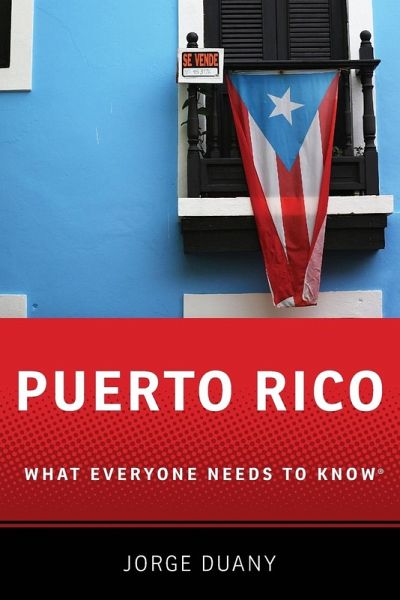
Jorge Duany
PUERTO RICO WENTK P
- Broschiertes Buch
- Merkliste
- Auf die Merkliste
- Bewerten Bewerten
- Teilen
- Produkt teilen
- Produkterinnerung
- Produkterinnerung
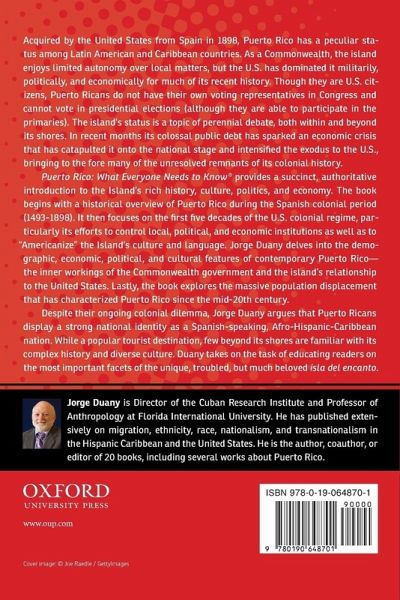
Puerto Rico, acquired by the United States from Spain in 1898, has a peculiar status among Latin American and Caribbean countries. As a Commonwealth, the island enjoys limited autonomy over local matters, but the U.S. has essentially dominated it militarily, politically, and economically for much of its history. Though they are citizens, Puerto Ricans do not have their own voting representatives in Congress and cannot vote for the president or VP. The island's status is a topic of perennial debate, evidenced by the 2012 referendum, in which a majority voted for statehood for the first time.…mehr
Andere Kunden interessierten sich auch für
 Natasha Martinez30 Amazing things to do in Puerto Rico32,99 €
 Tbd30 Amazing things to do in Puerto Rico31,99 €
 Earl Parker HansonPuerto Rico Land Of Wonder S34,99 €
 Gesine FroeseMARCO POLO Reiseführer Karibik, Große Antillen, Dominikanische Republik, Puerto Rico, Kuba, Jamaika, Bahamas, Cayman Islands15,95 €
 Lizzie WilliamsSt Lucia and Dominica Handbook11,99 €
 Lizzie WilliamsBarbados15,55 €
 Williams BarnesSt. Croix Island Travel Guide, USVI25,99 €
-
-
-
Puerto Rico, acquired by the United States from Spain in 1898, has a peculiar status among Latin American and Caribbean countries. As a Commonwealth, the island enjoys limited autonomy over local matters, but the U.S. has essentially dominated it militarily, politically, and economically for much of its history. Though they are citizens, Puerto Ricans do not have their own voting representatives in Congress and cannot vote for the president or VP. The island's status is a topic of perennial debate, evidenced by the 2012 referendum, in which a majority voted for statehood for the first time. More recently, the island's colossal public debt has sparked an economic crisis that is the focus of an upcoming Supreme Court case. The issue is intimately tied to the question of status, and consensus on the solution has proven elusive. Despite their ongoing colonial dilemma, Puerto Ricans display a strong national identity-after 118 years of occupation, the Island remains a Spanish-speaking, Afro-Hispanic-Caribbean nation. At the same time, the island's population is constantly in flux, with an estimated 60.7% of boricuas living stateside, while many others are also returning to the island. Despite the island's popularity as a tourist destination, few beyond its shores are familiar with its history. Puerto Rico: What Everyone Needs to Know provides a succinct, authoritative, and well-documented introduction to the Island's rich history, culture, politics, and economy. Jorge Duany, takes on the task of educating readers on the most important facets of the unique, troubled, but much beloved isla del encanto.
Produktdetails
- Produktdetails
- Verlag: OUP US
- Seitenzahl: 208
- Erscheinungstermin: 1. März 2017
- Englisch
- Abmessung: 210mm x 140mm x 12mm
- Gewicht: 292g
- ISBN-13: 9780190648701
- ISBN-10: 0190648708
- Artikelnr.: 47376234
- Herstellerkennzeichnung
- Libri GmbH
- Europaallee 1
- 36244 Bad Hersfeld
- gpsr@libri.de
- Verlag: OUP US
- Seitenzahl: 208
- Erscheinungstermin: 1. März 2017
- Englisch
- Abmessung: 210mm x 140mm x 12mm
- Gewicht: 292g
- ISBN-13: 9780190648701
- ISBN-10: 0190648708
- Artikelnr.: 47376234
- Herstellerkennzeichnung
- Libri GmbH
- Europaallee 1
- 36244 Bad Hersfeld
- gpsr@libri.de
Jorge Duany is Director of the Cuban Research Institute and Professor of Anthropology at Florida International University. He has published extensively on migration, ethnicity, race, nationalism, and transnationalism in Cuba, the Caribbean, and the United States. He is the author, coauthor, or editor of 20 books, including several works about Puerto Rico.
* Introduction
* Part I: Puerto Rico before 1898
* What groups inhabited Puerto Rico before the Spanish Conquest?
* Why did the indigenous population of Puerto Rico decline so quickly
after Spanish colonization?
* Why were African slaves imported to the Island?
* What role did immigration play in shaping Puerto Rico's population?
* What were the main features of Spanish colonial rule in Puerto Rico?
* What was Puerto Rico's primary role within the Spanish empire in the
Americas?
* Why was the capital city of San Juan fortified?
* How did the Catholic Church influence the development of Puerto Rican
culture?
* What happened to the Island's agricultural economy during the 19th
century?
* How did the intensive cultivation of sugar and coffee transform the
Island's landscape?
* What happened to Puerto Rico's population throughout the 19th
century?
* Why didn't Puerto Rico become independent from Spain?
* What was the Lares uprising and why didn't it succeed?
* How did an incipient sense of national identity emerge during the
19th century?
* Why was slavery abolished so late in Puerto Rico?
* How did the 1897 Autonomous Charter define Puerto Rico's political
status under Spain?
* Part II: Puerto Rico under U.S. Rule, 1898-1952
* Why was the U.S. government interested in Puerto Rico?
* How did the United States acquire the Island?
* How did Puerto Ricans initially receive the U.S. occupying forces?
* What was the Foraker Act of 1900?
* How did the U.S. Supreme Court define the legal status of Puerto
Rico?
* What was the Jones Act of 1917?
* What was the impact of extending U.S. citizenship to Puerto Ricans?
* What are the limitations of U.S. citizenship for residents of Puerto
Rico?
* How did the sugar plantation model expand on the Island?
* How did the U.S. colonial government attempt to Americanize Puerto
Ricans?
* How did various sectors of the Puerto Rican population resist U.S.
colonialism?
* How did the nationalist movement strengthen under the leadership of
Pedro Albizu Campos?
* How did World War II affect Puerto Rico?
* How did the Popular Democratic Party dominate Puerto Rican politics
between the 1940s and 1960s?
* What is the historical significance of Luis Muñoz Marín?
* How did Muñoz Marín and Albizu Campos develop different views of the
Puerto Rican nation?
* How did Puerto Rico industrialize its economy after World War II?
* How was Puerto Rico transformed from a predominantly rural to an
urban country?
* Part III: Puerto Rico as a U.S. Commonwealth, 1952-
* Population
* How did the Puerto Rican population change after World War II?
* Why did urban areas on the Island grow so quickly?
* How did the Commonwealth government attempt to reduce population
growth on the Island?
* Why has the Puerto Rican population decreased since the year 2000?
* What are the main demographic characteristics of contemporary Puerto
Rico?
* Economics
* What were the major socioeconomic changes on the Island after World
War II?
* Why did the Island experience such high rates of economic growth
during the 1950s?
* Why did Puerto Rico face an economic crisis during the 1970s?
* What were the limits of Puerto Rico's model of economic development,
Operation Bootstrap?
* How did Section 936 of the U.S. Internal Revenue Code promote the
growth of pharmaceutical and electronic industries on the Island?
* How did the 1994 adoption of the North American Free Trade Agreement
(NAFTA) affect the Puerto Rican economy?
* What were the main causes and consequences of Puerto Rico's current
economic recession, beginning in 2006?
* What led to the Island's public debt crisis?
* What are the policy options under consideration to address Puerto
Rico's dire fiscal situation?
* Politics
* How did Puerto Rico become a U.S. Commonwealth?
* To what extent did Commonwealth status recognize the sovereignty of
the Puerto Rican people?
* How does the Commonwealth government operate?
* What is the current political relationship between Puerto Rico and
the United States?
* Why did the independence movement decline in popularity since the
1950s?
* Why did the pro-statehood movement grow since the 1960s?
* How have Puerto Ricans voted in various status plebiscites since the
1960s?
* Why did the New Progressive Party win local elections in 1968?
* Why has popular support for Commonwealth status waned since the
1970s?
* How did various sectors of the Puerto Rican population respond to the
growing militarization of the Island?
* Why did the U.S. Navy abandon its major military bases in Vieques and
Roosevelt Roads?
* What are some of the leading community initiatives on the Island
today?
* What is the current state of Puerto Rico's status debate?
* Culture
* How did the Commonwealth government attempt to preserve and promote
Puerto Rican cultural identity?
* How did the Spanish language become a key symbol of cultural identity
on the Island?
* How did cultural nationalism gain strength, while political
nationalism weakened on the Island?
* How do Puerto Ricans assert their national identity, despite being
U.S. citizens?
* How do Puerto Ricans on the Island define themselves racially?
* How did writers and artists contribute to define Puerto Rico's
national culture?
* Why do most Puerto Ricans support their separate representation in
international sports events and beauty contests?
* Part IV: The Puerto Rican Diaspora to the United States
* Why did Puerto Ricans begin to move abroad during the late 19th
century?
* What was the experience of the first Puerto Rican workers who moved
to Hawaii at the turn of the 20th century?
* What was the legal status of Puerto Rican immigrants in the United
States between 1898 and 1917?
* Why did Puerto Rican migration to the U.S. mainland increase during
the first decades of the 20th century?
* What was the role of the Puerto Rican government in organizing
migration?
* What was the historical significance of the Puerto Rican farmworker
program?
* Why did most Puerto Ricans settle in New York City until the 1970s?
* Why were many Puerto Ricans segregated in inner-city neighborhoods?
* How did a distinctive Puerto Rican culture emerge in New York City
and other centers of the diaspora?
* What is the role of the Spanish language among various generations of
Puerto Rican immigrants in the United States?
* How do Puerto Ricans in the United States define themselves racially?
* Why did many Puerto Ricans return to the Island in the 1970s?
* Why have Puerto Ricans remained one of the most disadvantaged ethnic
minorities in the United States?
* Why are stateside Puerto Ricans increasingly marrying outside their
ethnic group?
* To what extent do U.S. Puerto Ricans identify as Hispanic or Latino,
together with other immigrants of Latin American origin?
* Why have recent Puerto Rican migrants changed their primary
destination to Florida?
* How has the socioeconomic profile of Puerto Rican migrants changed
over time?
* Why has contemporary Puerto Rican emigration reached its highest
levels since the postwar period?
* What is the role of the Puerto Rican diaspora in solving the Island's
status issue?
* Notes
* Bibliography
* Index
* Part I: Puerto Rico before 1898
* What groups inhabited Puerto Rico before the Spanish Conquest?
* Why did the indigenous population of Puerto Rico decline so quickly
after Spanish colonization?
* Why were African slaves imported to the Island?
* What role did immigration play in shaping Puerto Rico's population?
* What were the main features of Spanish colonial rule in Puerto Rico?
* What was Puerto Rico's primary role within the Spanish empire in the
Americas?
* Why was the capital city of San Juan fortified?
* How did the Catholic Church influence the development of Puerto Rican
culture?
* What happened to the Island's agricultural economy during the 19th
century?
* How did the intensive cultivation of sugar and coffee transform the
Island's landscape?
* What happened to Puerto Rico's population throughout the 19th
century?
* Why didn't Puerto Rico become independent from Spain?
* What was the Lares uprising and why didn't it succeed?
* How did an incipient sense of national identity emerge during the
19th century?
* Why was slavery abolished so late in Puerto Rico?
* How did the 1897 Autonomous Charter define Puerto Rico's political
status under Spain?
* Part II: Puerto Rico under U.S. Rule, 1898-1952
* Why was the U.S. government interested in Puerto Rico?
* How did the United States acquire the Island?
* How did Puerto Ricans initially receive the U.S. occupying forces?
* What was the Foraker Act of 1900?
* How did the U.S. Supreme Court define the legal status of Puerto
Rico?
* What was the Jones Act of 1917?
* What was the impact of extending U.S. citizenship to Puerto Ricans?
* What are the limitations of U.S. citizenship for residents of Puerto
Rico?
* How did the sugar plantation model expand on the Island?
* How did the U.S. colonial government attempt to Americanize Puerto
Ricans?
* How did various sectors of the Puerto Rican population resist U.S.
colonialism?
* How did the nationalist movement strengthen under the leadership of
Pedro Albizu Campos?
* How did World War II affect Puerto Rico?
* How did the Popular Democratic Party dominate Puerto Rican politics
between the 1940s and 1960s?
* What is the historical significance of Luis Muñoz Marín?
* How did Muñoz Marín and Albizu Campos develop different views of the
Puerto Rican nation?
* How did Puerto Rico industrialize its economy after World War II?
* How was Puerto Rico transformed from a predominantly rural to an
urban country?
* Part III: Puerto Rico as a U.S. Commonwealth, 1952-
* Population
* How did the Puerto Rican population change after World War II?
* Why did urban areas on the Island grow so quickly?
* How did the Commonwealth government attempt to reduce population
growth on the Island?
* Why has the Puerto Rican population decreased since the year 2000?
* What are the main demographic characteristics of contemporary Puerto
Rico?
* Economics
* What were the major socioeconomic changes on the Island after World
War II?
* Why did the Island experience such high rates of economic growth
during the 1950s?
* Why did Puerto Rico face an economic crisis during the 1970s?
* What were the limits of Puerto Rico's model of economic development,
Operation Bootstrap?
* How did Section 936 of the U.S. Internal Revenue Code promote the
growth of pharmaceutical and electronic industries on the Island?
* How did the 1994 adoption of the North American Free Trade Agreement
(NAFTA) affect the Puerto Rican economy?
* What were the main causes and consequences of Puerto Rico's current
economic recession, beginning in 2006?
* What led to the Island's public debt crisis?
* What are the policy options under consideration to address Puerto
Rico's dire fiscal situation?
* Politics
* How did Puerto Rico become a U.S. Commonwealth?
* To what extent did Commonwealth status recognize the sovereignty of
the Puerto Rican people?
* How does the Commonwealth government operate?
* What is the current political relationship between Puerto Rico and
the United States?
* Why did the independence movement decline in popularity since the
1950s?
* Why did the pro-statehood movement grow since the 1960s?
* How have Puerto Ricans voted in various status plebiscites since the
1960s?
* Why did the New Progressive Party win local elections in 1968?
* Why has popular support for Commonwealth status waned since the
1970s?
* How did various sectors of the Puerto Rican population respond to the
growing militarization of the Island?
* Why did the U.S. Navy abandon its major military bases in Vieques and
Roosevelt Roads?
* What are some of the leading community initiatives on the Island
today?
* What is the current state of Puerto Rico's status debate?
* Culture
* How did the Commonwealth government attempt to preserve and promote
Puerto Rican cultural identity?
* How did the Spanish language become a key symbol of cultural identity
on the Island?
* How did cultural nationalism gain strength, while political
nationalism weakened on the Island?
* How do Puerto Ricans assert their national identity, despite being
U.S. citizens?
* How do Puerto Ricans on the Island define themselves racially?
* How did writers and artists contribute to define Puerto Rico's
national culture?
* Why do most Puerto Ricans support their separate representation in
international sports events and beauty contests?
* Part IV: The Puerto Rican Diaspora to the United States
* Why did Puerto Ricans begin to move abroad during the late 19th
century?
* What was the experience of the first Puerto Rican workers who moved
to Hawaii at the turn of the 20th century?
* What was the legal status of Puerto Rican immigrants in the United
States between 1898 and 1917?
* Why did Puerto Rican migration to the U.S. mainland increase during
the first decades of the 20th century?
* What was the role of the Puerto Rican government in organizing
migration?
* What was the historical significance of the Puerto Rican farmworker
program?
* Why did most Puerto Ricans settle in New York City until the 1970s?
* Why were many Puerto Ricans segregated in inner-city neighborhoods?
* How did a distinctive Puerto Rican culture emerge in New York City
and other centers of the diaspora?
* What is the role of the Spanish language among various generations of
Puerto Rican immigrants in the United States?
* How do Puerto Ricans in the United States define themselves racially?
* Why did many Puerto Ricans return to the Island in the 1970s?
* Why have Puerto Ricans remained one of the most disadvantaged ethnic
minorities in the United States?
* Why are stateside Puerto Ricans increasingly marrying outside their
ethnic group?
* To what extent do U.S. Puerto Ricans identify as Hispanic or Latino,
together with other immigrants of Latin American origin?
* Why have recent Puerto Rican migrants changed their primary
destination to Florida?
* How has the socioeconomic profile of Puerto Rican migrants changed
over time?
* Why has contemporary Puerto Rican emigration reached its highest
levels since the postwar period?
* What is the role of the Puerto Rican diaspora in solving the Island's
status issue?
* Notes
* Bibliography
* Index
* Introduction
* Part I: Puerto Rico before 1898
* What groups inhabited Puerto Rico before the Spanish Conquest?
* Why did the indigenous population of Puerto Rico decline so quickly
after Spanish colonization?
* Why were African slaves imported to the Island?
* What role did immigration play in shaping Puerto Rico's population?
* What were the main features of Spanish colonial rule in Puerto Rico?
* What was Puerto Rico's primary role within the Spanish empire in the
Americas?
* Why was the capital city of San Juan fortified?
* How did the Catholic Church influence the development of Puerto Rican
culture?
* What happened to the Island's agricultural economy during the 19th
century?
* How did the intensive cultivation of sugar and coffee transform the
Island's landscape?
* What happened to Puerto Rico's population throughout the 19th
century?
* Why didn't Puerto Rico become independent from Spain?
* What was the Lares uprising and why didn't it succeed?
* How did an incipient sense of national identity emerge during the
19th century?
* Why was slavery abolished so late in Puerto Rico?
* How did the 1897 Autonomous Charter define Puerto Rico's political
status under Spain?
* Part II: Puerto Rico under U.S. Rule, 1898-1952
* Why was the U.S. government interested in Puerto Rico?
* How did the United States acquire the Island?
* How did Puerto Ricans initially receive the U.S. occupying forces?
* What was the Foraker Act of 1900?
* How did the U.S. Supreme Court define the legal status of Puerto
Rico?
* What was the Jones Act of 1917?
* What was the impact of extending U.S. citizenship to Puerto Ricans?
* What are the limitations of U.S. citizenship for residents of Puerto
Rico?
* How did the sugar plantation model expand on the Island?
* How did the U.S. colonial government attempt to Americanize Puerto
Ricans?
* How did various sectors of the Puerto Rican population resist U.S.
colonialism?
* How did the nationalist movement strengthen under the leadership of
Pedro Albizu Campos?
* How did World War II affect Puerto Rico?
* How did the Popular Democratic Party dominate Puerto Rican politics
between the 1940s and 1960s?
* What is the historical significance of Luis Muñoz Marín?
* How did Muñoz Marín and Albizu Campos develop different views of the
Puerto Rican nation?
* How did Puerto Rico industrialize its economy after World War II?
* How was Puerto Rico transformed from a predominantly rural to an
urban country?
* Part III: Puerto Rico as a U.S. Commonwealth, 1952-
* Population
* How did the Puerto Rican population change after World War II?
* Why did urban areas on the Island grow so quickly?
* How did the Commonwealth government attempt to reduce population
growth on the Island?
* Why has the Puerto Rican population decreased since the year 2000?
* What are the main demographic characteristics of contemporary Puerto
Rico?
* Economics
* What were the major socioeconomic changes on the Island after World
War II?
* Why did the Island experience such high rates of economic growth
during the 1950s?
* Why did Puerto Rico face an economic crisis during the 1970s?
* What were the limits of Puerto Rico's model of economic development,
Operation Bootstrap?
* How did Section 936 of the U.S. Internal Revenue Code promote the
growth of pharmaceutical and electronic industries on the Island?
* How did the 1994 adoption of the North American Free Trade Agreement
(NAFTA) affect the Puerto Rican economy?
* What were the main causes and consequences of Puerto Rico's current
economic recession, beginning in 2006?
* What led to the Island's public debt crisis?
* What are the policy options under consideration to address Puerto
Rico's dire fiscal situation?
* Politics
* How did Puerto Rico become a U.S. Commonwealth?
* To what extent did Commonwealth status recognize the sovereignty of
the Puerto Rican people?
* How does the Commonwealth government operate?
* What is the current political relationship between Puerto Rico and
the United States?
* Why did the independence movement decline in popularity since the
1950s?
* Why did the pro-statehood movement grow since the 1960s?
* How have Puerto Ricans voted in various status plebiscites since the
1960s?
* Why did the New Progressive Party win local elections in 1968?
* Why has popular support for Commonwealth status waned since the
1970s?
* How did various sectors of the Puerto Rican population respond to the
growing militarization of the Island?
* Why did the U.S. Navy abandon its major military bases in Vieques and
Roosevelt Roads?
* What are some of the leading community initiatives on the Island
today?
* What is the current state of Puerto Rico's status debate?
* Culture
* How did the Commonwealth government attempt to preserve and promote
Puerto Rican cultural identity?
* How did the Spanish language become a key symbol of cultural identity
on the Island?
* How did cultural nationalism gain strength, while political
nationalism weakened on the Island?
* How do Puerto Ricans assert their national identity, despite being
U.S. citizens?
* How do Puerto Ricans on the Island define themselves racially?
* How did writers and artists contribute to define Puerto Rico's
national culture?
* Why do most Puerto Ricans support their separate representation in
international sports events and beauty contests?
* Part IV: The Puerto Rican Diaspora to the United States
* Why did Puerto Ricans begin to move abroad during the late 19th
century?
* What was the experience of the first Puerto Rican workers who moved
to Hawaii at the turn of the 20th century?
* What was the legal status of Puerto Rican immigrants in the United
States between 1898 and 1917?
* Why did Puerto Rican migration to the U.S. mainland increase during
the first decades of the 20th century?
* What was the role of the Puerto Rican government in organizing
migration?
* What was the historical significance of the Puerto Rican farmworker
program?
* Why did most Puerto Ricans settle in New York City until the 1970s?
* Why were many Puerto Ricans segregated in inner-city neighborhoods?
* How did a distinctive Puerto Rican culture emerge in New York City
and other centers of the diaspora?
* What is the role of the Spanish language among various generations of
Puerto Rican immigrants in the United States?
* How do Puerto Ricans in the United States define themselves racially?
* Why did many Puerto Ricans return to the Island in the 1970s?
* Why have Puerto Ricans remained one of the most disadvantaged ethnic
minorities in the United States?
* Why are stateside Puerto Ricans increasingly marrying outside their
ethnic group?
* To what extent do U.S. Puerto Ricans identify as Hispanic or Latino,
together with other immigrants of Latin American origin?
* Why have recent Puerto Rican migrants changed their primary
destination to Florida?
* How has the socioeconomic profile of Puerto Rican migrants changed
over time?
* Why has contemporary Puerto Rican emigration reached its highest
levels since the postwar period?
* What is the role of the Puerto Rican diaspora in solving the Island's
status issue?
* Notes
* Bibliography
* Index
* Part I: Puerto Rico before 1898
* What groups inhabited Puerto Rico before the Spanish Conquest?
* Why did the indigenous population of Puerto Rico decline so quickly
after Spanish colonization?
* Why were African slaves imported to the Island?
* What role did immigration play in shaping Puerto Rico's population?
* What were the main features of Spanish colonial rule in Puerto Rico?
* What was Puerto Rico's primary role within the Spanish empire in the
Americas?
* Why was the capital city of San Juan fortified?
* How did the Catholic Church influence the development of Puerto Rican
culture?
* What happened to the Island's agricultural economy during the 19th
century?
* How did the intensive cultivation of sugar and coffee transform the
Island's landscape?
* What happened to Puerto Rico's population throughout the 19th
century?
* Why didn't Puerto Rico become independent from Spain?
* What was the Lares uprising and why didn't it succeed?
* How did an incipient sense of national identity emerge during the
19th century?
* Why was slavery abolished so late in Puerto Rico?
* How did the 1897 Autonomous Charter define Puerto Rico's political
status under Spain?
* Part II: Puerto Rico under U.S. Rule, 1898-1952
* Why was the U.S. government interested in Puerto Rico?
* How did the United States acquire the Island?
* How did Puerto Ricans initially receive the U.S. occupying forces?
* What was the Foraker Act of 1900?
* How did the U.S. Supreme Court define the legal status of Puerto
Rico?
* What was the Jones Act of 1917?
* What was the impact of extending U.S. citizenship to Puerto Ricans?
* What are the limitations of U.S. citizenship for residents of Puerto
Rico?
* How did the sugar plantation model expand on the Island?
* How did the U.S. colonial government attempt to Americanize Puerto
Ricans?
* How did various sectors of the Puerto Rican population resist U.S.
colonialism?
* How did the nationalist movement strengthen under the leadership of
Pedro Albizu Campos?
* How did World War II affect Puerto Rico?
* How did the Popular Democratic Party dominate Puerto Rican politics
between the 1940s and 1960s?
* What is the historical significance of Luis Muñoz Marín?
* How did Muñoz Marín and Albizu Campos develop different views of the
Puerto Rican nation?
* How did Puerto Rico industrialize its economy after World War II?
* How was Puerto Rico transformed from a predominantly rural to an
urban country?
* Part III: Puerto Rico as a U.S. Commonwealth, 1952-
* Population
* How did the Puerto Rican population change after World War II?
* Why did urban areas on the Island grow so quickly?
* How did the Commonwealth government attempt to reduce population
growth on the Island?
* Why has the Puerto Rican population decreased since the year 2000?
* What are the main demographic characteristics of contemporary Puerto
Rico?
* Economics
* What were the major socioeconomic changes on the Island after World
War II?
* Why did the Island experience such high rates of economic growth
during the 1950s?
* Why did Puerto Rico face an economic crisis during the 1970s?
* What were the limits of Puerto Rico's model of economic development,
Operation Bootstrap?
* How did Section 936 of the U.S. Internal Revenue Code promote the
growth of pharmaceutical and electronic industries on the Island?
* How did the 1994 adoption of the North American Free Trade Agreement
(NAFTA) affect the Puerto Rican economy?
* What were the main causes and consequences of Puerto Rico's current
economic recession, beginning in 2006?
* What led to the Island's public debt crisis?
* What are the policy options under consideration to address Puerto
Rico's dire fiscal situation?
* Politics
* How did Puerto Rico become a U.S. Commonwealth?
* To what extent did Commonwealth status recognize the sovereignty of
the Puerto Rican people?
* How does the Commonwealth government operate?
* What is the current political relationship between Puerto Rico and
the United States?
* Why did the independence movement decline in popularity since the
1950s?
* Why did the pro-statehood movement grow since the 1960s?
* How have Puerto Ricans voted in various status plebiscites since the
1960s?
* Why did the New Progressive Party win local elections in 1968?
* Why has popular support for Commonwealth status waned since the
1970s?
* How did various sectors of the Puerto Rican population respond to the
growing militarization of the Island?
* Why did the U.S. Navy abandon its major military bases in Vieques and
Roosevelt Roads?
* What are some of the leading community initiatives on the Island
today?
* What is the current state of Puerto Rico's status debate?
* Culture
* How did the Commonwealth government attempt to preserve and promote
Puerto Rican cultural identity?
* How did the Spanish language become a key symbol of cultural identity
on the Island?
* How did cultural nationalism gain strength, while political
nationalism weakened on the Island?
* How do Puerto Ricans assert their national identity, despite being
U.S. citizens?
* How do Puerto Ricans on the Island define themselves racially?
* How did writers and artists contribute to define Puerto Rico's
national culture?
* Why do most Puerto Ricans support their separate representation in
international sports events and beauty contests?
* Part IV: The Puerto Rican Diaspora to the United States
* Why did Puerto Ricans begin to move abroad during the late 19th
century?
* What was the experience of the first Puerto Rican workers who moved
to Hawaii at the turn of the 20th century?
* What was the legal status of Puerto Rican immigrants in the United
States between 1898 and 1917?
* Why did Puerto Rican migration to the U.S. mainland increase during
the first decades of the 20th century?
* What was the role of the Puerto Rican government in organizing
migration?
* What was the historical significance of the Puerto Rican farmworker
program?
* Why did most Puerto Ricans settle in New York City until the 1970s?
* Why were many Puerto Ricans segregated in inner-city neighborhoods?
* How did a distinctive Puerto Rican culture emerge in New York City
and other centers of the diaspora?
* What is the role of the Spanish language among various generations of
Puerto Rican immigrants in the United States?
* How do Puerto Ricans in the United States define themselves racially?
* Why did many Puerto Ricans return to the Island in the 1970s?
* Why have Puerto Ricans remained one of the most disadvantaged ethnic
minorities in the United States?
* Why are stateside Puerto Ricans increasingly marrying outside their
ethnic group?
* To what extent do U.S. Puerto Ricans identify as Hispanic or Latino,
together with other immigrants of Latin American origin?
* Why have recent Puerto Rican migrants changed their primary
destination to Florida?
* How has the socioeconomic profile of Puerto Rican migrants changed
over time?
* Why has contemporary Puerto Rican emigration reached its highest
levels since the postwar period?
* What is the role of the Puerto Rican diaspora in solving the Island's
status issue?
* Notes
* Bibliography
* Index