
Andere Kunden interessierten sich auch für
 The Stories of Our Lives12,99 €
 Shadows From The Sun17,99 €
 Dreaming22,99 €
 The Children's War15,99 €
 The Patrón15,99 €
 A Nation Without18,99 €
 The Celestrial Prophecy16,99 €






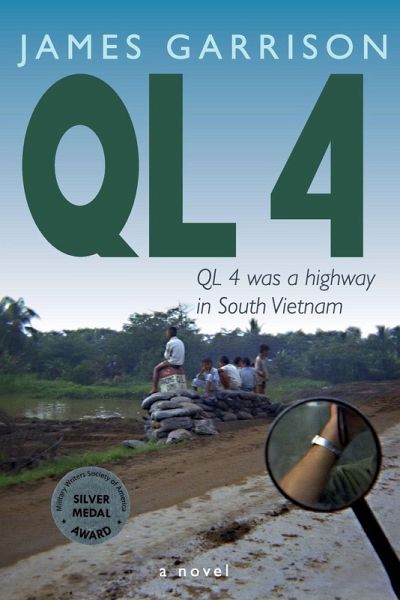
QL 4 was a highway in South Vietnam. In 1969, anyone going south from Saigon into the Mekong Delta would follow this national route, traversing an expanse of green rice paddies, passing through busy towns and quiet villages, and crossing wide fingers of the Mekong River by ferry. Squat red-and-white concrete posts marked the highway as "QL 4." These concrete markers-old and battered and faded-mimicked those on the country roads of France. "QL 4 was ...," but is no more. It no longer exists on modern maps, just as South Vietnam no longer exists. Just as many who travelled down that road no longer exist, except in the memories of those they left behind. I know there was a QL 4 in 1969 because I saw the signposts and I have photographs to prove it, like the one from which the book's cover is taken; my letters home and voice tapes often referred to QL 4, and what happened along it. But this road is now National Highway 1 of the Socialist Republic of Vietnam, part of a system that runs the length of the country from Hanoi to the Mekong Delta. Even the My Thuan ferry crossing, which the American MPs patrolled on the northern prong of the Mekong, no longer exists; the Australians helped construct a bridge spanning that broad stretch of river years ago. We called the road Quan Loc 4, although I'm not sure anyone else did. To me, QL 4 was a metaphor, more than a road, perhaps like the Mississippi in Huckleberry Finn, which I was rereading about the time I started writing the book. In my mind I envisioned a "road novel," sort of like Zen and the Art of Motorcycle Maintenance, or a "picaresque novel" like Don Quixote, a series of connected adventures with roguish and hapless characters. After a number of rewrites, it probably has bits of all of these, with influences from Sartre and Camus. Why the signposts? Years after the Vietnam War, my wife and I visited France. We rented a car and drove through the French countryside on the back roads ("N" or "D" roads on the map), eating lunches of French baguettes, wine, and cheese in ancient churchyards and village parks. I noticed that the roads were marked with concrete posts, red-and-white, with the road number and often the distance in kilometers to the next village. These were the same types of concrete posts I saw on the roads in South Vietnam. The French had left more than this behind from their colonial past: the boulangeries, baguettes, some French words, some French genes-just as the Americans left behind Amer-Asian children who survived as outcasts after the war. These French influences are reflected in QL 4, among them the Boulangerie and a beautiful prostitute the GIs called Sandy. As evidenced by the signposts, we followed in the footsteps of the French, and we Americans like the French passed that way only briefly, leaving much the same detritus behind. We certainly influenced the culture, but I doubt we really changed it, nor should we have. The Vietnamese and their culture endure, despite our influences and despite whatever government is in power, as they have for thousands of years. But one thing I never expected when I was there- and that I marvel at now-is that large numbers of Vietnamese refugees followed us back to "The World," and they, too, are Americans now.