
Andere Kunden interessierten sich auch für
 - RJ, Brasile") Qualità della carne di squalo mako Anequim (Isurus oxyrinchus) - RJ, Brasile40,99 €
Qualità della carne di squalo mako Anequim (Isurus oxyrinchus) - RJ, Brasile40,99 € - RJ, Brazylia") Jako¿¿ mi¿sa ¿ar¿acza bia¿ego Anequim (Isurus oxyrinchus) - RJ, Brazylia40,99 €
Jako¿¿ mi¿sa ¿ar¿acza bia¿ego Anequim (Isurus oxyrinchus) - RJ, Brazylia40,99 € - RJ, Brasilien") Qualität des Fleisches des Makrelenhais Anequim (Isurus oxyrinchus) - RJ, Brasilien61,90 €
Qualität des Fleisches des Makrelenhais Anequim (Isurus oxyrinchus) - RJ, Brasilien61,90 € - RJ, Brésil") Qualité de la chair du requin-taupe commun (Isurus oxyrinchus) - RJ, Brésil40,99 €
Qualité de la chair du requin-taupe commun (Isurus oxyrinchus) - RJ, Brésil40,99 € Epidemiological and Clinical Aspects of Yellow Fever in Brazil27,99 €
 Microbial Decontamination of Food113,99 €
 MYCOBIOTA CONTAMINANT AND OCCURRENCE OF AFLATOXINS IN MAIZE FLOUR25,99 €


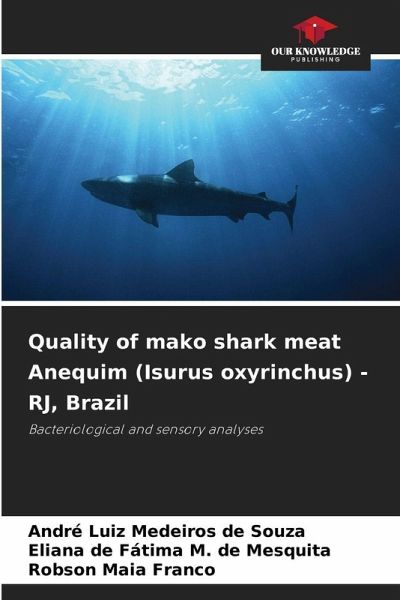
In the state of Rio de Janeiro, fish, a product with a short shelf life, is highly sought after and consumed. This group includes dogfish fillet, mainly of the species Isurus oxyrinchus (Elasmobranchii: Lamnidae), popularly known as Anequim dogfish. Dogfish meat is a distinctive product, widely accepted and ranked 5th among imported fish sold in the city's supermarkets, despite the lack of legislation promoting food identity and quality standards. Bacteriological and sensory analyses were performed on 17 samples of fresh dogfish fillet from markets in Niterói, Rio de Janeiro, to verify their quality. The bacteriological results showed non-compliant samples in the Salmonella spp. test and Vibrio parahaemolyticus enumeration. It was also found that the dogfish fillet was well accepted by the tasters, confirming its frequent commercialisation in the municipality. The objective of this study was to evaluate the hygienic and sanitary conditions of the Anequim dogfish fillet commercialised in the municipality of Niterói, Rio de Janeiro, Brazil.