
- Broschiertes Buch
- Merkliste
- Auf die Merkliste
- Bewerten Bewerten
- Teilen
- Produkt teilen
- Produkterinnerung
- Produkterinnerung
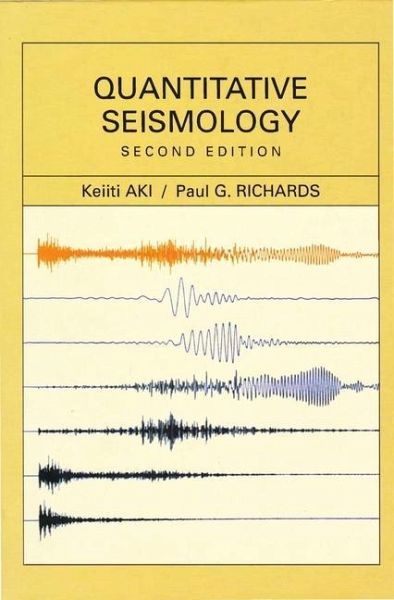
This book provides a unified treatment of seismological methods that will be of use to advanced students, seismologists, and scientists and engineers working in all areas of seismology.
Andere Kunden interessierten sich auch für
 Robin George AndrewsSuper Volcanoes32,99 €
 James Goff (Honorary Profes Honorary Professor of Tsunami ResearchTsunami44,99 €
 Andrew C. Scott (University of London Royal Holloway)Fire16,99 €
 Bikash Sadhukhan (Associate Professor in the Department of ComputerCan Artificial Intelligence Aid in Forecasting Earthquakes?155,99 €
 Iain Stewart (University of Plymouth)Plate Tectonics: A Ladybird Expert Book13,99 €
 Richard F. KatzThe Dynamics of Partially Molten Rock94,99 €
 Gillen Dâ Arcy WoodTambora26,99 €
-
-
-







This book provides a unified treatment of seismological methods that will be of use to advanced students, seismologists, and scientists and engineers working in all areas of seismology.
Produktdetails
- Produktdetails
- Verlag: University Science Books, U.S.
- 2 Revised edition
- Seitenzahl: 700
- Erscheinungstermin: 21. September 2002
- Englisch
- Abmessung: 255mm x 179mm x 42mm
- Gewicht: 1224g
- ISBN-13: 9781891389634
- ISBN-10: 1891389637
- Artikelnr.: 28898251
- Herstellerkennzeichnung
- Libri GmbH
- Europaallee 1
- 36244 Bad Hersfeld
- gpsr@libri.de
- Verlag: University Science Books, U.S.
- 2 Revised edition
- Seitenzahl: 700
- Erscheinungstermin: 21. September 2002
- Englisch
- Abmessung: 255mm x 179mm x 42mm
- Gewicht: 1224g
- ISBN-13: 9781891389634
- ISBN-10: 1891389637
- Artikelnr.: 28898251
- Herstellerkennzeichnung
- Libri GmbH
- Europaallee 1
- 36244 Bad Hersfeld
- gpsr@libri.de
Keiiti Aki (Author) Until his death in 2005, Keiiti Aki resided on Réunion Island in the Indian Ocean. His distinguished career included faculty appointments for many years at the Massachusetts Institute of Technology and the University of Southern California.Paul Richards (Author) Paul Richards has taught and conducted research for many years at Columbia University's Lamont-Doherty Earth Observatory, where his work has turned to methods of monitoring earthquakes and underground nuclear explosions. His current research is focused on improving the accuracy with which earthquakes and explosions are routinely located around the world.
1. Introduction Suggestions for Further Reading2. Basic Theorems in Dynamic
Elasticity 2.1 Formulation 2.2 Stress-Strain Relations and the
Strain-Energy Function 2.3 Theorems of Uniqueness and Reciprocity 2.4
Introducing Green's Function for Elastodynamics 2.5 Representation Theorems
2.6 Strain-Displacement Relations and Displacement-Stress Relations in
General Orthogonal Curvilinear Coordinates Suggestions for Further Reading
Problems3. Representation of Seismic Sources 3.1 Representation Theorems
for an Internal Surface: Body-Force Equivalents for Discontinuities in
Traction and Displacement 3.2 A Simple Example of Slip on a Buried Fault
3.3 General Analysis of Displacement Discontinuities across an Internal
Surface E 3.4 Volume Sources: Outline of the Theory and Some Simple
Examples Suggestions for Further Reading Problems4. Elastic Waves from a
Point Dislocation Source 4.1 Formulation: Introduction of Potentials 4.2
Solution for the Elastodynamic Green Function in a Homogeneous, Isotropic
Unbounded Medium 4.3 The Double-Couple Solution in an Infinite Homogeneous
Medium 4.4 Ray Theory for Far-Field P-waves and S-waves from a Point Source
4.5 The Radiation Pattern of Body Waves in the Far Field for a Point Shear
Dislocation of Arbitrary Orientation in a Spherically Symmetric Medium
Suggestions for Further Reading Problems5. Plane Waves in Homogeneous Media
and Their Reflection and Transmission at a Plane Boundary 5.1 Basic
Properties of Plane Waves in Elastic Media 5.2 Elementary Formulas for
Reflection/Conversion/Transmission Coefficients 5.3 Inhomogeneous Waves,
Phase Shifts, and Interface Waves 5.4 A Matrix Method for Analyzing Plane
Waves in Homogeneous Media 5.5 Wave Propagation in an Attenuating Medium:
Basic Theory for Plane Waves 5.6 Wave Propagation in an Elastic Anisotropic
Medium: Basic Theory for Plane Waves Suggestions for Further Reading
Problems6. Reflection and Refraction of Spherical Waves; Lamb's Problem 6.1
Spherical Waves as a Superposition of Plane Waves and Conical Waves 6.2
Reflection of Spherical Waves at a Plane Boundary: Acoustic Waves 6.3
Spherical Waves in an Elastic Half-Space: The Rayleigh Pole 6.4 Cagniard-De
Hoop Methods for Line Sources 6.5 Cagniard-De Hoop Methods for Point
Sources 6.6 Summary of Main Results and Comparison between Different
Methods Suggestions for Further Reading Problems7. Surface Waves in a
Vertically Heterogeneous Medium 7.1 Basic Properties of Surface Waves 7.2
Eigenvalue Problem for the Displacement-Stress Vector 7.3 Variational
Principle for Love and Rayleigh Waves 7.4 Surface-Wave Terms of Green's
Function for a Vertically Heterogeneous Medium 7.5 Love and Rayleigh Waves
from a Point Source with Arbitrary Seismic Moment 7.6 Leaky Modes
Suggestions for Further Reading Problems8. Free Oscillations of the Earth
8.1 Free Oscillations of a Homogeneous Liquid Sphere 8.2 Excitation of Free
Oscillations by a Point Source 8.3 Surface Waves on the Spherical Earth 8.4
Free Oscillations of a Self-Gravitating Earth 8.5 The Centroid Moment
Tensor 8.6 Splitting of Normal Modes Due to the Earth's Rotation 8.7
Spectral Splitting of Free Oscillations Due to Lateral Inhomogeneity of the
Earth's Structure Suggestions for Further Reading Problems9. Body Waves in
Media with Depth-Dependent Properties 9.1 Cagniard's Method for a Medium
with Many Plane Layers: Analysis of a Generalized Ray 9.2 The Reflectivity
Method for a Medium with Many Plane Layers 9.3 Classical Ray Theory in
Seismology 9.4 Inversion of Travel-Time Data to Infer Earth Structure 9.5
Wave Propagation in Media Having Smoothly Varying Depth-Dependent Velocity
Profiles within Which Turning Points Are Present 9.6 Body-Wave Problems for
Spherically Symmetric Earth Models in Which Discontinuities are Present
between In homogeneous Layers 9.7 Comparison between Different Methods
Suggestions for Further Reading Problems10. The Seismic Source: Kinematics
10.1 Kinematics of an Earthquake as Seen at Far Field 10.2 Kinematics of an
Earthquake as Seen at Near Field Suggestions for Further Reading
Problems11. The Seismic Source: Dynamics 11.1 Dynamics of a Crack
Propagating with Prescribed Velocity 11.2 Dynamics of Spontaneous Planar
Rupture Propagation Suggestions for Further Reading Problems12. Principles
of Seismometry 12.1 Basic Instrumentation 12.2 Frequency and Dynamic Range
of Seismic Signals and Noise 12.3 Detection of Signal Suggestions for
Further Reading ProblemsAppendix 1: Glossary of WavesAppendix 2: Definition
of MagnitudesIndex
Elasticity 2.1 Formulation 2.2 Stress-Strain Relations and the
Strain-Energy Function 2.3 Theorems of Uniqueness and Reciprocity 2.4
Introducing Green's Function for Elastodynamics 2.5 Representation Theorems
2.6 Strain-Displacement Relations and Displacement-Stress Relations in
General Orthogonal Curvilinear Coordinates Suggestions for Further Reading
Problems3. Representation of Seismic Sources 3.1 Representation Theorems
for an Internal Surface: Body-Force Equivalents for Discontinuities in
Traction and Displacement 3.2 A Simple Example of Slip on a Buried Fault
3.3 General Analysis of Displacement Discontinuities across an Internal
Surface E 3.4 Volume Sources: Outline of the Theory and Some Simple
Examples Suggestions for Further Reading Problems4. Elastic Waves from a
Point Dislocation Source 4.1 Formulation: Introduction of Potentials 4.2
Solution for the Elastodynamic Green Function in a Homogeneous, Isotropic
Unbounded Medium 4.3 The Double-Couple Solution in an Infinite Homogeneous
Medium 4.4 Ray Theory for Far-Field P-waves and S-waves from a Point Source
4.5 The Radiation Pattern of Body Waves in the Far Field for a Point Shear
Dislocation of Arbitrary Orientation in a Spherically Symmetric Medium
Suggestions for Further Reading Problems5. Plane Waves in Homogeneous Media
and Their Reflection and Transmission at a Plane Boundary 5.1 Basic
Properties of Plane Waves in Elastic Media 5.2 Elementary Formulas for
Reflection/Conversion/Transmission Coefficients 5.3 Inhomogeneous Waves,
Phase Shifts, and Interface Waves 5.4 A Matrix Method for Analyzing Plane
Waves in Homogeneous Media 5.5 Wave Propagation in an Attenuating Medium:
Basic Theory for Plane Waves 5.6 Wave Propagation in an Elastic Anisotropic
Medium: Basic Theory for Plane Waves Suggestions for Further Reading
Problems6. Reflection and Refraction of Spherical Waves; Lamb's Problem 6.1
Spherical Waves as a Superposition of Plane Waves and Conical Waves 6.2
Reflection of Spherical Waves at a Plane Boundary: Acoustic Waves 6.3
Spherical Waves in an Elastic Half-Space: The Rayleigh Pole 6.4 Cagniard-De
Hoop Methods for Line Sources 6.5 Cagniard-De Hoop Methods for Point
Sources 6.6 Summary of Main Results and Comparison between Different
Methods Suggestions for Further Reading Problems7. Surface Waves in a
Vertically Heterogeneous Medium 7.1 Basic Properties of Surface Waves 7.2
Eigenvalue Problem for the Displacement-Stress Vector 7.3 Variational
Principle for Love and Rayleigh Waves 7.4 Surface-Wave Terms of Green's
Function for a Vertically Heterogeneous Medium 7.5 Love and Rayleigh Waves
from a Point Source with Arbitrary Seismic Moment 7.6 Leaky Modes
Suggestions for Further Reading Problems8. Free Oscillations of the Earth
8.1 Free Oscillations of a Homogeneous Liquid Sphere 8.2 Excitation of Free
Oscillations by a Point Source 8.3 Surface Waves on the Spherical Earth 8.4
Free Oscillations of a Self-Gravitating Earth 8.5 The Centroid Moment
Tensor 8.6 Splitting of Normal Modes Due to the Earth's Rotation 8.7
Spectral Splitting of Free Oscillations Due to Lateral Inhomogeneity of the
Earth's Structure Suggestions for Further Reading Problems9. Body Waves in
Media with Depth-Dependent Properties 9.1 Cagniard's Method for a Medium
with Many Plane Layers: Analysis of a Generalized Ray 9.2 The Reflectivity
Method for a Medium with Many Plane Layers 9.3 Classical Ray Theory in
Seismology 9.4 Inversion of Travel-Time Data to Infer Earth Structure 9.5
Wave Propagation in Media Having Smoothly Varying Depth-Dependent Velocity
Profiles within Which Turning Points Are Present 9.6 Body-Wave Problems for
Spherically Symmetric Earth Models in Which Discontinuities are Present
between In homogeneous Layers 9.7 Comparison between Different Methods
Suggestions for Further Reading Problems10. The Seismic Source: Kinematics
10.1 Kinematics of an Earthquake as Seen at Far Field 10.2 Kinematics of an
Earthquake as Seen at Near Field Suggestions for Further Reading
Problems11. The Seismic Source: Dynamics 11.1 Dynamics of a Crack
Propagating with Prescribed Velocity 11.2 Dynamics of Spontaneous Planar
Rupture Propagation Suggestions for Further Reading Problems12. Principles
of Seismometry 12.1 Basic Instrumentation 12.2 Frequency and Dynamic Range
of Seismic Signals and Noise 12.3 Detection of Signal Suggestions for
Further Reading ProblemsAppendix 1: Glossary of WavesAppendix 2: Definition
of MagnitudesIndex
1. Introduction Suggestions for Further Reading2. Basic Theorems in Dynamic
Elasticity 2.1 Formulation 2.2 Stress-Strain Relations and the
Strain-Energy Function 2.3 Theorems of Uniqueness and Reciprocity 2.4
Introducing Green's Function for Elastodynamics 2.5 Representation Theorems
2.6 Strain-Displacement Relations and Displacement-Stress Relations in
General Orthogonal Curvilinear Coordinates Suggestions for Further Reading
Problems3. Representation of Seismic Sources 3.1 Representation Theorems
for an Internal Surface: Body-Force Equivalents for Discontinuities in
Traction and Displacement 3.2 A Simple Example of Slip on a Buried Fault
3.3 General Analysis of Displacement Discontinuities across an Internal
Surface E 3.4 Volume Sources: Outline of the Theory and Some Simple
Examples Suggestions for Further Reading Problems4. Elastic Waves from a
Point Dislocation Source 4.1 Formulation: Introduction of Potentials 4.2
Solution for the Elastodynamic Green Function in a Homogeneous, Isotropic
Unbounded Medium 4.3 The Double-Couple Solution in an Infinite Homogeneous
Medium 4.4 Ray Theory for Far-Field P-waves and S-waves from a Point Source
4.5 The Radiation Pattern of Body Waves in the Far Field for a Point Shear
Dislocation of Arbitrary Orientation in a Spherically Symmetric Medium
Suggestions for Further Reading Problems5. Plane Waves in Homogeneous Media
and Their Reflection and Transmission at a Plane Boundary 5.1 Basic
Properties of Plane Waves in Elastic Media 5.2 Elementary Formulas for
Reflection/Conversion/Transmission Coefficients 5.3 Inhomogeneous Waves,
Phase Shifts, and Interface Waves 5.4 A Matrix Method for Analyzing Plane
Waves in Homogeneous Media 5.5 Wave Propagation in an Attenuating Medium:
Basic Theory for Plane Waves 5.6 Wave Propagation in an Elastic Anisotropic
Medium: Basic Theory for Plane Waves Suggestions for Further Reading
Problems6. Reflection and Refraction of Spherical Waves; Lamb's Problem 6.1
Spherical Waves as a Superposition of Plane Waves and Conical Waves 6.2
Reflection of Spherical Waves at a Plane Boundary: Acoustic Waves 6.3
Spherical Waves in an Elastic Half-Space: The Rayleigh Pole 6.4 Cagniard-De
Hoop Methods for Line Sources 6.5 Cagniard-De Hoop Methods for Point
Sources 6.6 Summary of Main Results and Comparison between Different
Methods Suggestions for Further Reading Problems7. Surface Waves in a
Vertically Heterogeneous Medium 7.1 Basic Properties of Surface Waves 7.2
Eigenvalue Problem for the Displacement-Stress Vector 7.3 Variational
Principle for Love and Rayleigh Waves 7.4 Surface-Wave Terms of Green's
Function for a Vertically Heterogeneous Medium 7.5 Love and Rayleigh Waves
from a Point Source with Arbitrary Seismic Moment 7.6 Leaky Modes
Suggestions for Further Reading Problems8. Free Oscillations of the Earth
8.1 Free Oscillations of a Homogeneous Liquid Sphere 8.2 Excitation of Free
Oscillations by a Point Source 8.3 Surface Waves on the Spherical Earth 8.4
Free Oscillations of a Self-Gravitating Earth 8.5 The Centroid Moment
Tensor 8.6 Splitting of Normal Modes Due to the Earth's Rotation 8.7
Spectral Splitting of Free Oscillations Due to Lateral Inhomogeneity of the
Earth's Structure Suggestions for Further Reading Problems9. Body Waves in
Media with Depth-Dependent Properties 9.1 Cagniard's Method for a Medium
with Many Plane Layers: Analysis of a Generalized Ray 9.2 The Reflectivity
Method for a Medium with Many Plane Layers 9.3 Classical Ray Theory in
Seismology 9.4 Inversion of Travel-Time Data to Infer Earth Structure 9.5
Wave Propagation in Media Having Smoothly Varying Depth-Dependent Velocity
Profiles within Which Turning Points Are Present 9.6 Body-Wave Problems for
Spherically Symmetric Earth Models in Which Discontinuities are Present
between In homogeneous Layers 9.7 Comparison between Different Methods
Suggestions for Further Reading Problems10. The Seismic Source: Kinematics
10.1 Kinematics of an Earthquake as Seen at Far Field 10.2 Kinematics of an
Earthquake as Seen at Near Field Suggestions for Further Reading
Problems11. The Seismic Source: Dynamics 11.1 Dynamics of a Crack
Propagating with Prescribed Velocity 11.2 Dynamics of Spontaneous Planar
Rupture Propagation Suggestions for Further Reading Problems12. Principles
of Seismometry 12.1 Basic Instrumentation 12.2 Frequency and Dynamic Range
of Seismic Signals and Noise 12.3 Detection of Signal Suggestions for
Further Reading ProblemsAppendix 1: Glossary of WavesAppendix 2: Definition
of MagnitudesIndex
Elasticity 2.1 Formulation 2.2 Stress-Strain Relations and the
Strain-Energy Function 2.3 Theorems of Uniqueness and Reciprocity 2.4
Introducing Green's Function for Elastodynamics 2.5 Representation Theorems
2.6 Strain-Displacement Relations and Displacement-Stress Relations in
General Orthogonal Curvilinear Coordinates Suggestions for Further Reading
Problems3. Representation of Seismic Sources 3.1 Representation Theorems
for an Internal Surface: Body-Force Equivalents for Discontinuities in
Traction and Displacement 3.2 A Simple Example of Slip on a Buried Fault
3.3 General Analysis of Displacement Discontinuities across an Internal
Surface E 3.4 Volume Sources: Outline of the Theory and Some Simple
Examples Suggestions for Further Reading Problems4. Elastic Waves from a
Point Dislocation Source 4.1 Formulation: Introduction of Potentials 4.2
Solution for the Elastodynamic Green Function in a Homogeneous, Isotropic
Unbounded Medium 4.3 The Double-Couple Solution in an Infinite Homogeneous
Medium 4.4 Ray Theory for Far-Field P-waves and S-waves from a Point Source
4.5 The Radiation Pattern of Body Waves in the Far Field for a Point Shear
Dislocation of Arbitrary Orientation in a Spherically Symmetric Medium
Suggestions for Further Reading Problems5. Plane Waves in Homogeneous Media
and Their Reflection and Transmission at a Plane Boundary 5.1 Basic
Properties of Plane Waves in Elastic Media 5.2 Elementary Formulas for
Reflection/Conversion/Transmission Coefficients 5.3 Inhomogeneous Waves,
Phase Shifts, and Interface Waves 5.4 A Matrix Method for Analyzing Plane
Waves in Homogeneous Media 5.5 Wave Propagation in an Attenuating Medium:
Basic Theory for Plane Waves 5.6 Wave Propagation in an Elastic Anisotropic
Medium: Basic Theory for Plane Waves Suggestions for Further Reading
Problems6. Reflection and Refraction of Spherical Waves; Lamb's Problem 6.1
Spherical Waves as a Superposition of Plane Waves and Conical Waves 6.2
Reflection of Spherical Waves at a Plane Boundary: Acoustic Waves 6.3
Spherical Waves in an Elastic Half-Space: The Rayleigh Pole 6.4 Cagniard-De
Hoop Methods for Line Sources 6.5 Cagniard-De Hoop Methods for Point
Sources 6.6 Summary of Main Results and Comparison between Different
Methods Suggestions for Further Reading Problems7. Surface Waves in a
Vertically Heterogeneous Medium 7.1 Basic Properties of Surface Waves 7.2
Eigenvalue Problem for the Displacement-Stress Vector 7.3 Variational
Principle for Love and Rayleigh Waves 7.4 Surface-Wave Terms of Green's
Function for a Vertically Heterogeneous Medium 7.5 Love and Rayleigh Waves
from a Point Source with Arbitrary Seismic Moment 7.6 Leaky Modes
Suggestions for Further Reading Problems8. Free Oscillations of the Earth
8.1 Free Oscillations of a Homogeneous Liquid Sphere 8.2 Excitation of Free
Oscillations by a Point Source 8.3 Surface Waves on the Spherical Earth 8.4
Free Oscillations of a Self-Gravitating Earth 8.5 The Centroid Moment
Tensor 8.6 Splitting of Normal Modes Due to the Earth's Rotation 8.7
Spectral Splitting of Free Oscillations Due to Lateral Inhomogeneity of the
Earth's Structure Suggestions for Further Reading Problems9. Body Waves in
Media with Depth-Dependent Properties 9.1 Cagniard's Method for a Medium
with Many Plane Layers: Analysis of a Generalized Ray 9.2 The Reflectivity
Method for a Medium with Many Plane Layers 9.3 Classical Ray Theory in
Seismology 9.4 Inversion of Travel-Time Data to Infer Earth Structure 9.5
Wave Propagation in Media Having Smoothly Varying Depth-Dependent Velocity
Profiles within Which Turning Points Are Present 9.6 Body-Wave Problems for
Spherically Symmetric Earth Models in Which Discontinuities are Present
between In homogeneous Layers 9.7 Comparison between Different Methods
Suggestions for Further Reading Problems10. The Seismic Source: Kinematics
10.1 Kinematics of an Earthquake as Seen at Far Field 10.2 Kinematics of an
Earthquake as Seen at Near Field Suggestions for Further Reading
Problems11. The Seismic Source: Dynamics 11.1 Dynamics of a Crack
Propagating with Prescribed Velocity 11.2 Dynamics of Spontaneous Planar
Rupture Propagation Suggestions for Further Reading Problems12. Principles
of Seismometry 12.1 Basic Instrumentation 12.2 Frequency and Dynamic Range
of Seismic Signals and Noise 12.3 Detection of Signal Suggestions for
Further Reading ProblemsAppendix 1: Glossary of WavesAppendix 2: Definition
of MagnitudesIndex