68,99 €
inkl. MwSt.
Versandkostenfrei*Erscheint vorauss. 28. Februar 2026
Melden Sie sich
hier
hier
für den Produktalarm an, um über die Verfügbarkeit des Produkts informiert zu werden.

34 °P sammeln
Andere Kunden interessierten sich auch für
 Quo Vadis Quantum Mechanics?38,99 €
 Quantum Analogues: From Phase Transitions to Black Holes and Cosmology38,99 €
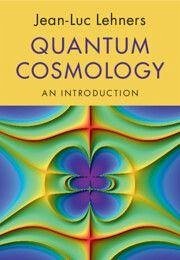
 Quantum Cosmology65,99 €
 Quantum Gravitation76,99 €
") One Hundred Years of General Relativity: From Genesis and Empirical Foundations to Gravitational Waves, Cosmology and Quantum Gravity (in 2 Volumes)221,99 €
One Hundred Years of General Relativity: From Genesis and Empirical Foundations to Gravitational Waves, Cosmology and Quantum Gravity (in 2 Volumes)221,99 € Frontiers of Fundamental Physics 477,99 €
 Quantum Reality, Relativistic Causality, and Closing the Epistemic Circle115,99 €
'Quantum Cosmology' offers a guided introduction to the quantum aspects of the cosmos. Starting with an overview of early universe cosmology, the book builds up to advanced topics such as the Wheeler-DeWitt equation, gravitational path integrals, and the no-boundary proposal for the wave function of the universe. Readers will explore tunneling processes via Coleman-DeLuccia instantons, the quantum origin of primordial fluctuations, the thermodynamics of horizons, and basic notions of string cosmology. Concepts such as wormholes and semi-classical geometry are introduced with clarity and physical motivation. The book assumes some familiarity with general relativity and quantum mechanics, but little prior knowledge of cosmology. It includes a wide range of exercises, with solutions provided. Written in a pedagogical style, it bridges the gap between undergraduate courses and the research level in this frontier area of theoretical physics.