
Andere Kunden interessierten sich auch für
 Museum Italicum Seu Collectio Veterum Scriptorum Ex Bibliothecis Italicis, Volume 1...40,99 €
 Museum Italicum Seu Collectio Veterum Scriptorum Ex Bibliothecis Italicis, 2...42,99 €
 Monumenta Spectantia Historiam Slavorum Meridionalium32,99 €
 P. Chrysostomi Hanthaler, ... Exercitationes Faciles De Numis Veterum Pro Tyronibus ... Pars 1. Exhibens Adversas Numorum, Et In Eisdem, Propositis Augg. Vultibus, Cum Capitum Ornamenta, Tum Titulos Expedens...28,99 €
 Dissertatio Mathematico-Antiquaria De Horologiis Veterum Sciothericis Cui Accedit Theoria Solariorum Horam Azimuthum Et Altitudinem Solis Una Exhibentium24,99 €
 Quid in Libris M. Terentii Varronis De Re Rustica Ad Litteras Attineat27,99 €
 Scripta Historica Islandorum De Rebus Gestis Veterum Borealium32,99 €





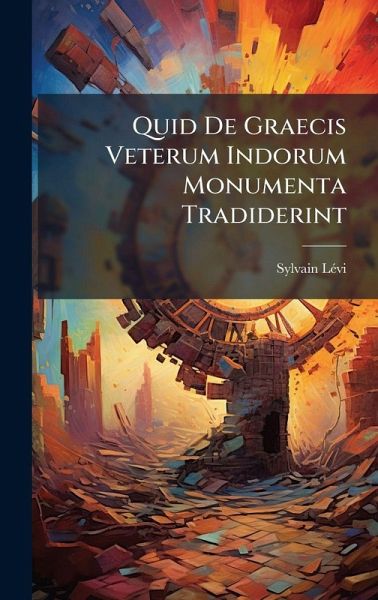
Quid De Graecis Veterum Indorum Monumenta Tradiderint, by Sylvain Lévi, explores the ancient Greek accounts of ancient Indian monuments. This work, originally presented as a thesis to the Faculty of Letters in Paris, delves into the historical and linguistic connections between these two significant ancient civilizations. Lévi's study examines the records and traditions passed down, providing valuable insights into the interactions and cultural exchanges between Greece and India. This book is essential for historians, linguists, and anyone interested in classical studies and the ancient world. It offers a detailed examination of the historical narratives, revealing the extent of Greek knowledge and perceptions of ancient Indian civilization. This work has been selected by scholars as being culturally important, and is part of the knowledge base of civilization as we know it. This work was reproduced from the original artifact, and remains as true to the original work as possible. Therefore, you will see the original copyright references, library stamps (as most of these works have been housed in our most important libraries around the world), and other notations in the work. This work is in the public domain in the United States of America, and possibly other nations. Within the United States, you may freely copy and distribute this work, as no entity (individual or corporate) has a copyright on the body of the work. As a reproduction of a historical artifact, this work may contain missing or blurred pages, poor pictures, errant marks, etc. Scholars believe, and we concur, that this work is important enough to be preserved, reproduced, and made generally available to the public. We appreciate your support of the preservation process, and thank you for being an important part of keeping this knowledge alive and relevant.