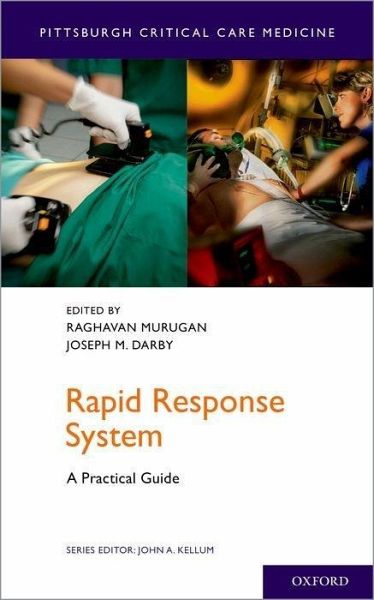
Rapid Response System: A Practical Guide provides a practical approach to the evaluation, differential diagnosis, and management of common medical and surgical emergencies such as cardiac arrest, acute respiratory failure, seizures, and hemorrhagic shock occurring in hospitalized patients. Less common and special circumstances such as pediatric, obstetric, oncologic, neurologic and behavioral emergencies as well as palliative care for terminally ill patients encountered in the context of rapid response team events are also discussed. An overview of commonly performed bedside emergency…mehr
Rapid Response System: A Practical Guide provides a practical approach to the evaluation, differential diagnosis, and management of common medical and surgical emergencies such as cardiac arrest, acute respiratory failure, seizures, and hemorrhagic shock occurring in hospitalized patients. Less common and special circumstances such as pediatric, obstetric, oncologic, neurologic and behavioral emergencies as well as palliative care for terminally ill patients encountered in the context of rapid response team events are also discussed. An overview of commonly performed bedside emergency procedures by rapid response team members complements the clinical resources that may need to be brought to bear during the course of the rapid response team event. Finally, an overview of organization, leadership, communication, quality and patient safety surrounding rapid response team events is provided. This book is written with medical students, junior physicians and nursing staff in mind working in both academic and community hospital settings. Both a novice and an experienced healthcare provider involved in a rapid response system will find this handbook to be valuable supplement to the clinical experiences gained though active engagement in the system. Hospital administrators and senior management staff will also find this book to be useful in the evaluation of quality and performance of the rapid response system, management of staff attitudes and behavior, performance of peer review, care for second victims and implementation of countermeasures for patient safety problems discovered in the course of rapid response system reviews.
Dr. Raghavan Murugan is an Associate Professor in the Departments of Critical Care Medicine and the Clinical and Translational Science at the University of Pittsburgh School of Medicine. He is currently the Medical Director of the Rapid Response System at the University of Pittsburgh Medical Center and Chief of Intensive Care Unit at Magee Womens Hospital of UPMC. Dr. Joseph M. Darby is Professor of Critical Care Medicine and Surgery at the University of Pittsburgh School of Medicine. He is a former Medical Director of the Rapid Response System at the University of Pittsburgh Medical Center. He is currently the Chief of Critical Care at UPMC Hamot Hospital and Co-Director of the NeuroTrauma ICU at the Presbyterian Hospital.
Inhaltsangabe
* Foreword Introduction to Rapid Response Team * Michael A. DeVita * Part I: Rapid Response Teams * 1 Evolution and Evidence for Rapid Response Teams * Richard L. Simmons and Muhammad Tahseen MD * 2 Rapid Response Team Organization and Activation * Carol Curio Scholle MSN RN * 3 Leadership and Crisis Management * Brad W. Butcher MD * Part II: Common Emergency Syndromes and Management * 4 In-Hospital Cardiac Arrest * Jonathan Elmer MD MS and Abhishek Freyer MD * 5 Atrial Fibrillation and Other Cardiac Arrhythmias * Rinaldo Bellomo MD PhD and Antoine Schneider MD PhD * 6 Hypoxemia and Respiratory Failure * Jeffrey K. Javed MD and Jason E. Moore MD MS * 7 Seizures and Altered Mental Status * Ruchira Jha MD Jodi Manners MD and Kiruba Dharaneeswaran MD * 8 Hypotension and Shock * Christopher K. Schott MD MS RDMS FACEP and Jessica A. Fozard NREMT-P BS * 9 Hypertensive Emergencies * Chenell Donadee MD and Hitesh Gidwani MD * 10 Bleeding Emergencies * Michael C. Reede MBBS MPH DPhil FANZCA FCICM and Patrick C. Finn MBBS. * 11 Chest Pain and Acute Coronary Syndrome * Stephen D'Auria MD and Ravi Ramani MD * 12 Major Trauma * Louis H. Alarcon MD and Patrick R.Varley MD * 13 Sepsis * David T. Huang MD MPH and Munish H. Lapsia MD * Part III: Special Circumstances * 14 Pediatric Emergencies * Cameron Dezfulian MD Christopher M. Horvat MD and Melinda F. Hamilton MD MSc * 15 Obstetric Emergencies * David Muigai MD MMM and Amir Shamshirsaz MD * 16 Behavioral Health Emergencies * Robin Valpey MD and Amy Crawford-Faucher MD FAAFP * 17 Oncologic Emergencies * Harry S. Rafkin MD * 18 The Difficult Airway * Dennis Phillip DO and Joshua Knight MD * 19 Acute Stroke * Alexis Steinberg MD and Bradley J. Molyneaux MD PhD * 20 Pulmonary Embolism * Agnes Koczo MD and Belinda Rivera-Lebro MD MS * 21 Ventricular Assist Devices * Rajagopala Padmanabhan MD and Penny Sappington MD * 22 Management of Exsanguinating Hemorrhage: Hemostasis and Reduction * Sara P. Myers MD MA MS and Matthew D. Neal MD * 23 Palliative Care Interventions: Role in Rapid Response Team Events * Taylor Lincoln MD Jane Schell MD and Shannon Haliko MD * Part IV: Emergency Procedures * 24 Airway Management * James M. Dargin MD and Lillian L. Emlet MD MS * 25 Emergency Vascular Access * Rajagopala Padmanabhan MD and Holt N. Murray MD * 26 Critical Care Ultrasound * Christopher K. Schott MD MS RDMS FACEP * 27 Tube Thoracostomy * Matthew R. Rosengart MD MPH * Part V: Equipment * 28 The Emergency Crash Cart * Sarah Martin-Cua MBA MSN RN * 29 Airway Equipment * Lillian L. Emlet MD MS and James M. Dargin MD * 30 Point-of-Care Testing * Douglas E. Morgan MBA MSN RN CCRN * 31 Portable Monitors and Defibrillators * Robert Bauer MSN CRNP AG-ACNP-BC and Raghavan Murugan MD MS * Part VI: Organization and Administration * Chapter 32: Hospital Policy * Carol Curio Scholle MSN RN * Chapter 33: Communication and Coordination of Care * Jeannine DiNella RN DNP CCNS and Terri Kress RN MSN CEN * Chapter 34: Patient Safety and Quality Improvement * Lisa M. Painter DNP RN Cheryl Janov BSN RN and Richard L. Simmons
* Foreword Introduction to Rapid Response Team * Michael A. DeVita * Part I: Rapid Response Teams * 1 Evolution and Evidence for Rapid Response Teams * Richard L. Simmons and Muhammad Tahseen MD * 2 Rapid Response Team Organization and Activation * Carol Curio Scholle MSN RN * 3 Leadership and Crisis Management * Brad W. Butcher MD * Part II: Common Emergency Syndromes and Management * 4 In-Hospital Cardiac Arrest * Jonathan Elmer MD MS and Abhishek Freyer MD * 5 Atrial Fibrillation and Other Cardiac Arrhythmias * Rinaldo Bellomo MD PhD and Antoine Schneider MD PhD * 6 Hypoxemia and Respiratory Failure * Jeffrey K. Javed MD and Jason E. Moore MD MS * 7 Seizures and Altered Mental Status * Ruchira Jha MD Jodi Manners MD and Kiruba Dharaneeswaran MD * 8 Hypotension and Shock * Christopher K. Schott MD MS RDMS FACEP and Jessica A. Fozard NREMT-P BS * 9 Hypertensive Emergencies * Chenell Donadee MD and Hitesh Gidwani MD * 10 Bleeding Emergencies * Michael C. Reede MBBS MPH DPhil FANZCA FCICM and Patrick C. Finn MBBS. * 11 Chest Pain and Acute Coronary Syndrome * Stephen D'Auria MD and Ravi Ramani MD * 12 Major Trauma * Louis H. Alarcon MD and Patrick R.Varley MD * 13 Sepsis * David T. Huang MD MPH and Munish H. Lapsia MD * Part III: Special Circumstances * 14 Pediatric Emergencies * Cameron Dezfulian MD Christopher M. Horvat MD and Melinda F. Hamilton MD MSc * 15 Obstetric Emergencies * David Muigai MD MMM and Amir Shamshirsaz MD * 16 Behavioral Health Emergencies * Robin Valpey MD and Amy Crawford-Faucher MD FAAFP * 17 Oncologic Emergencies * Harry S. Rafkin MD * 18 The Difficult Airway * Dennis Phillip DO and Joshua Knight MD * 19 Acute Stroke * Alexis Steinberg MD and Bradley J. Molyneaux MD PhD * 20 Pulmonary Embolism * Agnes Koczo MD and Belinda Rivera-Lebro MD MS * 21 Ventricular Assist Devices * Rajagopala Padmanabhan MD and Penny Sappington MD * 22 Management of Exsanguinating Hemorrhage: Hemostasis and Reduction * Sara P. Myers MD MA MS and Matthew D. Neal MD * 23 Palliative Care Interventions: Role in Rapid Response Team Events * Taylor Lincoln MD Jane Schell MD and Shannon Haliko MD * Part IV: Emergency Procedures * 24 Airway Management * James M. Dargin MD and Lillian L. Emlet MD MS * 25 Emergency Vascular Access * Rajagopala Padmanabhan MD and Holt N. Murray MD * 26 Critical Care Ultrasound * Christopher K. Schott MD MS RDMS FACEP * 27 Tube Thoracostomy * Matthew R. Rosengart MD MPH * Part V: Equipment * 28 The Emergency Crash Cart * Sarah Martin-Cua MBA MSN RN * 29 Airway Equipment * Lillian L. Emlet MD MS and James M. Dargin MD * 30 Point-of-Care Testing * Douglas E. Morgan MBA MSN RN CCRN * 31 Portable Monitors and Defibrillators * Robert Bauer MSN CRNP AG-ACNP-BC and Raghavan Murugan MD MS * Part VI: Organization and Administration * Chapter 32: Hospital Policy * Carol Curio Scholle MSN RN * Chapter 33: Communication and Coordination of Care * Jeannine DiNella RN DNP CCNS and Terri Kress RN MSN CEN * Chapter 34: Patient Safety and Quality Improvement * Lisa M. Painter DNP RN Cheryl Janov BSN RN and Richard L. Simmons
Es gelten unsere Allgemeinen Geschäftsbedingungen: www.buecher.de/agb
Impressum
www.buecher.de ist ein Internetauftritt der buecher.de internetstores GmbH
Geschäftsführung: Monica Sawhney | Roland Kölbl | Günter Hilger
Sitz der Gesellschaft: Batheyer Straße 115 - 117, 58099 Hagen
Postanschrift: Bürgermeister-Wegele-Str. 12, 86167 Augsburg
Amtsgericht Hagen HRB 13257
Steuernummer: 321/5800/1497
USt-IdNr: DE450055826