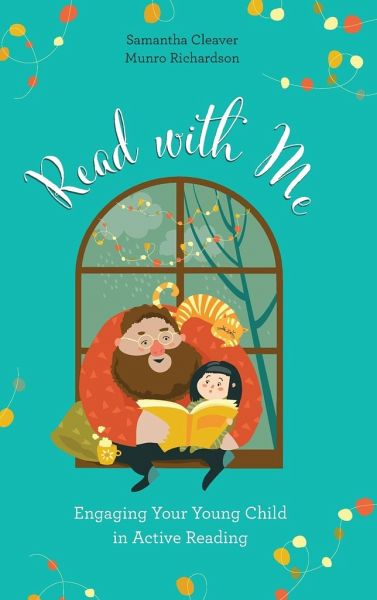
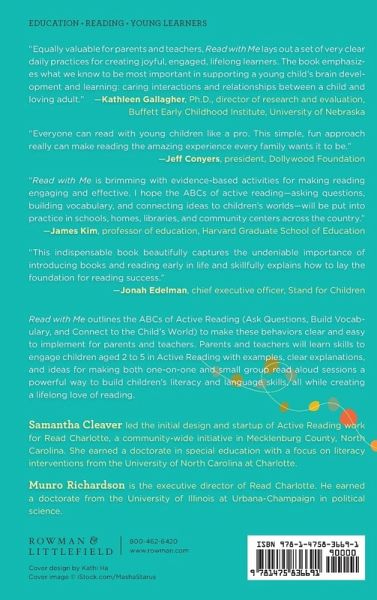
Read With Me synthesizes decades of research into simple things that adults can do with young children to improve early literacy and language skills. After reading this book, adults use Active Reading to engage children in reading, prepare them to read on their own, and instill a lifelong love of reading.
Read With Me synthesizes decades of research into simple things that adults can do with young children to improve early literacy and language skills. After reading this book, adults use Active Reading to engage children in reading, prepare them to read on their own, and instill a lifelong love of reading.
Samantha Cleaver and Reuben Nantogmah have been partners of one kind or another for more than 10 years. Their picture book collaboration started in 2020, when Samantha asked Reuben for input on a picture book idea about a west African outdooring ceremony. Reuben shared his knowledge and insights, and their book Waiting to Welcome was born. Now, Samantha and Reuben write stories that help them share and celebrate their kids' bicultural Ghanaian-American family, traditions, and community. Outside of writing, Samantha and Reuben have four kids, and enjoy exploring local greenways, cooking, and watching Japanese TV with their kids.
Inhaltsangabe
Introduction: The Power of Active Reading Chapter 1: Reading "With" versus Reading "To" Active Reading: Raising Readers Using Decades of Research The ABCs of Active Reading When to do Active Reading: Taking Advantage of Child Development Learning to Love Books Chapter 2: Learning to Read: Joint Attention, Print Concepts, and Print Knowledge Learning to Read vs. Reading to Learn How Children Learn to Read Learning to Read: The Early Years Sharing a Story: Joint Attention Teaching the Basics of Books Learning to Read Chapter 3: How to Read a Book: Repeated Reading, Fill-in-the-Blank, Picture Walks, and Talk More Early Language and Active Reading How Children Develop Language Repeated Reading Picture Walks Fill-in-the-Blank Prompts Talk More Reading Together Chapter 4: How to Talk about a Book: Asking Questions Ask Questions Setting the Foundation for Reading Comprehension: How Children Learn to Understand what they Read Asking and Answering Questions: The Foundation for Reading Comprehension Talk about a Book Chapter 5: Building Vocabulary: How to Teach Words in Books Building Vocabulary: A Powerful Tool Finding Rare Words in Books Building Vocabulary from Books: Repeated Reading and Conversation Building Vocabulary through Active Reading Building Vocabulary after Reading: Talking Beyond Books Building Vocabulary as Children Grow Chapter 6: Make Books Bigger: Connect to the Child's World Make Connections to Build Meaning Connect to Experiences Connect to Stories Build Background Knowledge Connect to your Child's World Chapter 7: How to Talk about Sounds: Building Phonemic Awareness and Letter Knowledge through Active Reading What is Phonemic Awareness? Active Reading to Build Phonemic Awareness Teaching Letters through Active Reading How do Kids Learn to Read Words? From Singing to Reading Chapter 8: The Active Reading Bookshelf: Building a Library for Active Reading Access to Books How to Build an Active Reading Library Active Reading and Informational Text The Active Reading Bookshelf Chapter 9: Time to Read: Doing Active Reading One book at a Time: Answering Questions about Active Reading Is e-Reading Active Reading? Raising Kids who Love to Read Read with Me Appendix A: Books for Active Reading Great for Pointing and Labeling Great for Letting your Child take over Story Telling Great for Asking Questions Great for Building Vocabulary Great for Connecting to Everyday Experiences Great Fiction Picture Books for Building Background Knowledge Great Nonfiction Picture Books for Building Background Knowledge Great for Picture Walks Great for Fill-in-the-Blank Great for Rhyming and Alliteration Great for Learning Letters and ABCs Wordless Picture Books Diverse Books for Active Reading Appendix B: Active Reading Guides Llama Llama Red Pajama Maisy Goes to Preschool Noisy Nora The Gruffalo's Child A Seed is Sleepy Owl Babies Where the Wild Things Are Rosie's Hat Bunny Money Rumble in the Jungle Beekle: The Unimaginary Friend Little Blue Truck Leads the Way 10 Minutes til Bedtime Appendix C: Building a Coordinated System of Active Reading in Your Community Glossary
Introduction: The Power of Active Reading Chapter 1: Reading "With" versus Reading "To" Active Reading: Raising Readers Using Decades of Research The ABCs of Active Reading When to do Active Reading: Taking Advantage of Child Development Learning to Love Books Chapter 2: Learning to Read: Joint Attention, Print Concepts, and Print Knowledge Learning to Read vs. Reading to Learn How Children Learn to Read Learning to Read: The Early Years Sharing a Story: Joint Attention Teaching the Basics of Books Learning to Read Chapter 3: How to Read a Book: Repeated Reading, Fill-in-the-Blank, Picture Walks, and Talk More Early Language and Active Reading How Children Develop Language Repeated Reading Picture Walks Fill-in-the-Blank Prompts Talk More Reading Together Chapter 4: How to Talk about a Book: Asking Questions Ask Questions Setting the Foundation for Reading Comprehension: How Children Learn to Understand what they Read Asking and Answering Questions: The Foundation for Reading Comprehension Talk about a Book Chapter 5: Building Vocabulary: How to Teach Words in Books Building Vocabulary: A Powerful Tool Finding Rare Words in Books Building Vocabulary from Books: Repeated Reading and Conversation Building Vocabulary through Active Reading Building Vocabulary after Reading: Talking Beyond Books Building Vocabulary as Children Grow Chapter 6: Make Books Bigger: Connect to the Child's World Make Connections to Build Meaning Connect to Experiences Connect to Stories Build Background Knowledge Connect to your Child's World Chapter 7: How to Talk about Sounds: Building Phonemic Awareness and Letter Knowledge through Active Reading What is Phonemic Awareness? Active Reading to Build Phonemic Awareness Teaching Letters through Active Reading How do Kids Learn to Read Words? From Singing to Reading Chapter 8: The Active Reading Bookshelf: Building a Library for Active Reading Access to Books How to Build an Active Reading Library Active Reading and Informational Text The Active Reading Bookshelf Chapter 9: Time to Read: Doing Active Reading One book at a Time: Answering Questions about Active Reading Is e-Reading Active Reading? Raising Kids who Love to Read Read with Me Appendix A: Books for Active Reading Great for Pointing and Labeling Great for Letting your Child take over Story Telling Great for Asking Questions Great for Building Vocabulary Great for Connecting to Everyday Experiences Great Fiction Picture Books for Building Background Knowledge Great Nonfiction Picture Books for Building Background Knowledge Great for Picture Walks Great for Fill-in-the-Blank Great for Rhyming and Alliteration Great for Learning Letters and ABCs Wordless Picture Books Diverse Books for Active Reading Appendix B: Active Reading Guides Llama Llama Red Pajama Maisy Goes to Preschool Noisy Nora The Gruffalo's Child A Seed is Sleepy Owl Babies Where the Wild Things Are Rosie's Hat Bunny Money Rumble in the Jungle Beekle: The Unimaginary Friend Little Blue Truck Leads the Way 10 Minutes til Bedtime Appendix C: Building a Coordinated System of Active Reading in Your Community Glossary
Es gelten unsere Allgemeinen Geschäftsbedingungen: www.buecher.de/agb
Impressum
www.buecher.de ist ein Internetauftritt der buecher.de internetstores GmbH
Geschäftsführung: Monica Sawhney | Roland Kölbl | Günter Hilger
Sitz der Gesellschaft: Batheyer Straße 115 - 117, 58099 Hagen
Postanschrift: Bürgermeister-Wegele-Str. 12, 86167 Augsburg
Amtsgericht Hagen HRB 13257
Steuernummer: 321/5800/1497
USt-IdNr: DE450055826