

Andere Kunden interessierten sich auch für
 Adoption and Optimization of Embedded and Real-Time Communication Systems175,99 €
 Advanced Topics in Bisimulation and Coinduction127,99 €
 Cellular Neural Networks and Visual Computing149,99 €
 The Real MCTS/MCITP Exam 70-649 Upgrading Your MCSE on Windows Server 2003 to Windows Server 2008 Prep Kit45,99 €
 The Real Citrix Cca Exam Preparation Kit38,99 €
 Enhanced Transport Protocols for Real Time and Streaming Applications47,99 €
 Cooperative Control of Multi-Agent Systems232,99 €
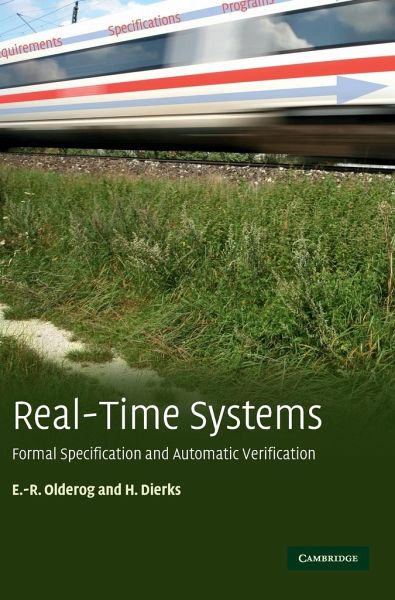
Real-time systems need to react to certain input stimuli within given time bounds. For example, an airbag in a car has to unfold within 300 milliseconds in a crash. There are many embedded safety-critical applications and each requires real-time specification techniques. This text introduces three of these techniques, based on logic and automata: duration calculus, timed automata, and PLC-automata. The techniques are brought together to form a seamless design flow, from real-time requirements specified in the duration calculus; via designs specified by PLC-automata; and into source code for hardware platforms of embedded systems. The syntax, semantics, and proof methods of the specification techniques are introduced; their most important properties are established; and real-life examples illustrate their use. Detailed case studies and exercises conclude each chapter. Ideal for students of real-time systems or embedded systems, this text will also be of great interest to researchers and professionals in transportation and automation.